REVIEW · NEW DELHI
8 Days Tour of Essential India & Classic Nepal – Golden Triangle with Kathmandu
Book on Viator →Operated by EXPERT TOURS & TRAVELS · Bookable on Viator
A Golden Triangle + Kathmandu in one smooth sweep? That’s what makes this 8-day India and Nepal combo feel so efficient, with guided classics from Delhi to Agra to Jaipur and then Kathmandu Valley’s UNESCO sites. I especially like that you get structured time for major stops like Taj Mahal and the Delhi Old City sights, and that the ground travel is handled by an air-conditioned vehicle with bottled water included.
I also like the built-in “effort savers.” Battery bus/golf cart rides are included for Taj Mahal and Fatehpur Sikri, and there’s even a jeep option up to Amer Fort in Jaipur if you don’t want to walk. The possible drawback is that the schedule is active and long days do happen, and a couple of key moments (like Taj Mahal sunrise) are weather-dependent.
In This Review
- Key highlights worth knowing before you go
- Price and logistics: what you’re really paying for
- Day 1 in Delhi: Old City classics with a strong morning start
- Day 2 in Delhi and Agra: Akshardham, Agra Fort, and the Taj-area viewpoint
- Day 3: Taj Mahal morning + Fatehpur Sikri and Abhaneri’s step well
- Taj Mahal early visit
- After Taj: Fatehpur Sikri and Chand Baori
- Day 4 in Jaipur: Amer Fort, Hawa Mahal, City Palace, and Jantar Mantar
- Amer Fort and the jeep option
- Photo stops and palace time
- Jantar Mantar
- Day 5: Galtaji, then Jaipur to Kathmandu by flight
- Galtaji Temple
- Fly to Kathmandu via Delhi
- Day 6 Kathmandu Valley: Swayambhunath, Durbar Square, Boudhanath, and a food stop
- Day 7 Kathmandu Valley back half: Patan, Bhaktapur, and Pashupatinath
- Day 8 Dhulikhel viewpoint: a calmer finish before your flight departure
- Hotels, meals, and what’s included (and what isn’t)
- Guides, safety feel, and the value of having a plan
- Should you book this India & Nepal Golden Triangle + Kathmandu tour?
- FAQ
- Is pickup included for this tour?
- Are entrance fees included?
- What meals are included?
- Are hotels included in the price?
- Do you fly from India to Nepal or travel by road?
- How is Amer Fort handled if I don’t want to walk up?
- Do I need a visa before traveling?
Key highlights worth knowing before you go
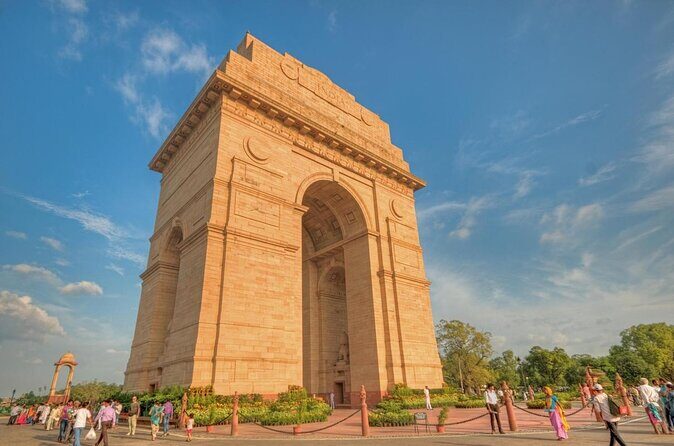
- Guided Old Delhi + iconic monuments: Red Fort and Jama Masjid area sightseeing, plus Qutub Minar.
- Taj Mahal planning that reduces hassle: early start and access management with included entry and transport support.
- UNESCO-heavy Kathmandu Valley day: Swayambhunath, Kathmandu Durbar Square, and Boudhanath are all in the same loop.
- Jaipur forts + astronomy stop: Amer Fort plus Jantar Mantar’s stone instruments.
- A flight bridge between countries: Jaipur to Kathmandu with a connection in Delhi keeps the itinerary moving.
- Energy-saving inclusions: battery bus/golf cart at major sites and bottled water in the vehicle.
Price and logistics: what you’re really paying for
At $1,796 per person for an 8-day trip, you’re not just paying for tickets to monuments. You’re paying for a full chain of problem-solving: guides for each day’s sightseeing, entrances where listed, hotel nights (if you choose the option with hotels), and transport in a chauffeured air-conditioned vehicle during the India portion. Then there’s the cross-border jump too: a scheduled flight from Jaipur to Kathmandu with a connection via Delhi.
That matters because India and Nepal travel can be time-consuming if you try to DIY everything. Here, you reduce decision fatigue: the day-to-day sequencing is set, and you’re not hunting for local transport while managing your energy after long sightseeing blocks.
The biggest tradeoff is that private doesn’t always mean leisurely. This is a guided, itinerary-driven tour. If you like lots of free wandering without a timetable, you may find some days tight. If you prefer a clear plan and reliable timing, you’ll like it.
You can also read our reviews of more tours and experiences in New Delhi.



Day 1 in Delhi: Old City classics with a strong morning start
Your Delhi day is built around the best-known sights of Old Delhi and the transition toward New Delhi highlights.
- Humayun’s Tomb kicks things off with a quieter kind of grandeur than the later chaos of Old Delhi. It’s a great opener because it sets a historical tone without you feeling immediately overwhelmed by crowds.
- Then you move through Red Fort area sights and Jama Masjid, which is a massive Mughal-era mosque. Even if you’ve seen photos, being inside the complex and taking in the scale is the real point here.
- Chandni Chowk gives you the sensory overload in a controlled way: spice stalls, dried fruits, silver jewelry, and colorful saris. This is where you’ll want a slow pace, even if the group timing keeps you moving.
- Gurudwara Bangla Sahib adds a different cultural rhythm. It’s a calm break in the middle of a high-energy city day.
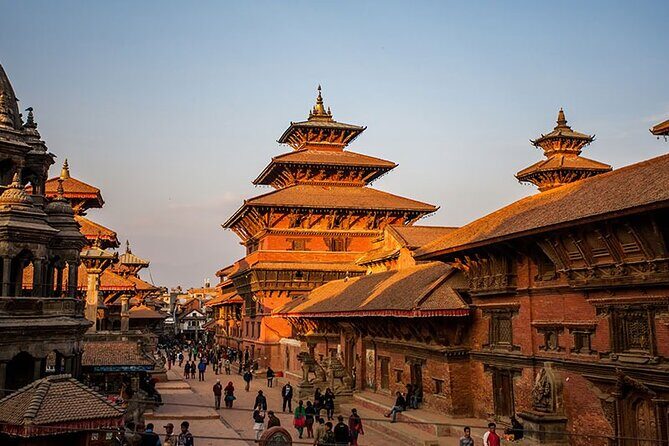
- You finish with India Gate (a WWI memorial) and then Qutub Minar, a UNESCO World Heritage Site and a famous brick minaret. Qutub Minar is one of those monuments that makes you look up and keep looking up.
Practical note: the itinerary lists admission tickets for key stops and sets time blocks like 45 minutes for many sights. That’s enough to see the main elements without turning the day into a marathon of line-juggling.
Day 2 in Delhi and Agra: Akshardham, Agra Fort, and the Taj-area viewpoint
Day 2 starts with a major temple complex: Swaminarayan Akshardham. It’s one of the large-scale Hindu temple experiences in Delhi, and it tends to feel more organized and expansive than older sites—useful early in your trip if you want a “big visual” before you head into Agra.
Then you go to Agra Fort and the Yamuna river corridor:
- Agra Fort is tied to the Mughal seat of power, and it’s another UNESCO stop category on this circuit.
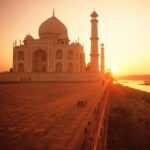
- You also visit Mehtab Bagh, the garden area opposite the Taj Mahal. This viewpoint is valuable because it gives you a different angle. You’re not just staring at the Taj from one direction—you’re thinking like a photographer and a visitor at the same time.
One subtle benefit of the day-2 structure: you reach Agra with enough time to get the “Taj setting” established before the main Taj visit on day 3. That makes day 3 feel less like you’re rushing into a single photo and more like you’re understanding where the monument sits in the larger landscape.
Day 3: Taj Mahal morning + Fatehpur Sikri and Abhaneri’s step well
This is your headline day.
Taj Mahal early visit
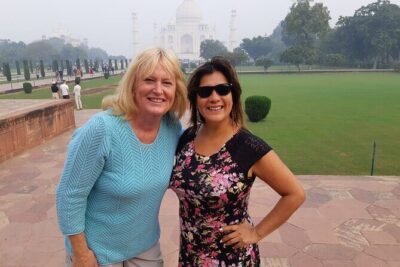
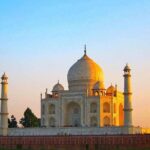
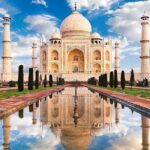
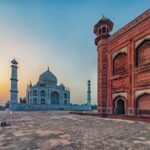
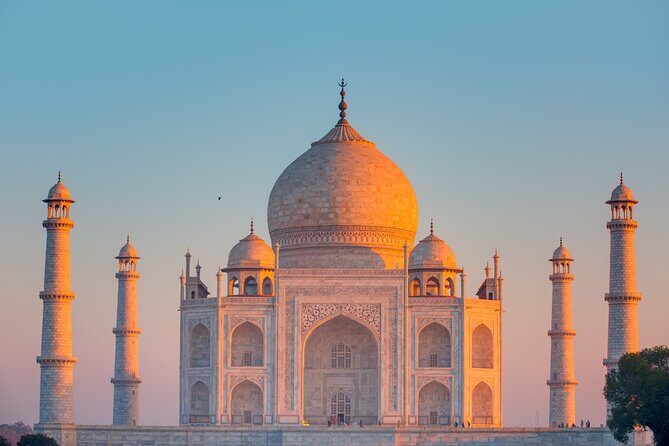
You wake up early for the Taj Mahal, with tea/coffee arranged in your room beforehand and an included guided visit. Taj Mahal is listed as UNESCO World Heritage, and this tour is clearly built around getting you there before the day gets too hot and too packed.
Important reality check: there’s a noted rule that Taj Mahal remains closed every Friday. If your scheduled day falls on a Friday, the tour will visit a day earlier instead. Also, the exact sunrise visit timing is subject to weather conditions, so don’t build your day completely around a guaranteed sunrise photo. Still, early arrival is the best bet for better light and smoother viewing.


After Taj: Fatehpur Sikri and Chand Baori
You then head toward Jaipur with en-route stops:
- Fatehpur Sikri is a UNESCO World Heritage site, and it’s one of those “complex after complex” historical areas where you can feel the layers of past reigns.
- Chand Baori in Abhaneri is the surprise stop that many people love because it’s different. It’s a step well. You’ll look down into the geometry and get a real sense of scale—especially if you’re used to flat city streets.
Day 3 ends with an evening visit to Birla Mandir in Jaipur. It’s a nice cap because it’s at a slower pace than fort interiors and it gives you a clean visual introduction to the city at night.
Day 4 in Jaipur: Amer Fort, Hawa Mahal, City Palace, and Jantar Mantar

If Delhi is where you learn to handle motion and crowds, Jaipur is where you slow down just enough to see details.
Amer Fort and the jeep option
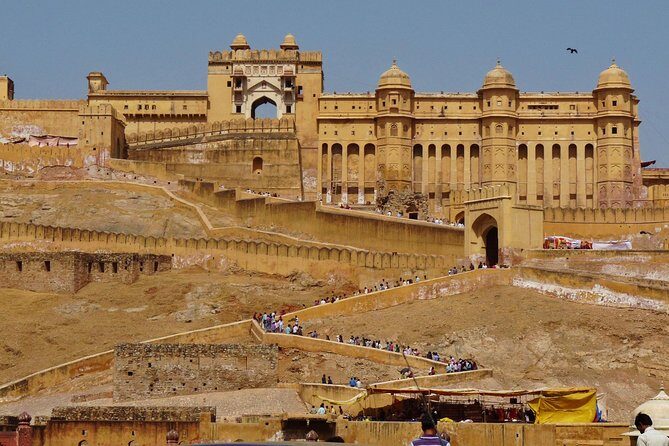
You spend the morning with Amber Fort. The tour includes an entrance ticket, and it also offers a jeep ride to/from Amer Fort in Jaipur if you don’t want to climb by foot. That small choice can make a big difference. If your legs are tired or you just don’t want to start the day out with steep steps, take the jeep.
Amer Fort is also the kind of site where the viewing lines matter. You’ll want to give yourself a bit of patience for the best angles and don’t rush through the courtyards.
Photo stops and palace time
Your day mixes “see it now” photo stops with longer historic time:
- Jal Mahal is a quick photo stop at the Water Palace on the lake. You’re mostly going for that look across the water.
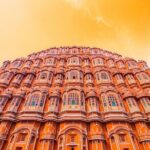
- Hawa Mahal (Palace of Breeze) is another short photo stop. The famous detail here is the 953 windows idea, and even from the outside, it reads as a uniquely Jaipur building.
- City Palace is where the day becomes more substantial. It’s described as a fusion of Rajasthani and Mughal architecture and includes time with the royal-family connection.
Jantar Mantar
Finally, Jantar Mantar (UNESCO) lands the science angle. You’re looking at a stone observatory with instruments designed to measure time and positions. Even if astronomy isn’t your thing, it’s fascinating because it’s practical engineering dressed as public monument.
A nice bonus is Patrika Gate near the end, listed as a top photo location. It’s modern and painted, which can be a relief after centuries of stone and marble.
Day 5: Galtaji, then Jaipur to Kathmandu by flight
Day 5 has a split personality: one last Jaipur-side spiritual stop, then the cross-country transition.
Galtaji Temple
You visit Galtaji Temple, a hill-terrain temple complex. This stop tends to work because it’s atmospheric and not just another palace wall. The tour also keeps this relatively short, which helps you keep energy for the flight.
Fly to Kathmandu via Delhi
After Galtaji, you head to the airport and connect from Jaipur to Kathmandu with a connection in Delhi on scheduled commercial airlines. That’s a huge time-saver compared with road travel, and it keeps the itinerary realistic for an 8-day trip.
You should be aware of the baggage allowance noted as 20 Kgs. If you’re traveling with more, check your flight rules early.
When you arrive in Kathmandu, your guide transfers you to your hotel and you then begin exploring around Thamel. Thamel is a good first neighborhood in Kathmandu because it’s geared to visitors and gives you immediate access to food, small shops, and a sense of daily Nepal life right after landing.
Day 6 Kathmandu Valley: Swayambhunath, Durbar Square, Boudhanath, and a food stop
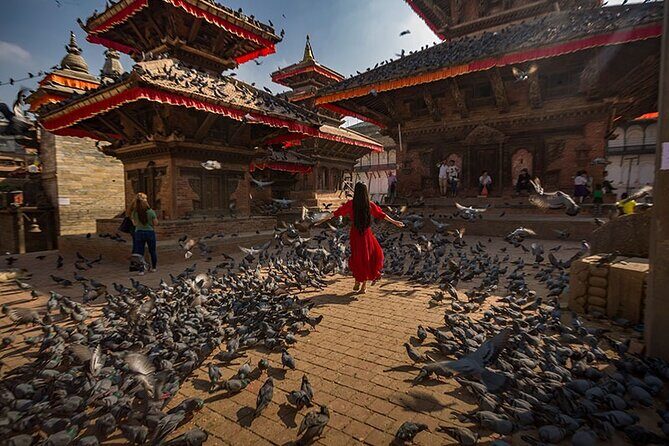
Day 6 is a classic Kathmandu Valley day—big, spiritual, and very visual.
- Swayambhunath Stupa is first. It’s one of the holiest Buddhist stupas in Nepal (as described), and the views from up there give you context for Kathmandu’s valley shape.
- Kathmandu Durbar Square follows and is a UNESCO World Heritage Site. Durbar Square is a ritual and palace-court kind of place, so you’re not just sightseeing buildings—you’re watching how sacred spaces function.
- Boudhanath Stupa comes later, and this is one of the tour’s most impressive “arrival moments.” It’s visible from the airport area, and the stop time reflects that it’s meant to be felt, not just passed through.
Then you get two more modern-culture experiences:
- Singing Bowl in Nepal: this is listed as an included experience in the itinerary but with an explicit note that it’s not included for admission. Practically, that means you may have a paid component once you’re there.
- Nepali Chulo (the Nepalese cooking/food-related stop in the itinerary) is listed as included.
This day is where you’ll likely feel the cultural contrast most strongly. Delhi and Jaipur are monumental and grand; Kathmandu adds ceremony, daily religious movement, and the rhythm of people actually using the spaces.
Day 7 Kathmandu Valley back half: Patan, Bhaktapur, and Pashupatinath
Day 7 keeps you in UNESCO-temple territory, with a slightly different feel across the three major stops.
- Patan (Lalitpur) Durbar Square: UNESCO site and known as the City of Beauty, with emphasis on craft traditions and preserved techniques. The tour time suggests it’s a focused, “get the meaning fast” visit.
- Bhaktapur Durbar Square: UNESCO site as well, and listed as not included admission. That’s a heads-up for cost on the ground, and it’s also a reason to be alert when you’re presented tickets.
- Pashupatinath Temple: one of Nepal’s major Hindu pilgrimage temples dedicated to Shiva, and included with an entrance ticket. This stop is shorter, but it’s one you remember because it’s intense and central to how many people understand Kathmandu.
If you want one practical approach: wear layers. Kathmandu temples and courtyards can involve more walking than you expect, plus weather shifts.
Day 8 Dhulikhel viewpoint: a calmer finish before your flight departure
Your last day is designed for a slower send-off.
You go to Dhulikhel, about 30 km from Kathmandu Durbar Square (and the tour notes about distances to Bhaktapur as well). This village is known for Himalayan views, and the tour includes a viewing period before returning for breakfast.
Then the tour ends with a drop at Kathmandu International Airport or your Kathmandu hotel (or another desired location in Kathmandu). It’s a good final structure: you get your scenery moment, you eat, and you avoid a frantic final rush.
Hotels, meals, and what’s included (and what isn’t)
From the tour details, you get:
- Dinner included
- Breakfast for 7 days
- Entrance fees for the monuments listed as included
- Lunch and other snacks are not listed as included (so you’ll want to budget or plan your own meals on non-breakfast days)
- Unlimited bottled mineral water in the vehicle during the trip
- Hotel accommodation for 7 nights on twin sharing if you choose the option that includes hotels
Also, the tour notes that there’s a private tour model for your group (no sharing of other tourists). That’s a real value if you want your guide to adjust pace slightly, especially when you’re moving between sites with variable crowd levels.
Guides, safety feel, and the value of having a plan
A small detail that matters: the reviews you provided mention expert guidance and even a specific Spanish-speaking guide named Ankit. They also highlight planning support from Kapil Jain. I’m not claiming everyone gets the same guide, but this does signal something important: the company’s strength is organization and communication across languages.
And safety-wise, that matches what you want on a first visit to India and Nepal: someone knows how to handle the timing, the transitions, and the small surprises that always show up with travel.
If you’re the kind of person who likes to understand what you’re looking at—why a monument matters, what a fort represents, how the valley’s sacred sites connect—this kind of guided routing can make the trip feel less stressful and more meaningful.
Should you book this India & Nepal Golden Triangle + Kathmandu tour?
Book it if:
- You want major highlights in India and Kathmandu Valley in just 8 days.
- You like having guides and entrance fees organized, so you can focus on seeing and learning instead of planning day-by-day.
- You’re okay with early starts and active days, especially the Taj Mahal morning.
Consider other options if:
- You want lots of unstructured time. This itinerary is built as a sequence of timed experiences.
- You’re depending on a specific Taj Mahal sunrise moment. The tour notes sunrise timing is weather-dependent, and Taj Mahal is closed on Fridays with a day adjustment plan instead.
FAQ
Is pickup included for this tour?
Pickup is offered, and the guide meets you at your desired location in the Delhi/Gurugram/Noida area at 8 AM for the first day. The tour also includes drop-off in Kathmandu at the airport or hotel (or another desired location in Kathmandu).
Are entrance fees included?
Entrance fees are included for monuments listed in the itinerary as admission ticket included. Some stops are noted as admission ticket free or admission not included, depending on the site.
What meals are included?
Dinner is included, and breakfast is included for 7 days. Other meals and snacks beyond that are not listed as included.
Are hotels included in the price?
Hotel accommodation for 7 nights on twin sharing is included only if you book the option that includes hotels.
Do you fly from India to Nepal or travel by road?
You fly. The itinerary includes a flight from Jaipur to Kathmandu with a connection in Delhi on scheduled commercial airlines.
How is Amer Fort handled if I don’t want to walk up?
A jeep ride to/from Amer Fort is included if you do not want to go up by walking.
Do I need a visa before traveling?
You need a valid visa prior to arrival in India. Nepal visa can be obtained upon arrival at Kathmandu airport. The tour also notes requirements for proof of vaccination completion or a negative RT-PCR test before departure, based on prevailing government guidelines.
If you want, tell me your travel month and whether you prefer an early-morning pace or slower sightseeing—I can suggest how to plan your days around the weather-sensitive Taj Mahal timing.