REVIEW · NEW DELHI
8 Day Golden Triangle Tour with Ranthambore {Taj , Tigers & More}
Book on Viator →Operated by Joyful Holidays · Bookable on Viator
Tigers and temples in eight days works nicely. This Golden Triangle plus Ranthambore trip stacks two big-ticket moments up front: two safari game drives and a sunrise Taj Mahal morning, all tied together with hotel stays and guide-led sightseeing.
I also like that you get real logistics help from day one, including a chauffeur meet-and-transfer in Delhi and even a tuk-tuk ride during city sightseeing. The main thing to plan for is extra cost: monument entry tickets aren’t included (priced at about $69 per person), so you’ll want that budget ready.
In This Review
- Key points at a glance
- The Golden Triangle plus Ranthambore formula that actually works
- Day 1 in Delhi: chauffeur pickup and a low-stress first night
- Delhi Day 2 route: Old Delhi mosque, Gandhi memorial, and UNESCO tombs
- Agra Day 3: fort and garden views without rushing your arrival
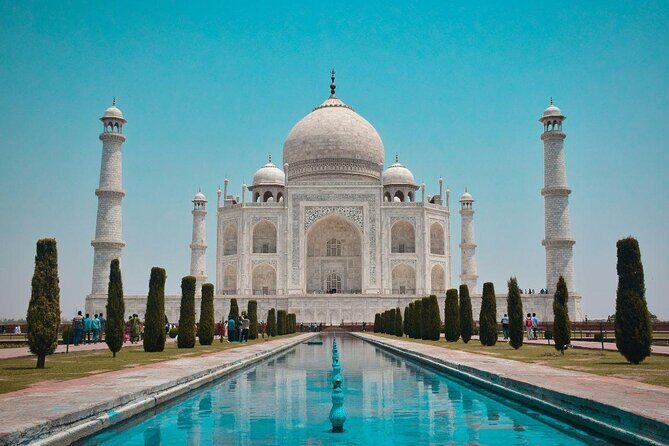
- Taj Mahal at sunrise (Day 4): the timing is the whole point
- Fatehpur Sikri en route: a quick detour that adds meaning
- Ranthambore Day 5: two safaris, one reality check, and more chances
- Jaipur Day 6-7: temples, forts, and the photo stops that matter
- Day 8 departure: a clean finish
- Price, inclusions, and the extra $69 per person you should budget
- Should you book this Golden Triangle with Ranthambore?
- FAQ
- What is the price of the tour?
- What’s included in the tour price?
- Are monument entry tickets included?
- Do I get round-trip transfers from Delhi?
- How many Ranthambore safaris are included?
- Is the Taj Mahal visit at sunrise?
- What accommodation options are available?
- Is this tour private?
- What is the cancellation policy for a full refund?
- Is there a mobile ticket and is it easy to get to?
Key points at a glance
- Sunrise Taj Mahal timing sets you up for great light and a calmer start
- Two Ranthambore safaris on the same day gives you more chances to see tigers
- Private group pace means you’re not stuck waiting on a big bus crowd
- Air-conditioned transfers + parking + guides remove a lot of day-to-day hassle
- Delhi sightseeing with a tuk-tuk ride adds variety beyond car-and-walk tours
- Accommodation upgrade options (3/4/5 star) let you match comfort level to budget
The Golden Triangle plus Ranthambore formula that actually works
This itinerary makes sense because it avoids the usual “only monuments” problem. Yes, you do the classic Golden Triangle loop—Delhi, Agra, Jaipur—but you also add Ranthambore, where the pacing shifts from temples and forts to forests and early mornings.
What you’re really paying for at $799 per person is not just the sites. It’s the setup: round-trip transfers, an air-conditioned vehicle, professional city tour guides, and breakfast included across the trip. Those pieces add up fast if you were building it yourself, especially with the tight timing of sunrise and safari departures.
The other smart choice is private-group touring. Even though the Ranthambore safaris are shared (more on that later), the rest of the day-to-day plan stays flexible. That matters when you’re tired, when you want a slower photo stop, or when the heat makes you adjust on the fly.
You can also read our reviews of more tours and experiences in New Delhi.



Day 1 in Delhi: chauffeur pickup and a low-stress first night
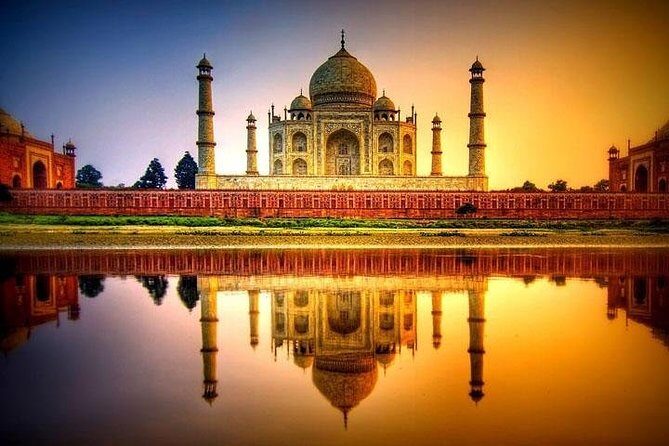
On arrival in New Delhi, you meet the company chauffeur who helps you transfer to your pre-booked hotel. For many first-time India trips, that alone is worth something—leaving you to focus on sleep and rest instead of figuring out transport.
After that, the schedule leaves breathing room. You’ll have free time on day one, which is exactly what you want in Delhi. You can do a casual first walk, pick up small necessities, or just reset after travel.
If you want to be efficient for the rest of the tour, use this evening to plan your early start for day two. Delhi sightseeing includes long stops and a mix of religious and historic sites, so it’s helpful if you’re organized with water and comfortable shoes.
Delhi Day 2 route: Old Delhi mosque, Gandhi memorial, and UNESCO tombs

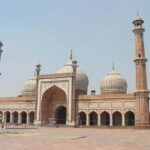
Day two is a full “big picture” day, mixing Old Delhi icons with New Delhi government-era architecture. It starts with Jama Masjid, one of the city’s most important mosques, commissioned by Shah Jahan. The stop is set for about 30 minutes, which is enough to take in the scale and understand why this area matters.
Next comes Red Fort from the outside. Only part of the structure is visible because much of it is occupied, so you won’t get the typical inside tour vibe here. Still, it’s a strong photo stop and a useful way to see the landmark without losing time.
You’ll then pass Raj Ghat, the simple black-marble platform marking where Mahatma Gandhi was cremated. From there, the route moves toward New Delhi’s ceremonial axis with India Gate, a war memorial with a height of about 140 feet, and photo stops at Parliament House and Rashtrapati Bhavan.
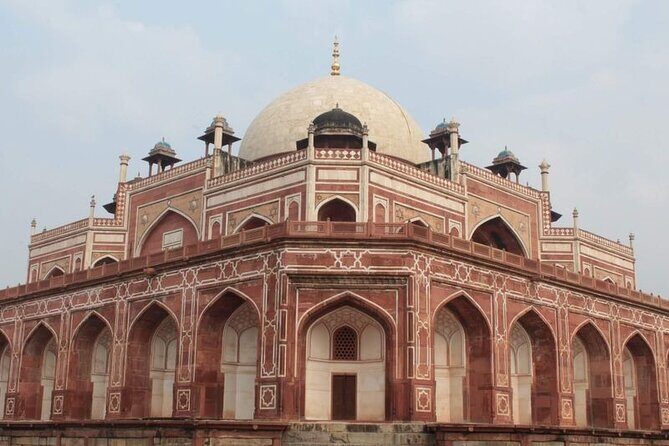
The day finishes with heritage sites you’ll want to see in daylight: Humayun’s Tomb (UNESCO) and Qutub Minar (also UNESCO). The overall challenge in Delhi isn’t the walking—it’s the pace and the amount of “new stuff” in one day. My advice: treat day two like a highlights reel. If you fall behind mentally, the next days won’t feel overwhelming.
Agra Day 3: fort and garden views without rushing your arrival
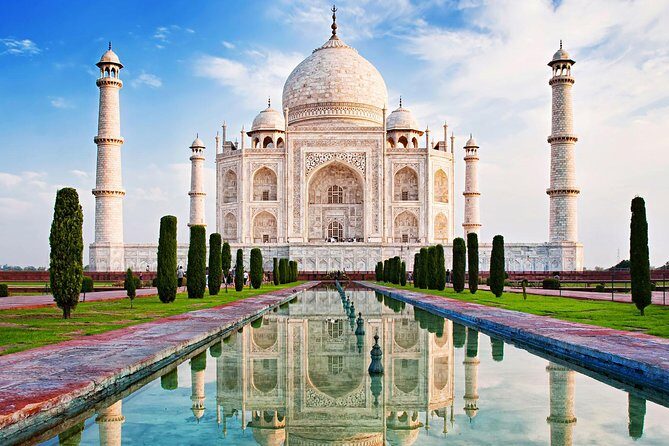
After breakfast on day three, you’ll drive to Agra. Once you check into your hotel, you meet your guide for sightseeing. This is a good structure: you’re not trying to sprint across Agra immediately after arrival.
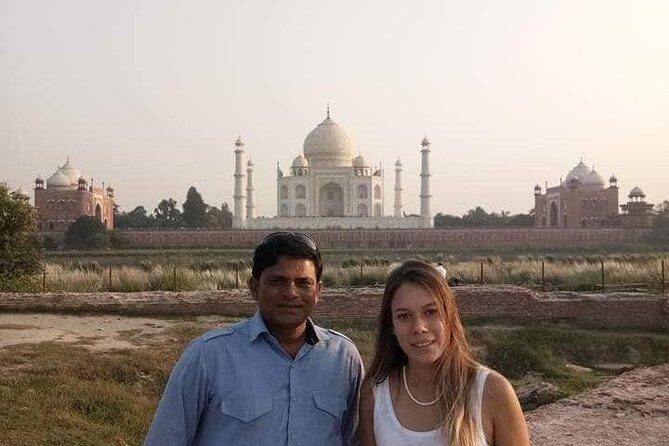
In Agra you visit Agra Fort, built by Emperor Akbar in 1565 and now a UNESCO World Heritage Site. The stop runs about an hour, which keeps it realistic but still meaningful. You’ll also head to Mehtab Bagh, the Moonlight Garden opposite the Taj Mahal on the Yamuna’s bank. Even if you don’t get a full Taj viewing here, this stop helps you understand the Taj’s setting.
The day ends back at your hotel with time to rest. That matters because the next morning’s Taj plan requires an early pickup.
If you’re trying to travel smart in Agra: keep this day lighter than you think you need to. The sunrise Taj on day four is where your energy should go.
Taj Mahal at sunrise (Day 4): the timing is the whole point
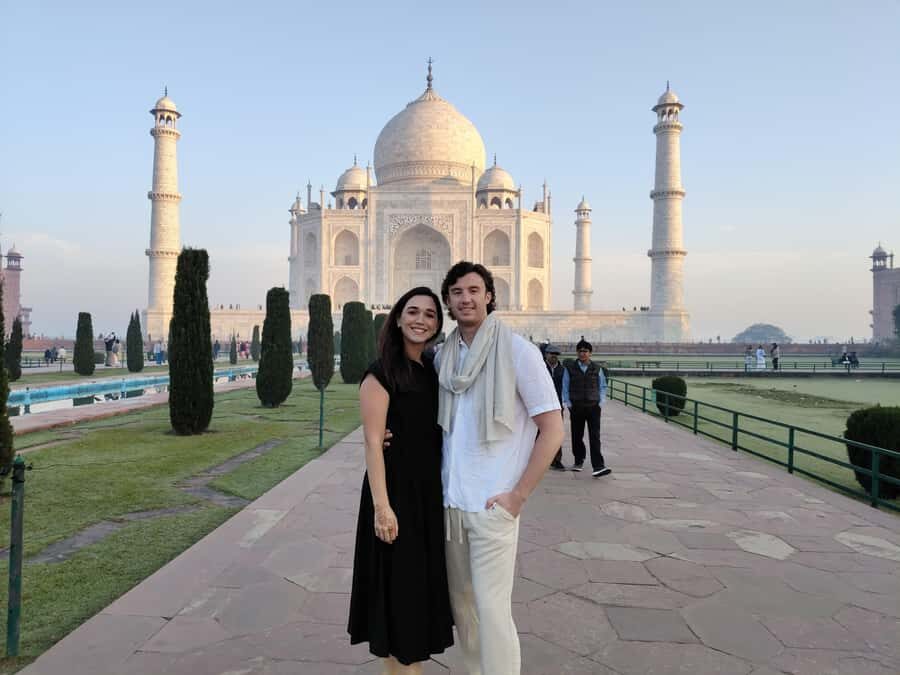
Day four is the centerpiece. You meet your guide at the hotel lobby at 5:45 AM, then head out for the sunrise Taj Mahal visit. The schedule sets aside about 30 minutes for getting there and taking everything in, and the Taj visit is listed for around two hours.
At sunrise, the Taj Mahal is described as taking on a pink hue, which is exactly the kind of detail you can appreciate when you’re not staring at it through the harshest part of midday glare. The key is that you’re not just visiting a monument—you’re matching your timing to what makes the Taj special.
This is also when I’d be most strategic with your time. Do the classic exterior views first, then use your guide time to focus on craftsmanship and layout. The tour description highlights the Taj’s hues across times of day and the fascination visitors have with its craftsmanship. Use that guidance to slow down for the parts you’ll remember later.
Practical note: mornings can feel cool early on even when the day warms up. Bring something light for before the sun climbs.



Fatehpur Sikri en route: a quick detour that adds meaning

After the sunrise Taj visit, you return to the hotel, freshen up, have breakfast, and then check out. Then the plan becomes “travel with purpose.”
You drive toward Ranthambore and include Fatehpur Sikri en route. This 16th-century Mughal site was Akbar’s capital for about 15 years before being abandoned, reportedly due to water scarcity. The stop is about an hour, which makes Fatehpur Sikri a high-value pause rather than a long detour.
Why it works in this itinerary: it’s a bridge between eras. Agra is about Mughal power expressed through major monuments, and Fatehpur Sikri shows the broader experiment behind empire-building. Then you move toward a completely different rhythm in Ranthambore.
After Fatehpur Sikri, you continue to Sawai Madhopur (the Ranthambore area), check into the hotel, and get the rest of the day free to relax.
Ranthambore Day 5: two safaris, one reality check, and more chances
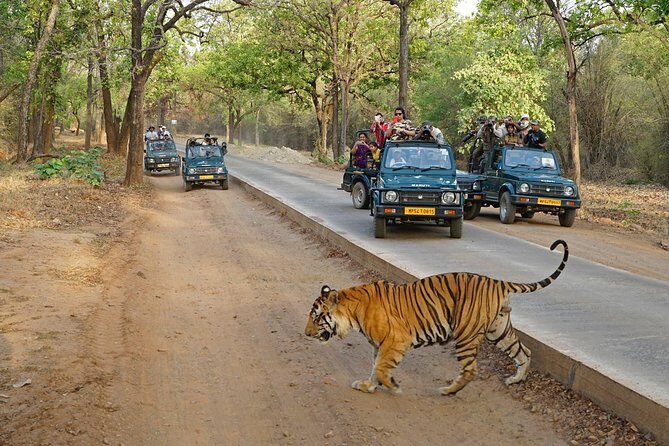
Morning safari picks you up between 5:30 and 6:00 AM and you go into Ranthambore National Park for the game drive (listed as around 6:00 AM), then you’re back around 10:30 AM for breakfast and rest.
Then comes the second attempt: afternoon safari at 2:30 PM, with a return around 6:30 PM. So you get two rides in daylight windows that make wildlife sightings more likely than a single outing—and you avoid the pressure of needing tiger luck on day one only.
Two important points to understand about value here:
- These are shared jeeps/canters. That means your sighting experience depends partly on how the group and vehicles position.
- Tigers are never guaranteed. The itinerary’s structure is designed to improve odds with a second safari rather than promising results.
For your comfort, plan around fatigue. Day 5 is the hardest day of the trip time-wise—early wake-up in the morning and a later return in the evening, then dinner and overnight in Sawai Madhopur.
If you’re photographing, bring a method for quick organization (lens cloth, basic padding, and a plan for where to store gear while moving between pickup and seats). Even without changing the route, small habits make the safari feel smoother.
Jaipur Day 6-7: temples, forts, and the photo stops that matter
After breakfast on day six, you drive to Jaipur (about three hours) and check into your hotel. The late afternoon includes guided exploration and a couple of high-recognition stops.
You’ll visit Galta Ji (Monkey Temple), known for sacred space and its spring-fed water tanks, plus the monkey population. Even if you’re not chasing temple details, it’s a memorable cultural contrast after Ranthambore.
You’ll also see Birla Mandir, a white marble temple dedicated to Lord Vishnu and Goddess Lakshmi. The stop is about 40 minutes, so it’s enough time to appreciate details without letting the day stretch too long.
Day seven is your deeper Jaipur day. You start after breakfast with Jaipur Fort (an example of Rajput architecture rising from rocky terrain), then a photo stop at Jal Mahal, the Water Palace on Man Sagar. Next is City Palace of Jaipur, the royal family residence complex with courtyards and a mix of Rajasthani and Mughal architecture.
Then you hit the landmarks that people travel for. There’s a photo stop at Hawa Mahal (Palace of Winds)—a five-story, honeycombed pink facade built in 1799—and an included visit at Jantar Mantar, a UNESCO site with geometric instruments designed to track movement of stars and planets.
This is a lot of stops, so here’s how to keep it fun instead of exhausting: treat Hawa Mahal and Jal Mahal as photos with purpose, not as long rests. Spend your longer attention on City Palace and Jantar Mantar, where the layout and meaning are easier to connect with during a guided explanation.
Also, watch your pace. Jaipur’s sightseeing runs best when you accept that it’s a busy two-day rhythm and you keep breaks short but real.
Day 8 departure: a clean finish
On day eight, you drive from Jaipur to Jaipur Airport or back to Delhi (about five hours). Then you’re dropped off at your preferred location in Delhi/Noida/Gurgaon or transferred to the airport/railway station.
This is a practical ending because you’re not doing one more “must-see” stop that steals your final morning. The tradeoff is simple: you’ll want to pack early enough the night before so you’re not rushed.
If you have a later flight, you can use day eight’s scheduled drive as buffer time rather than trying to squeeze in extra shopping. That keeps your trip from turning into a sprint.
Price, inclusions, and the extra $69 per person you should budget
At $799 per person, this tour is priced like a bundled multi-city trip: Delhi, Agra, Ranthambore, and Jaipur with guide support and hotel stays. The best value is the combination of:
- Transfers and sightseeing by air-conditioned vehicle
- Professional private city tour guides
- Breakfast included (listed as 7 breakfasts)
- Packaged water bottles during travelling and sightseeing
- Two game drives in Ranthambore by shared jeep/canter
That’s the structure that protects you from the biggest planning headaches in India: finding drivers, coordinating entry timing, and dealing with day-to-day logistics across multiple cities.
Your main additional cost is monument entry fees, listed as about $69 per person, and the tour also notes that anything not specifically mentioned as included is extra. In other words, you’ll want to carry cash or card ready for entry fees tied to the big sites.
Accommodation is another lever. You can upgrade to 3-, 4-, or 5-star options, which is useful if you want a quieter base between long sightseeing days. If you choose a lower star level, you should still expect comfort from the included package, but the upgrade is there for a reason.
Service quality is also part of the “value.” The trip’s reviews emphasize professionalism and standout driver support—names like Sonia and Shiva come up as excellent, which suggests the company takes day-to-day coordination seriously. When a schedule includes sunrise and safaris, that matters.
Should you book this Golden Triangle with Ranthambore?
If you want a classic India “highlights” route but also care about seeing tigers, I’d say this is a strong match. The sunrise Taj timing plus two Ranthambore safari shots is the heart of the itinerary, and those are exactly the moments most people remember.
I’d be cautious if you hate early mornings or if you dislike shared experiences. The safari drives are shared, and you’ll also pay extra for monument entry tickets. But if you can handle an early start and you budget for entry fees, the overall plan looks efficient and well organized for an eight-day window.
My final take: book it if you want structure, guide support, and practical transfers, with enough flexibility for a private group pace. If you prefer total independence, you might find other DIY options cheaper—but they usually cost more time and more stress than you expect.
FAQ
What is the price of the tour?
The tour price is $799.00 per person.
What’s included in the tour price?
Included items include hotels based on your selected 3-, 4-, or 5-star option, packaged water bottles, transfers and sightseeing by air-conditioned vehicle, professional private city tour guides, transport/parking/gas/tollways, two game drives in Ranthambore using shared jeep/canter, and breakfast (7).
Are monument entry tickets included?
No. Monument tickets are listed as $69.00 per person and anything not specifically included is extra.
Do I get round-trip transfers from Delhi?
Yes. The tour includes round-trip transfers from your Delhi departure points and drop-off at the end of the trip (either at your Delhi hotel, Delhi Airport, railway station, or your desired location in Delhi/Noida/Gurgaon).
How many Ranthambore safaris are included?
You get two game drives in Ranthambore National Park: one morning safari and one afternoon safari.
Is the Taj Mahal visit at sunrise?
Yes. On day four, you’ll meet your guide early and visit the Taj Mahal at sunrise.
What accommodation options are available?
You can upgrade accommodation to 3-, 4-, or 5-star hotels for the journey.
Is this tour private?
Yes. It’s listed as private, and only your group participates.
What is the cancellation policy for a full refund?
You can cancel up to 6 days in advance of the experience’s start time for a full refund (must cancel at least 6 full days before).
Is there a mobile ticket and is it easy to get to?
A mobile ticket is listed. The experience is also noted as near public transportation, and most travelers can participate.