REVIEW · NEW DELHI
5-Days Delhi Agra Jaipur Tour(Golden Triangle Tour)
Book on Viator →Operated by Jaipur Agra Delhi Tours · Bookable on Viator
Two sunrises set the tone here. This 5-day Delhi–Agra–Jaipur Golden Triangle tour moves fast, but it hits the big monuments at the right moments, including early light at the Taj Mahal. I love the step-by-step guiding that helps you connect Mughal-era power, Rajput design, and modern India in one trip, and I especially like the Old Delhi rickshaw ride that turns markets into something you can actually feel, not just read about.
The other big win is the ride itself: you get a private air-conditioned car with an experienced driver, so city-to-city travel stays easier than doing it on your own. One consideration: the schedule is packed, and entrance tickets are not included, with the Taj Mahal sunrise marked as not included—so you’ll want to budget for those.
In This Review
- Key Highlights You’ll Care About
- Golden Triangle in Five Days: How Fast It Really Feels
- Day 1 in New Delhi: Old Delhi Markets, Mughal Power, and Qutub Minar
- Day 2 in Agra: Red Fort with a Guide, Then Mahtab Bagh at Sunset
- Day 3: Taj Mahal Sunrise at 6am, Inside the Mausoleum, then Fatehpur Sikri to Jaipur
- Day 4 in Jaipur: Amber Fort, City Palace Museums, Jantar Mantar, and Two Iconic Photo Stops
- Day 5: Back to Delhi or Jaipur Airport with a Final Transfer
- Price and Value: Why $399 Can Make Sense (and When It Might Not)
- Service Quality: The Small Details That Matter
- Who This Delhi–Agra–Jaipur Tour Is Best For
- Should You Book This 5-Day Golden Triangle Tour?
- FAQ
- What cities are included in this Golden Triangle tour?
- Is the Taj Mahal sunrise included, and what time does it start?
- Are entrance tickets included in the tour price?
- What transport do I get during the tour?
- How are hotels and meals handled?
- Can I customize the itinerary?
Key Highlights You’ll Care About
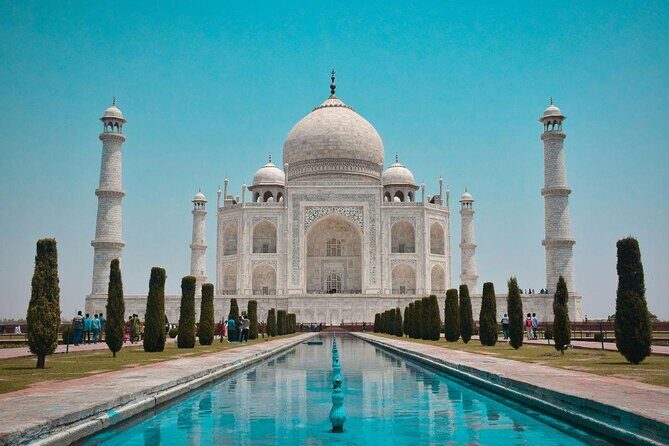
- Taj Mahal at sunrise (start time around 6am) with time inside the mausoleum
- Old Delhi on a rickshaw plus major stops like Jama Masjid and Raj Ghat
- Agra at golden light via Mahtab Bagh, often called the sunset point
- A full Jaipur day covering Amber Fort, City Palace, and Jantar Mantar
- Support from Sonia during trip issues, plus friendly, accommodating service across the board
- Private format where it’s your group only, in one vehicle with your chauffeur
Golden Triangle in Five Days: How Fast It Really Feels
This tour is built around a classic India loop: Delhi, Agra, Jaipur. In five days, that’s not “slow travel,” so set your expectations accordingly. You’ll be moving through neighborhoods, forts, gardens, and ceremonial spaces with a tight rhythm—yet the guide time is designed to help the sights make sense, not just pile up.
If you like your trips structured, this one works well. Each day has a clear spine: a morning highlight, a mid-day cultural anchor, and then the next city or major photo stops. You’ll see Mughal architecture in Delhi and Agra, then switch gears to Rajput design in Jaipur—without needing to plan trains, tickets, or route logistics yourself.
You can also read our reviews of more tours and experiences in New Delhi.



Day 1 in New Delhi: Old Delhi Markets, Mughal Power, and Qutub Minar
Your day starts with pickup from the airport or your location in Delhi / Noida / Gurugram, then it’s straight into Old Delhi. You begin at Jama Masjid, the big centerpiece mosque in India, and it’s the kind of stop that makes you notice how city layout, religion, and street life all connect. After that, you get a ride through the colorful lanes on a rickshaw—one of those experiences where the route matters as much as the destination.
Then the tour blends iconic “photo stops” with meaningful memorial and garden architecture. You’ll stop for pictures at Red Fort, visit Raj Ghat for Mahatma Gandhi’s memorial, and see the monumental government zone around India Gate and the Parliament House / President’s Palace area (photos mainly). The pace stays energetic, but it’s a smart mix: commercial Old Delhi first, then the national-symbol layer of New Delhi.
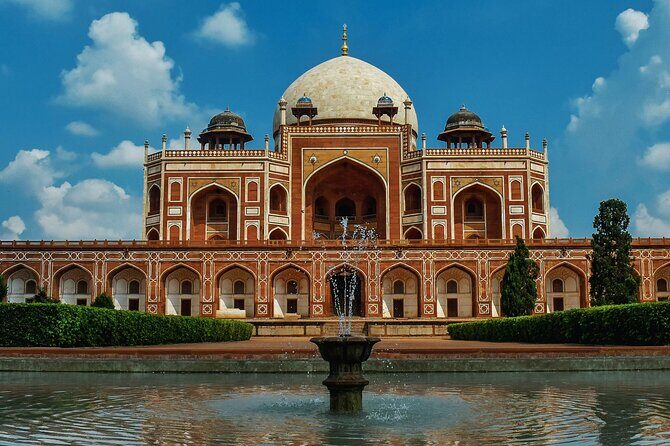
Two heritage sites close out the day in a strong way. You’ll visit Humayun’s Tomb, often described as an early, influential Mughal garden tomb, and then the Qutub Minar Complex, including Qutub Minar, one of Delhi’s most famous landmarks. If you want your trip to feel like India’s layers—imperial, colonial-era angles, and modern national identity—Day 1 is where that combo clicks.
Practical tip: Old Delhi mornings can be warm and crowded. Wear shoes you can walk in for a while, and keep water handy even if bottles are provided.
Day 2 in Agra: Red Fort with a Guide, Then Mahtab Bagh at Sunset
After breakfast, your driver picks you up and you head to Agra by private car. This is where the Golden Triangle really locks in: Agra is the Mughal city of tombs and forts, and today is about both history and viewcraft.
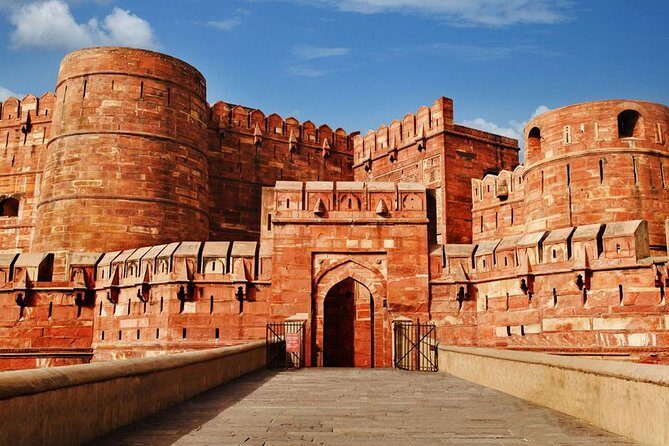
You arrive and check in, then start with the Red Fort in Agra. You’re not just looking at walls here—the guide helps you understand the Indo-Islamic architecture and why this complex matters. It’s a more complete experience than quick exterior sightseeing because you get time to explore the complex with context.
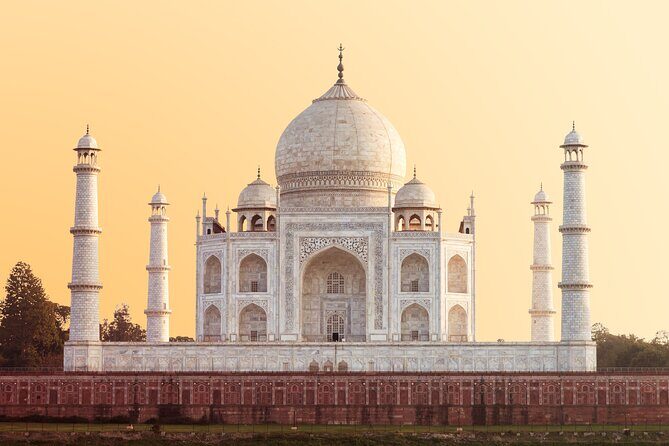
In the evening, you go to Mahtab Bagh, also known as the sunset point. It’s a popular place because the view angle lets you watch the Taj Mahal shift colors as the light changes. You’ll head back to the hotel after the tour, so you’re not forced to stretch the day late.
Practical tip: Sunset spots are great, but they also mean temperatures drop fast once the sun goes. Bring a light layer even in warmer months.
Day 3: Taj Mahal Sunrise at 6am, Inside the Mausoleum, then Fatehpur Sikri to Jaipur
If you’re choosing one “must be perfect” part of the trip, it’s this morning. Your guide and driver pick you up around 6am for a sunrise tour of the Taj Mahal. The idea is simple: go early enough to see the changing facade tones as the day begins, then take your time through the complex.
You explore the Taj Mahal grounds and also get to see the mausoleum from inside. That inside access changes the whole experience, because you start noticing how the design pulls your attention toward the central space. After that, you stroll the Gardens of Paradise area—again, the pacing here matters because it gives you time for photos without feeling rushed.
Breakfast comes after the morning return to the hotel. Then it’s check-out and a transfer to Jaipur, with an important stop on the way: Fatehpur Sikri. This is the preserved red stone ghost-town-like complex of Akbar’s era. The tour frames it as a “completely preserved” site and the stop is designed as a cultural bridge between the Mughal story in Agra and the Rajput kingdom story in Rajasthan.
Once you reach Jaipur, you stay overnight. That matters because Jaipur is a different kind of energy—more markets, more fort silhouettes, and more places designed for viewing and display.
Day 4 in Jaipur: Amber Fort, City Palace Museums, Jantar Mantar, and Two Iconic Photo Stops
Jaipur is where your trip shifts from Mughal monumentality to Rajput design. After breakfast, you meet your private guide and head straight to Amber Fort, once the capital of the Jaipur state before the walled city took over. The fort experience is about scale and style—so expect to spend real time walking areas that feel built for power and ceremony.
Next is City Palace, where you’ll find museums covering textiles, costumes, arms, weapons, and paintings. This is one reason Jaipur works well in a guided format: you’re not just seeing buildings, you’re learning what people wore, used, and collected.
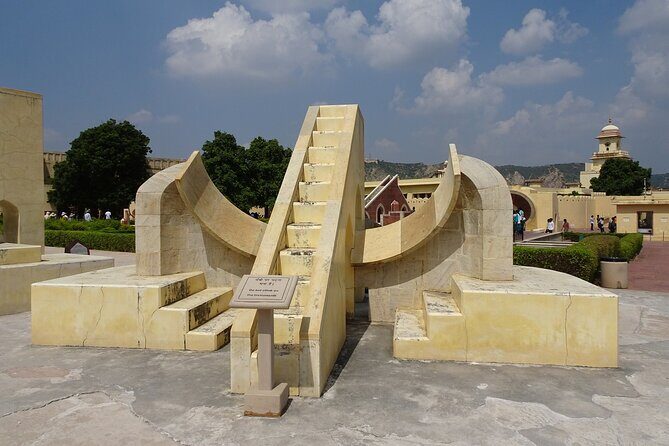
Then comes Jantar Mantar, described here as India’s largest observatory. Even if you’re not a “science museum person,” the bigger point is that these instruments connect math, astronomy, and statecraft. Your guide time helps make those shapes and structures feel more than decorative stonework.
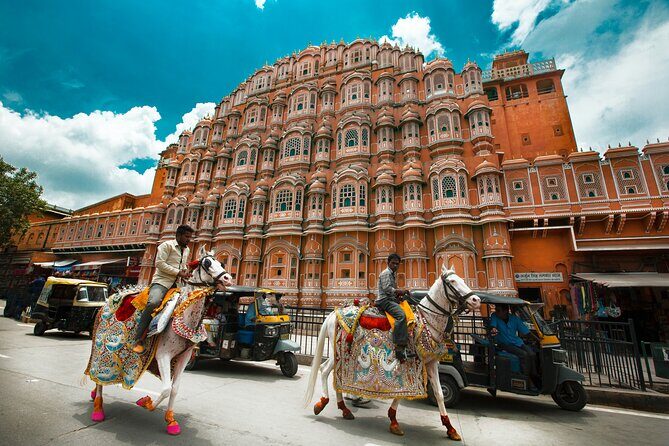
For photos, you’ll stop at Hawa Mahal (Wind Palace) and Jal Mahal (Water Palace). Both are visually striking for different reasons: one is about the facade and ventilation design, and the other is about the watery setting that makes it look like it’s floating.
After that, you return to the hotel for an overnight stay. It’s a good finish because Jaipur days can be tiring—bright light plus walking plus crowds adds up fast.
Practical tip: These photo stops still mean walking and waiting in traffic zones. Build in a little patience, and keep sunglasses and sunscreen in your day bag.





Day 5: Back to Delhi or Jaipur Airport with a Final Transfer
Your fifth day is the wrap-up day. After breakfast, you travel back to your location in Delhi or, if you prefer, to Jaipur Airport. This flexibility is useful if your flight plans don’t line up neatly with a return to your Delhi base.
The day itself is shorter—about 5 hours—so you’re not ending the trip exhausted. It’s a good way to keep energy for packing, last meals, or simply unwinding after five days of moving across three cities.
Price and Value: Why $399 Can Make Sense (and When It Might Not)
At $399 per person, this tour is priced in the range where you’re paying for convenience: private transfers, hotel nights, and organized guiding across all three cities. The value is strongest if you’d otherwise have to rent cars, coordinate drivers, and buy separate tours for sunrise Taj Mahal, Old Delhi orientation, and the Jaipur heritage day.
What you’re getting for that price:
- Pickup and drop included
- A private air-conditioned vehicle with a driver
- Hotel stays in 3/4/5 star options (based on your selection)
- Guides for the key sightseeing blocks
- Water bottles
- Breakfast included (4 times)
What may add cost:
- Entrance tickets are not included. The Taj Mahal sunrise day is specifically marked as not included. So you’ll want to budget for at least major entries.
Here’s how I’d think about it: if your priority is seeing the Golden Triangle highlights in a tight, guided way without dealing with ticket lines, transport puzzles, and route changes, the package price can feel fair. If you’re the type who wants total freedom and already plans your own bookings, you might find it cheaper to DIY. But most people hate the coordination headaches—this tour removes them.
Service Quality: The Small Details That Matter
The strongest theme from the experience feedback is service that feels human and practical. You get the impression that the company organizes the trip as a system, not just a list of stops.
I’d call out three service signals:
- Sonia’s support when plans went sideways or emergencies popped up. That kind of responsiveness matters most when you’re tired and language barriers exist.
- Drivers described as accommodating and helpful, which matters on long travel days between Delhi, Agra, and Jaipur.
- Guides described as friendly with good on-site guidance, which you feel most during the Taj Mahal sunrise morning and the fort/observatory explanations later.
Also, the structure itself helps: pickup, private car, and hotel check-ins are bundled together. That reduces the “where do I go next?” stress that can drain the fun out of a short trip.
Who This Delhi–Agra–Jaipur Tour Is Best For
This works best if you want:
- A guided Golden Triangle with multiple major sites each day
- The sunrise Taj Mahal experience timed for early light
- Private transport so you’re not wrestling buses or transfers
- A trip that’s structured enough to be easy, but flexible enough that you can customize interests city-wise
It might be less ideal if you prefer slow mornings with no scheduled touring and no early starts. This tour leans into efficiency, and early-day Taj Mahal sunrise is built in.
It also suits couples, friends, and small groups who want a private format where it’s only your group in the vehicle.
Should You Book This 5-Day Golden Triangle Tour?
If you’re planning your first Delhi–Agra–Jaipur trip and you want the classic highlights done well, I’d say yes—with one important caveat: make sure you budget for entrance fees since they’re not included. Then focus on the timing advantages: sunrise Taj Mahal, a strong Old Delhi orientation day, and a Jaipur day that covers both forts and observatories.
If your biggest goal is a comfortable, organized experience with responsive help (especially if your schedule shifts), this package reads like a good match. And if you’re chasing the best versions of the iconic photos—Taj Mahal early, Mahtab Bagh at sunset—this itinerary is built around those moments instead of just sprinkling them at random times.
FAQ
What cities are included in this Golden Triangle tour?
The tour covers New Delhi, Agra, and Jaipur over about 5 days.
Is the Taj Mahal sunrise included, and what time does it start?
Yes. The itinerary includes a sunrise Taj Mahal visit with pickup around 6am.
Are entrance tickets included in the tour price?
No. The tour lists entrance tickets as not included, and the Taj Mahal day is marked as not included for admission.
What transport do I get during the tour?
You travel in a private air-conditioned vehicle with an experienced licensed driver, including transfers between cities.
How are hotels and meals handled?
Hotels are included (with 3/4/5 star options based on your selection). Breakfast is included 4 times.
Can I customize the itinerary?
Yes. The itinerary can be customized city wise based on your interests.
If you want, tell me your travel month and where you’re starting from (Delhi hotel vs airport), and I’ll suggest how to plan your daily energy—especially around the early Taj Mahal morning.