REVIEW · NEW DELHI
2-Days Private Delhi and Agra Taj Mahal Tour ( Overnight in Agra)
Book on Viator →Operated by Markable Joy · Bookable on Viator
Sunrise at the Taj changes the pace. This private 2-day Delhi and Agra trip packs Taj Mahal sunrise plus major Mughal-era sights, with one night in Agra. I like the private A/C car transfers with pickup across Delhi-NCR, and I also like that breakfast and key monument fees are bundled. The main thing to watch: some Delhi stops note tickets as not included, so confirm what your chosen option covers.
You’ll skip the usual bus-and-train scramble and keep your day moving with a driver and guide. Day 1 is a strong mix: Jama Masjid and Chandni Chowk spices, the Red Fort area, Gurudwara Bangla Sahib, then photo stops around India Gate and the official residences. It’s a lot of stops, so if you’re the type who likes to linger, build in extra time at the front end.
Day 2 starts early at 5:45 AM for sunrise viewing, then you’ll hit the big Agra trio: Taj Mahal, Agra Fort, and Itmad-ud-Daula. The tradeoff is simple: you’re on the move most of the day, so plan for travel time and early mornings.
In This Review
- Key highlights that make this tour worth your time
- Price and logistics: what $80 per person really buys
- Your private ride across Delhi-NCR (and why it matters)
- Day 1 in Delhi: the opening hits (Jama Masjid, spices, and the Red Fort area)
- Gurudwara Bangla Sahib and India Gate: short stops that add balance
- Humayun’s Tomb vs Akshardham: choose the flavor you want in Delhi
- Qutub Minar and Lotus Temple: a UNESCO pairing with different vibes
- The drive to Agra and your overnight advantage
- Taj Mahal sunrise: meeting at 5:45 AM and how to plan for it
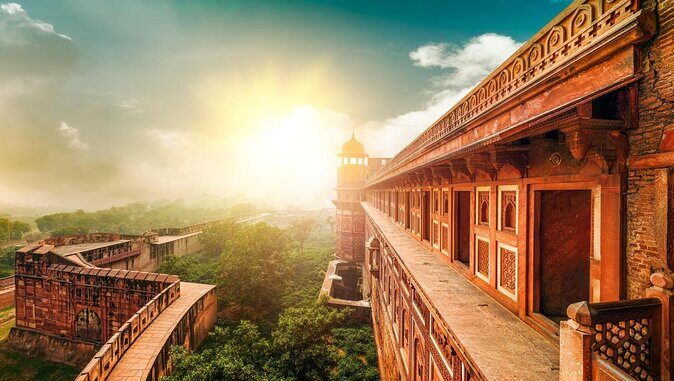
- Agra Fort: big Mughal walls and a clear story of power shifts
- Itmad-ud-Daula: the quieter tomb that shows a design transition
- What’s included (and what you should double-check before you go)
- Who this tour suits best (and who might want a different style)
- Guides and drivers: the human factor that turns monuments into stories
- Should you book this 2-day Delhi and Agra tour with overnight in Agra?
- FAQ
- What is the duration of the tour?
- Where is pickup and drop-off available?
- Is there an overnight stay?
- What time do you meet for the Taj Mahal sunrise?
- How long do you spend at the Taj Mahal?
- Are monument entry fees included?
- Are meals included?
- Is this a private tour?
- Is free cancellation available?
Key highlights that make this tour worth your time
- Private A/C car with pickup and drop anywhere in Delhi, Noida, Gurugram, Ghaziabad, and Faridabad
- One night in Agra with breakfast, so you don’t waste your limited time commuting
- Taj Mahal sunrise meeting at 5:45 AM, built into the schedule for better light and atmosphere
- Photo inclusion at Taj Mahal (5 photos), plus bottled water during the tour
- Delhi and Agra in 2 days, ideal for first-timers who want the headline monuments without logistics stress
- Your route can be customized, so you can trade time between major Delhi sights
Price and logistics: what $80 per person really buys
At $80 per person for two days, the real value isn’t just that you’re seeing famous monuments. You’re buying a bundle: private car transfers, an overnight in Agra with breakfast, and a schedule that runs point-to-point instead of you figuring out transport on your own.
Also worth noting: the tour lists monument fees as included for the option chosen, and it separately mentions that attraction entry fees are included so you don’t get surprise charges. Still, the itinerary has several entries marked as admission tickets not included. That doesn’t mean the tour is bad—it means you should confirm exactly which monument fees are covered when you book, especially for Delhi stops like Jama Masjid, Red Fort, Humayun’s Tomb, and Qutub Minar.
The other logistics perk is where you’ll start and end. You’re picked up across Delhi-NCR and dropped at New Delhi airport or railway station after the Agra portion. That saves you time and helps you line up your onward plans.
You can also read our reviews of more private tours in New Delhi


Your private ride across Delhi-NCR (and why it matters)
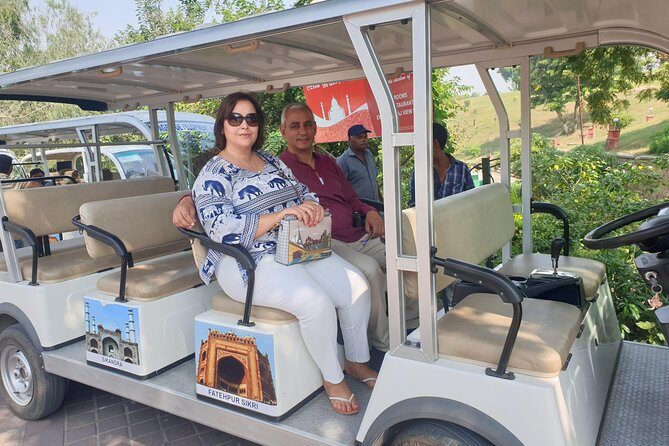
Delhi is the kind of city where getting around can feel like a second job. This tour cuts that stress by using a private A/C car and arranging pickup and drop across Delhi, Noida, Gurugram, Ghaziabad, and Faridabad.
In plain terms: you won’t be hunting platforms, timing trains, or coordinating multiple rides just to see one monument. You meet your driver and guide after pickup, and the day is designed to flow from one stop to the next.
The car also makes a difference for comfort during the longer stretches—especially between Delhi landmarks and the drive down to Agra. You’ll still be in a vehicle a lot (this is a 2-day whirlwind), but you’ll be doing it in a way that feels planned rather than chaotic.
Day 1 in Delhi: the opening hits (Jama Masjid, spices, and the Red Fort area)
Your first real stop is Jama Masjid, India’s largest mosque. It’s the kind of place where the scale hits immediately: a huge red-sandstone courtyard and a grand complex built in 1656 with the help of 5,000 workers. Plan to walk, pause for photos, and enjoy how the architecture frames the street life around it.
Then comes Chandni Chowk, the spice-and-market side of Delhi. This part is less about a single monument and more about sensory overload—in a good way. The tour sets you up to experience Indian spices up close, with a guide sharing uses and fun facts so you’re not just staring at jars.
Next is the Red Fort (Shah Jahan, 1639–1648), the massive Mughal stronghold that served as the Mughal emperors’ main residence. Even if you only get a portion of the fort experience, you’ll get context for why this site matters: Indo-Islamic and Mughal architectural influences show up in the way the fort is laid out.
One caution for Day 1: it’s packed. If you’re easily tired by crowd flow and walking, you’ll want to pace yourself at Jama Masjid and the Red Fort zone. A tour like this moves fast by design, so you’ll enjoy it most if you’re happy with big-picture sightseeing.
Gurudwara Bangla Sahib and India Gate: short stops that add balance
You get a quick detour to Gurudwara Bangla Sahib, typically about 30 minutes. It’s a Sikh place of worship and a famously calm spot amid the city’s motion. A key story shared here is that in 1664 the eighth Sikh Guru visited during a smallpox and cholera epidemic, distributing water from the tank that helped people recover. It’s a nice reminder that Delhi’s religious sites aren’t just architecture—they’re tied to living community history.
From there, you visit India Gate briefly, around 15 minutes. This war memorial for the Tomb of the Unknown Soldier has names carved on the walls: 13,300 Indian army servicemen who died during World War I. It’s short, but it gives you a different lens on the city than the Mughal monuments.
The tour also drives past and lets you photograph Parliament House and President’s House. It’s not a long museum-style stop, but the photos are useful if you want to understand modern India’s layout alongside the older empires you’re touring.
Humayun’s Tomb vs Akshardham: choose the flavor you want in Delhi
This part of the schedule can shift depending on timing and your option. You’ll either visit Humayun’s Tomb or Swaminarayan Akshardham.
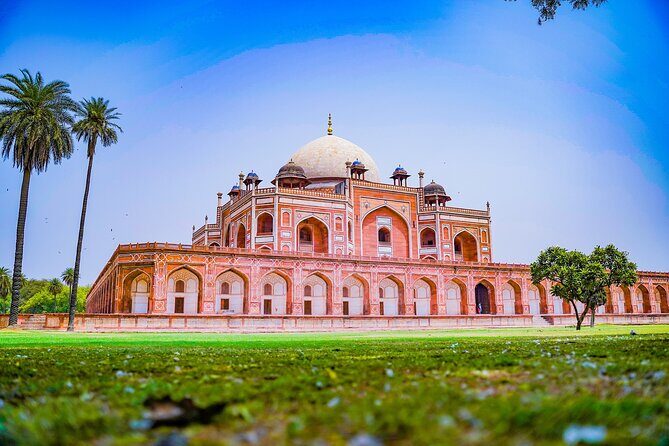
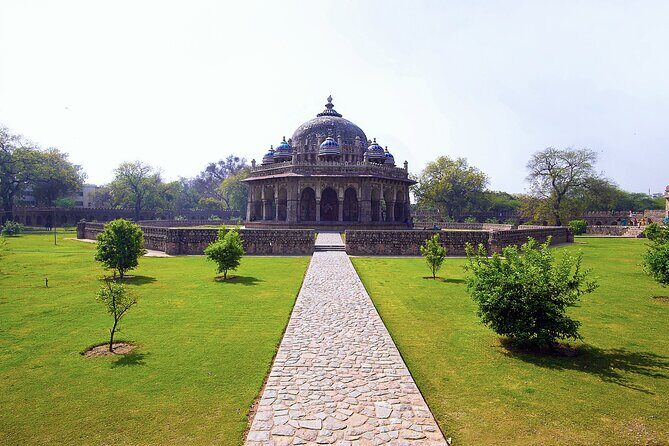
Humayun’s Tomb is UNESCO-listed and considered the first garden tomb of India. It’s also tied to a personal story: it was commissioned after Humayun’s death, with the motivation linked to his wife. Even if you only have about an hour, you’ll notice how the garden design organizes the whole experience.
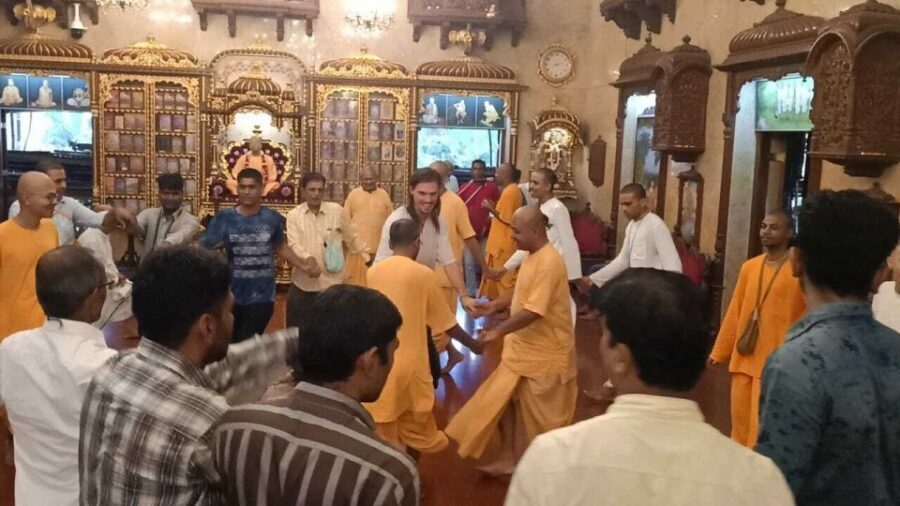
Akshardham is the other side of the Delhi coin. It’s one of the biggest Hindu temples, constructed in 2005, but it’s designed so it feels like it belongs to a far older era through its architectural style. The tour lists it as about an hour, and admission is listed as free.
If you want a more historically grounded feel, Humayun’s Tomb tends to satisfy that. If you want something that feels like a full-scale cultural complex—bigger, newer, and visually dramatic—Akshardham is the one.
A few more New Delhi tours and experiences worth a look






Qutub Minar and Lotus Temple: a UNESCO pairing with different vibes
You end the Delhi day with two very different landmarks.
First is Qutub Minar, part of the Qutub UNESCO World Heritage Site. It’s the tallest minaret, built starting in 1192 with bricks. This is one of those sites where the details matter: you’re looking at a landmark that has survived centuries of weather, politics, and change, and it’s surrounded by other ruins and historic structures.
Then comes Lotus Temple, about an hour. It’s a Bahá’í House of Worship dedicated in December 1986. Its flower-like shape is iconic, and it’s listed as admission free. If your day is heavy on stone and empire stories, Lotus Temple is a nice reset—more peaceful, more open, and very photogenic.
The drive to Agra and your overnight advantage
After Day 1’s Delhi circuit, you’ll drive to Agra and overnight there. This is one of the smartest choices in the whole itinerary. Instead of trying to do Delhi in the day and Agra late at night, you sleep in Agra and start Taj Mahal on Day 2 with a real early start.
Overnight in Agra also helps with pacing. You’re less likely to feel like you’re stealing time from the experience, and more likely to enjoy it at a human speed—especially at sunrise.
Taj Mahal sunrise: meeting at 5:45 AM and how to plan for it
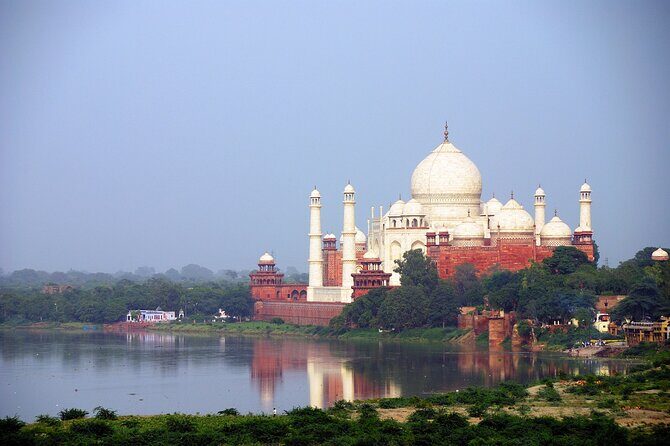
Day 2 starts the moment most people in Delhi are still in sleep mode. You meet your private guide in the hotel lobby at 5:45 AM to go for sunrise at the Taj Mahal.
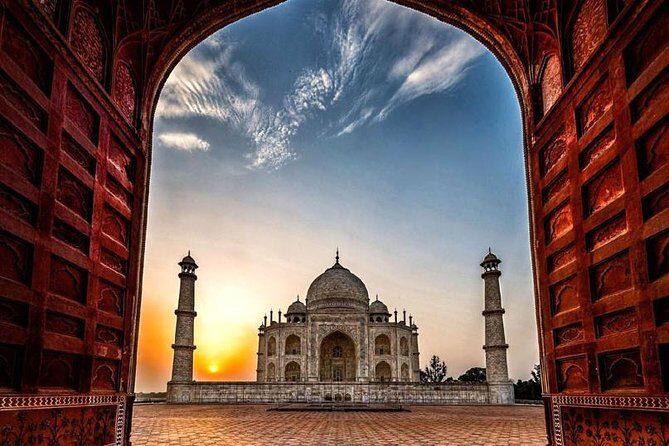
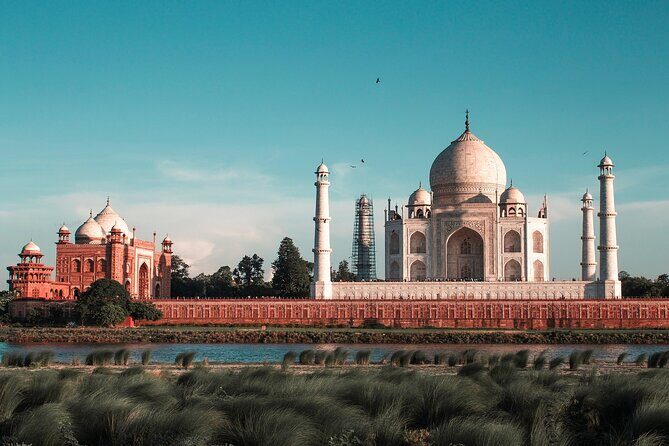
This is the centerpiece stop, and the reason is simple: the Taj Mahal looks extraordinary in early light. The tour frames it as the symbol of eternal love of Shah Jahan, built in marble on the Yamuna’s right bank. It also notes the Taj was commissioned in 1632 by Shah Jahan.
Plan on spending about 3 hours here. That’s enough time to see it from different angles and not feel like you’re rushing through because the light is changing too fast. You also get 5 photos in the Taj Mahal area, plus bottled water during the day.
Real talk drawback: sunrise means you’ll feel the early alarm. Bring something light you can wear and a mindset that the first hour is for the view—not for selfies and shopping.
Agra Fort: big Mughal walls and a clear story of power shifts
After the Taj, you’ll move to Agra Fort, around one hour. This fort served as the main residence of Mughal emperors until 1638, when the capital shifted from Agra to Delhi.
Even in a short visit window, Agra Fort helps connect the dots. You’re going from the Taj’s romance and marble symbolism to the fort’s political reality—power, control, and the way empires lived day to day.
This is also a good stop if you want variety: the Taj is all about white marble and gardens; Agra Fort is heavier, fortress-like, and more about scale.
Itmad-ud-Daula: the quieter tomb that shows a design transition
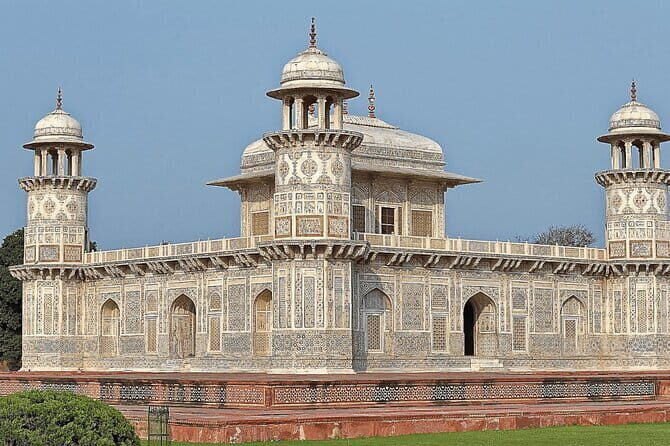
Your final major sightseeing stop is Itmad-ud-Daula, about an hour. It’s described as a masterpiece of domeless Mughal tomb style. The tour also points out that it’s the first building finished in white marble and marks a transitional phase from red stone to white marble.
This stop is underrated for people who love details. You’ll get a sense of how Mughal architecture evolved, especially in the move toward more refined marble work. It’s also a relief after the Taj’s intense emotional pull—you’re switching to craftsmanship and design evolution.
What’s included (and what you should double-check before you go)
Here’s what the tour includes, based on the provided details:
- Breakfast (with your Agra overnight stay)
- Pick-up and drop-off within Delhi, Noida, Gurugram, Ghaziabad, and Faridabad
- Private A/C car for sightseeing from pickup to drop-off
- All taxes, fuel surcharge, and parking fees
- Complimentary water bottle
- 5 photos in Taj Mahal
- Monument fees included depending on the option chosen
What’s not included:
- Tip and gifts
- Meals (beyond breakfast)
The tricky part is monument fees. The itinerary labels several stops as admission ticket not included. At the same time, the package says monument fees are included for the option chosen and that attraction entry fees are included. That’s why I recommend confirming your exact inclusions when you book—especially for Day 1 ticket-heavy sights like Jama Masjid, Red Fort, and Qutub Minar.
Who this tour suits best (and who might want a different style)
This tour fits you best if you:
- Want a Delhi–Agra highlight tour in only 2 days
- Prefer private transfers over buses and trains
- Like sunrise experiences and want Taj Mahal at the start of the day
- Are okay with a packed schedule and short, focused time at each stop
You might consider a slower, more flexible plan if you:
- Hate early mornings
- Want deep time at one site (not just a strong overview)
- Know you’ll want extra time in markets like Chandni Chowk
This tour is also clearly set up for small groups. It’s private, meaning only your group participates. That can make the experience feel calmer and more personal than typical group tours.
Guides and drivers: the human factor that turns monuments into stories
The quality of a tour like this often comes down to interpretation, not just transport. In this route, guides and drivers are repeatedly recognized for making the sites click culturally and historically.
On the Delhi side, names like Imran and Yogi show up in standout experiences, with Babban also praised as a driver who helped keep things smooth. On the Agra side, Shein is specifically mentioned as an excellent guide, and Anou is named as a Delhi guide in another experience.
You’ll feel that difference most at the stops where the facts matter—Humayun’s Tomb’s story, the meaning behind India Gate’s names, and why the Taj Mahal became such a symbol. With a good guide, you spend less time trying to translate what you’re seeing.
Should you book this 2-day Delhi and Agra tour with overnight in Agra?
If you’re short on time and you want the big hits without the transport headache, this is a strong choice. The combination of private A/C transfers, an overnight stay in Agra, and the 5:45 AM Taj Mahal sunrise timing is the core reason it works.
I’d book it if you can answer one quick question before you pay: which monument tickets are included in your exact option? If you confirm that, you’ll avoid budget surprises and can enjoy the trip for what it is—a fast but meaningful route through Delhi’s major landmarks and Agra’s iconic sights.
FAQ
What is the duration of the tour?
The tour runs for about 2 days.
Where is pickup and drop-off available?
Pickup and drop-off are available in Delhi, Noida, Gurugram, Ghaziabad, and Faridabad. After the tour you’ll be driven to New Delhi airport or railway station.
Is there an overnight stay?
Yes. The tour includes one night’s accommodation in Agra, plus breakfast.
What time do you meet for the Taj Mahal sunrise?
You meet your private guide at 5:45 AM in the hotel lobby for sunrise at the Taj Mahal.
How long do you spend at the Taj Mahal?
The Taj Mahal visit is listed as about 3 hours.
Are monument entry fees included?
Monument fees are listed as included for the option chosen, and the tour also says attraction entry fees are included to avoid costly surprises. However, the itinerary marks some Delhi stops with admission tickets not included, so it’s smart to confirm what’s covered for your option.
Are meals included?
Only breakfast is included. Meals other than breakfast are not included.
Is this a private tour?
Yes. It’s private, and only your group will participate.
Is free cancellation available?
Yes. You can cancel up to 24 hours in advance for a full refund.