REVIEW · JAIPUR
2 Days Jaipur: Amber Fort, Hawa Mahal Tuk-Tuk Tour
Book on GetYourGuide →Operated by Nahargarh Travels · Bookable on GetYourGuide
A tuk-tuk day in Jaipur keeps you moving without feeling rushed. I like the practical route that strings together major monuments (Amber Fort, City Palace, Hawa Mahal, Jantar Mantar) plus smart side stops like Panna Meena Ka Kund. I also like that you get a driver who acts as a guide, so you’re not stuck decoding everything alone. The main drawback to consider is simple: you’re depending on the tuk-tuk and driver to keep the schedule rolling, and if anything goes wrong you’ll feel it.
Jaipur at street level is where the city makes sense: markets, turns, photo stops, and those sudden views over forts and palaces. This tour is priced at about $7 per person, which is great on paper, but you’ll still want to budget for monument entry fees since they’re not included.
In This Review
- Key Highlights to Know Before You Go
- What the Tuk-Tuk Tour Actually Feels Like in Jaipur
- Amber Fort, Jaigarh Fort, and Nahargarh Fort: Fort Views Without the Confusion
- Panna Meena Ka Kund and Jal Mahal: The Stops That Break Up the Big Names
- Panna Meena Ka Kund step-well
- Jal Mahal photo moment
- Hawa Mahal to City Palace: Architecture You Can Actually See
- Hawa Mahal (Palace of Winds)
- City Palace
- Jantar Mantar: The UNESCO Stop That Isn’t Just a Photo Stop
- Albert Hall Museum and Birla Mandir: Slower Stops for a Full Day
- Gaitor Ki Chhatriyan: A Meaningful Pause Between Major Stops
- Local Markets and a Real Lunch Break: How to Use Your Free Time
- Driver + Guide Factor: Safety, Language, and the Human Side
- Price and Entry Fees: Getting the Real Value
- What to Pack and How to Make the Day Comfortable
- Who This Tour Suits Best
- Should You Book This 2-Day Jaipur Tuk-Tuk Tour?
- FAQ
- What time does the tour start and end?
- Is hotel pickup and drop-off included?
- Which major attractions are included?
- Are entry fees for monuments included?
- Does the tour include meals?
- Is bottled water provided?
- What are the photography rules?
- Can I cancel for a refund?
- What languages can the driver guide in?
Key Highlights to Know Before You Go
- Tuk-tuk city circuit that links major monuments with short, efficient rides
- Amber Fort + courtyards and viewpoints with a guide to explain what you’re seeing
- UNESCO-listed Jantar Mantar for serious astronomy with an easy-to-understand walkthrough
- Panna Meena Ka Kund step-well: a quieter stop with a strong sense of place
- City Palace and Hawa Mahal: royal architecture made for photos and close-up details
- More forts than you expect: Jaigarh, Nahargarh, and Gaitor Ki Chhatriyan in the same day
What the Tuk-Tuk Tour Actually Feels Like in Jaipur
This is not a sit-down bus tour. You’re in a tuk-tuk for the day, hopping between stops with enough time to look, take photos, and listen without spending the whole day parked.
The flow is built around your morning starting at 8:30 AM with pickup from your hotel area, then finishing around 5:30 PM. That timing matters in Jaipur. You’ll catch cooler morning light for the forts and palaces, and later you’ll be in the city when the streets and shops are active. If you’re the type who likes to see a lot but also wants to move at a human pace, this format can work well.
One more practical note: you’re walking at several stops, including uneven areas at fort sites. Comfortable shoes are non-negotiable. If your back is sensitive, take that seriously too, because this kind of day includes stairs, slopes, and ground changes.
A few more Jaipur tours and experiences worth a look



Amber Fort, Jaigarh Fort, and Nahargarh Fort: Fort Views Without the Confusion
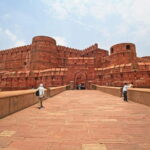
Amber Fort is the headline, and it earns it. You’ll go up to the hilltop complex and spend about 1.5 hours with a guide. The fort’s courtyards and carved details make a lot more sense when someone points out the “why” behind the layout—how power worked, how space was organized, and why certain viewpoints were prized.
What I like about starting with Amber Fort early is the light and the energy. You’re not only looking at stone and gates—you’re seeing Jaipur’s layout. From the fort, the city feels like it’s built around the forts, not the other way around.
Then the plan keeps momentum with additional fort photo stops and guided time at Jaigarh Fort and Nahargarh Fort. These spots give you variety:
- Jaigarh tends to feel more about the fortifications and the defensive mindset.
- Nahargarh adds a different angle over the hills and city views.
You don’t get to “wander forever” at each place (that’s not how this tour is designed), but you do get enough guided time to make the visit feel intentional.
Panna Meena Ka Kund and Jal Mahal: The Stops That Break Up the Big Names
If your Jaipur day is all big-ticket stops, it can feel repetitive. This route adds stops that change the mood.
Panna Meena Ka Kund step-well
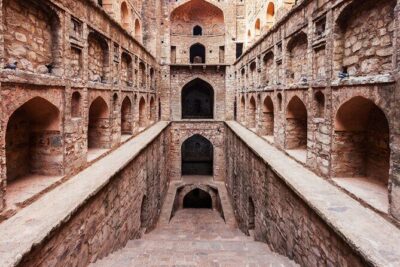
Panna Meena Ka Kund is an ancient step-well and it’s worth treating as more than a quick photo stop. You’ll have around 25 minutes here, with time for a look and a guided explanation of the site’s story. Step-wells are a clever mix of engineering and daily life, and this one gives you a different side of Rajasthan beyond forts and palaces.
Jal Mahal photo moment
Jal Mahal is the palace sitting out on the water in a way that looks almost unreal. You’ll get about 25 minutes for photo time and sightseeing. It’s short, but if you focus your camera on angles that catch the reflection and the surrounding shoreline, it turns into one of the best “wow” moments of the day.






Hawa Mahal to City Palace: Architecture You Can Actually See
After the fort area, the tour transitions into Jaipur’s royal center, and this is where the city’s face becomes very recognizable.
Hawa Mahal (Palace of Winds)
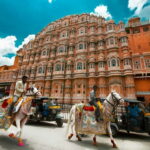
You’ll visit Hawa Mahal with about 30 minutes guided. The highlight is the honeycomb design with 953 intricately carved windows. Even if you’ve seen photos, standing in front of it helps you understand the design idea: air, light, and the way a building can act like a visual screen.
Practical tip: treat this as a close-up architecture stop. Move slowly, look up, and don’t just shoot one wide photo. The repeating window patterns are what make it special.
City Palace
Next comes City Palace, where you’ll spend about 1.5 hours with a guide. The palace complex includes multiple sections such as Mubarak Mahal, Chandra Mahal, Diwan-I-Khas, and the Maharani Palace. That’s a lot of names, but the benefit of having a guide is that you’re not memorizing labels—you’re connecting them to spaces and functions.
City Palace can feel like a “museum plus palace” in one, and that’s exactly the point. You’re seeing how the royal family lived alongside how the palace displayed power.
Jantar Mantar: The UNESCO Stop That Isn’t Just a Photo Stop
Jantar Mantar is UNESCO-listed, and you’ll spend about 45 minutes guided. This is one of the few places in Jaipur where the explanation really matters.
You’re looking at astronomical instruments designed to measure positions and track time using the sky. From a distance, it can look like a collection of unusual stone shapes. With a guide, it turns into a story about observation—how ancient tools turned the heavens into something measurable.
This is also a good stop if you like learning while you travel. You’ll get facts, but the bigger value is understanding why the instruments are shaped the way they are.
Albert Hall Museum and Birla Mandir: Slower Stops for a Full Day
The day doesn’t end at the forts and palaces. You’ll also have time for:
- Albert Hall Museum with about 1 hour guided time (plus a photo stop).
- Birla Mandir with about 30 minutes guided time.
These are good for balancing the schedule. Forts are dramatic, and palace architecture is grand, but museums and temples slow you down a bit. They’re a chance to step back, take photos with less strain, and refocus.
If you’re traveling with people who get tired of stone-heavy visits, these stops can help the day feel less like a checklist.
Gaitor Ki Chhatriyan: A Meaningful Pause Between Major Stops
Between the big royal and city center moments, you’ll visit Gaitor Ki Chhatriyan (about 25 minutes with guided time). It’s a quieter kind of site, and that matters in a long day.
This stop gives you a change of pace—more reflective than showy. If you’re the type who enjoys atmosphere, it helps break up the adrenaline of constant sightseeing.
Local Markets and a Real Lunch Break: How to Use Your Free Time
There’s a built-in break in the middle of the day—about 2 hours for lunch and shopping. This is where you can steer the experience.
If you like crafts, textiles, and small souvenirs, this is the moment to do it. Jaipur is known for handicrafts and jewelry, and the market time is your chance to compare prices and pick what you genuinely want to carry home.
For lunch: meals are not included, so use the break to find something that fits your comfort level. I’d also keep water in mind. The tour includes bottled water, but a hot Rajasthan afternoon can still surprise you.
Driver + Guide Factor: Safety, Language, and the Human Side
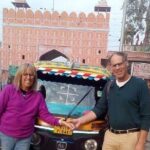
One of the biggest strengths here is that your driver functions as a guide. The tour notes that the driver is English, Hindi, French, Spanish, Japanese, Dutch, and German, so you should be able to get meaningful explanations in your preferred language.
You’ll also feel the difference between a driver who just transports you and one who helps you understand where to look. I saw this particularly in how tours like this work in practice: when someone knows the best way to reach the next spot efficiently, you lose less time and your day feels smoother.
That said, there’s a reality you can’t ignore. A previous experience highlighted a problem with tuk-tuk condition and unexpected delays. Even if that’s not your situation, it’s worth planning like the vehicle is the single weak link. The best defense is mental flexibility: build in patience, and don’t schedule anything tight immediately after the tour.
Price and Entry Fees: Getting the Real Value
At around $7 per person, the transportation, pickup/drop-off, driver guidance, and included supplies (like bottled water) can feel like a steal. You also get things like parking charges and taxes listed as included, which reduces surprise costs.
But entry fees are not included for multiple major sites—Amber Fort, City Palace, Hawa Mahal, Jantar Mantar, Albert Hall Museum, and more. That means your final total depends on what you enter and how the day is handled on the ground.
My approach: treat the $7 as the transport + guide deal, and budget an additional amount for monument access. If you’re trying to travel ultra-budget, you’ll still likely pay those fees, but you’ll at least know what you’re buying: access to major sites without the hassle of coordinating everything yourself.
What to Pack and How to Make the Day Comfortable
You’ve been warned, and it’s correct: the day includes walking, sun, and photography stops.
Bring:
- Comfortable shoes
- Hat
- Sunscreen
- Camera
- Water (even though bottled water is included, I still like having extra)
Know the photo rules:
- Photography is allowed, but flash photography is not permitted inside monuments.
Also: no smoking and no alcohol or drugs during the tour.
If you get overwhelmed by heat easily, aim for shade breaks when you can and keep your water routine steady. Jaipur rewards pacing.
Who This Tour Suits Best
This tour fits best if you:
- Want to cover a lot of top Jaipur sights in one day without renting your own vehicle.
- Enjoy short guided explanations at each stop rather than long museum-style wandering.
- Like photo opportunities where you can see landmark architecture up close—Hawa Mahal, Amber Fort viewpoints, and Jantar Mantar instruments.
It may be less ideal if you:
- Have back problems or mobility limits, since you’ll do walking and stairs in several places.
- Need long seated time between sights. This is a movement-heavy day.
Also note a possible contradiction in the information about wheelchair suitability. It mentions wheelchair accessible, but it also lists wheelchair users as not suitable. If that applies to you, confirm directly before booking so you don’t end up with a rough day.
Should You Book This 2-Day Jaipur Tuk-Tuk Tour?
If your priority is a guided, low-cost circuit through the best-known Jaipur sights—plus a few stops that give the day variety—this is a strong option. The value is real: pickup and drop-off, tuk-tuk transport, water, and a driver who can explain what you’re seeing.
I’d book it if you can handle a long day, walk in heat, and you’re okay paying entry fees on top. I’d think twice if you’re very schedule-sensitive or worried about vehicle reliability. For most people, that risk is manageable with the right mindset.
My practical checklist before you go:
- Wear the most supportive shoes you own.
- Bring a hat and sunscreen like you mean it.
- Budget entry fees for the major monuments.
- Keep the rest of your day flexible after 5:30 PM.
If you do that, you’ll get the best of Jaipur in one practical, street-level day—tuk-tuk turns, fort views, and royal architecture, all stitched together with just enough guidance to make it click.
FAQ
What time does the tour start and end?
It starts at 8:30 AM and ends around 5:30 PM.
Is hotel pickup and drop-off included?
Yes. Pickup and drop-off are included from your hotel (and also airport/railway/bus station).
Which major attractions are included?
You’ll visit Amber Fort, City Palace, Hawa Mahal, and Jantar Mantar, plus stops like Panna Meena ka Kund and Jal Mahal, along with several other photo stops and guided visits.
Are entry fees for monuments included?
No. Entry fees are not included for Amber Fort, City Palace, Hawa Mahal, Jantar Mantar, Albert Hall Museum, and other monuments.
Does the tour include meals?
No. Meals and beverages are not included. There is a break in the day for lunch and shopping.
Is bottled water provided?
Yes. Bottled water is included.
What are the photography rules?
Photography is allowed, but flash photography is not permitted inside the monuments.
Can I cancel for a refund?
Yes. You can cancel up to 24 hours in advance for a full refund.
What languages can the driver guide in?
The driver can guide in English, Hindi, French, Spanish, Japanese, Dutch, and German.