REVIEW · NEW DELHI
Taj Mahal and Agra: Beyond The Guidebooks
Book on Viator →Operated by India with a Guide · Bookable on Viator
Agra hits harder with the right guide. I like the government-accredited guidance that helps you read the Taj Mahal like a real piece of art and power, not just a famous photo. I also like that the price bundles entry tickets for the Taj Mahal, Agra Fort, and Itimad-ud-Daulah, so you spend less time figuring out logistics. One drawback: at $180 per person, this is for people who want a smooth private experience, not a budget DIY day.
Most of the annoying parts are handled for you: pickup is offered, you travel by private transportation with parking fees covered, plus WiFi on board and bottled water. Just do a quick sanity check on timing, because the start point listed is Indira Gandhi Intl Airport in New Delhi while the sights are in Agra—transfer time can affect how much energy you’ll have for your “perfect Taj” moments.
The flow also makes sense. You hit the Taj Mahal first (2 hours), then Agra Fort (1 hour) to understand the Mughal world that created it, and finish with Itimad-ud-Daulah, the “Baby Taj,” for smaller-scale marble beauty (45 minutes). A 30-minute stop at Kalakriti gives you a practical look at Mughal-era marble inlay—handy when you’re trying to spot those details back at the Taj.
In This Review
- Key highlights worth your attention
- Why a licensed guide makes Taj Mahal click
- Pickup, timing, and beating the day’s rules
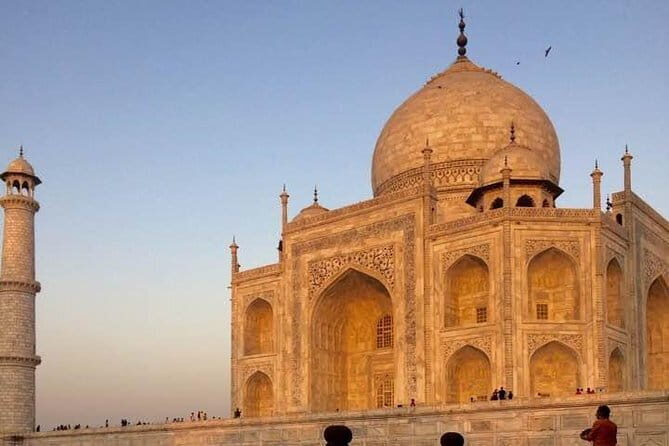
- Taj Mahal: 2 hours for architecture, symbolism, and photos
- Agra Fort: the Mughal power backdrop in 1 hour
- Itimad-ud-Daulah: Baby Taj and the marble details
- Kalakriti marble inlay: a 30-minute craft stop you’ll remember
- Price and value: what $180 covers (and what it doesn’t)
- Who this tour fits best—and who might prefer DIY
- Should you book this Taj Mahal and Agra tour?
- FAQ
- How much does the Taj Mahal and Agra private tour cost?
- How long is the tour?
- Is the tour private?
- Where does the tour start?
- Which attractions are included in the itinerary?
- Are admission tickets included?
- What’s included in the price besides tickets?
- Is lunch included?
- What about cancellation?
Key highlights worth your attention
- A licensed guide who explains what you’re actually seeing (Muzammil’s name comes up again and again in great reviews)
- Tickets included for Taj Mahal, Agra Fort, and Itimad-ud-Daulah, so you can move faster inside
- Smart pacing: Taj first, then the Mughal context of Agra Fort, then Baby Taj for contrast
- Photo help and on-the-spot answers: you’ll get guidance on where to stand and what questions to ask
- A practical craft stop at Kalakriti to connect marble inlay to what the Taj Mahal shows
Why a licensed guide makes Taj Mahal click
The Taj Mahal is one of those places where you can see everything and still miss the point. With this kind of private tour, the Taj becomes more than a backdrop for photos. A guide who’s certified through the Ministry of Tourism can frame what you’re looking at—its design choices, its symbolism, and the Mughal story around it—so your visit feels ordered instead of random.
The strongest praise in the reviews centers on the guide experience. Many people specifically called out Muzammil for mixing warm personality with solid explanations, plus answering questions at the pace that works for the group. That matters at the Taj, where the crowds and rules can make you feel rushed. When someone gives you a short historical setup before you enter, you don’t walk in cold—you walk in knowing where to look.
There’s also a practical benefit: reviews mention smoother handling around tickets and queues. You still need to follow on-site procedures, of course, but having a pro coordinate the timing can save you energy for the sights that actually matter.
You can also read our reviews of more tours and experiences in New Delhi.



Pickup, timing, and beating the day’s rules

This tour is listed as 4 to 6 hours, and it’s offered as a private activity where only your group participates. Pickup is included, WiFi is on board, and bottled water comes along for the ride. That kind of “most logistics covered” approach is exactly what you want when you’re traveling with limited time.
The one thing I’d double-check before you lock it in is the start point. The meeting point is Indira Gandhi Intl Airport in New Delhi, while the tour targets Agra landmarks. That can be totally fine—just make sure you understand how early you’ll need to be ready and whether the timeline you’re expecting is a true match for your day.
Timing matters most if you’re chasing a sunset-style visit. One of the best practical tips from the reviews is this: the ticket office closes about 45 minutes before sunset. If you’re planning around that golden-hour dream, you’ll want to build in margin, not hope for luck. A good guide helps you plan backwards from the clock, so you don’t end up watching the Taj from outside your ticket window.
Taj Mahal: 2 hours for architecture, symbolism, and photos
You get 2 hours at the Taj Mahal, and the tour focuses on the story and the craft. Expect to learn about its history, art, and architecture, plus the famous love narrative tied to the monument. The idea here is that the Taj doesn’t just look beautiful—it was built with specific design choices, materials, and patterns meant to create an emotional effect as light shifts.
This is where the guide quality really shows. Reviews repeatedly mention that Muzammil gives a clear historical overview before going in, so you’re not just staring at white marble. People also highlighted pacing that feels flexible, with answers tailored to the group. If you want quick context, you can get it. If you want more detail on how the Mughal style works, you’ll also get room to ask.
You’ll also get practical photo help. Several reviews mention guidance on the best spots for pictures. That’s valuable because the Taj’s sightlines can be confusing once you’re inside, and standing in the wrong place can mean you’re stuck with awkward angles.
If you’re aiming for late-day light, remember the ticket-office timing tip: allow enough buffer because the closing happens about 45 minutes before sunset. It’s the kind of rule that can ruin your plan fast if you rely on guesswork.
Agra Fort: the Mughal power backdrop in 1 hour

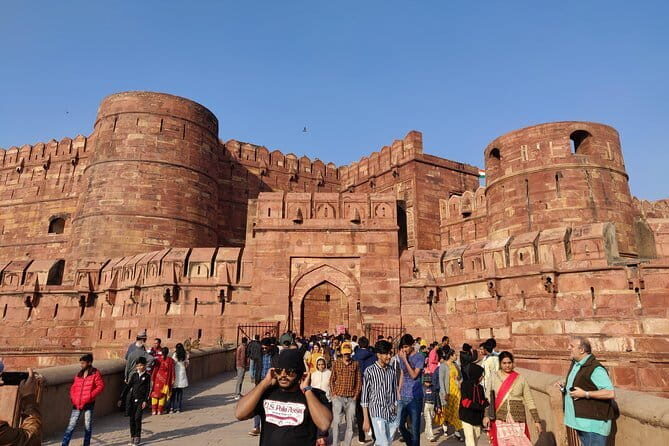
After the Taj, the tour moves to Agra Fort for about 1 hour. This stop changes the mood in a good way. The Taj Mahal is all about beauty and feeling; Agra Fort gives you the power and mechanics of the Mughal era that made projects like the Taj possible.
In the fort, you’ll see how it functioned not just as a fortification, but as a walled city and the imperial residence of Mughal rulers. That framing helps your brain connect dots: the Taj isn’t an isolated masterpiece—it belongs to a larger system of rule, wealth, and engineering.
In terms of value, this stop works because it gives you scale. The Taj Mahal can feel like a single icon; Agra Fort shows the broader imperial world around it. If you’ve been trying to understand how architecture served status in Mughal India, this is the hour that puts it into focus.
A potential drawback: 1 hour goes quickly, so if you’re the type who wants to read every plaque and linger in every corridor, you may feel a little pressure. The upside is that the time allocation matches the tour’s goal: strong context without turning the day into a marathon.
Itimad-ud-Daulah: Baby Taj and the marble details

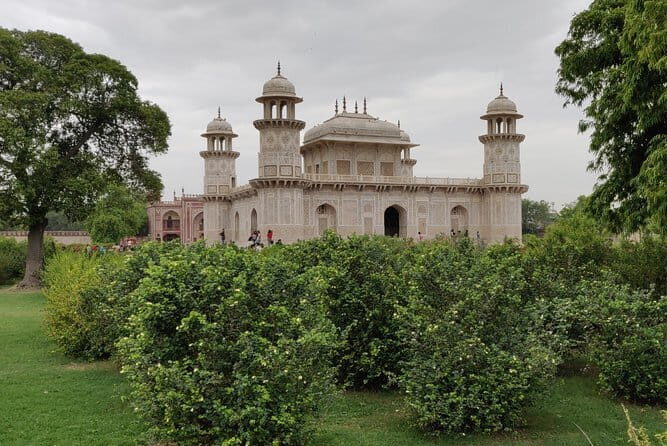
Then comes the “Baby Taj”: Itimad-ud-Daulah. You’ll spend about 45 minutes here, and this is one of the most rewarding stops for people who love careful details. The monument is often seen as a precursor to the Taj Mahal, which is part of why it earns its nickname.
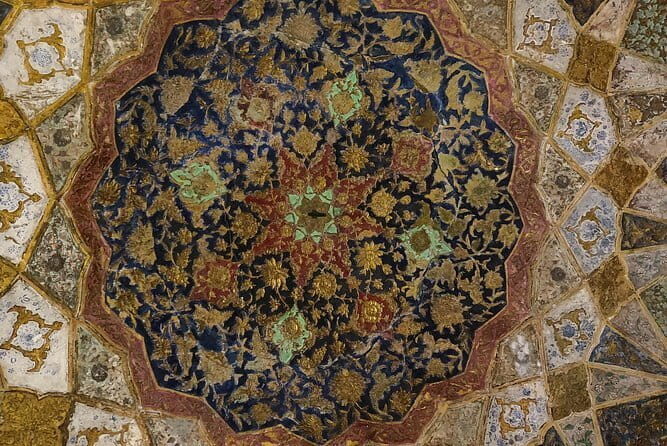
What you’ll want to watch for is the way it uses white marble and refined decorative elements. It’s described as the first major structure from the Mughal era entirely made of white marble, which already sets expectations. On the inside, the tour highlights traces of golden fresco on the pyramid-styled ceiling—small, striking touches that you can miss if you’re rushing.
This stop also balances the day. After the grand scale of the Taj and the fort’s heavy presence, Itimad-ud-Daulah feels more intimate. If you enjoy garden settings and delicate architectural storytelling, this is where your “wow” moment might shift from size to detail.
The tradeoff is simple: 45 minutes is enough for a solid look, but not enough to become a slow museum reader. If you want to fully absorb every carved panel and ceiling area, plan to prioritize what you care about most.






Kalakriti marble inlay: a 30-minute craft stop you’ll remember
The tour includes a 30-minute visit to Kalakriti Cultural & Convention Center, and it’s listed as free. This is the craft side of the day—specifically marble inlay, the technique introduced to India during the Mughal era and famously used in the Taj Mahal’s design.
Even if you’re not a craft nerd, this kind of stop helps you see the Taj differently. Marble inlay is easy to appreciate visually, but it’s harder to understand without a quick explanation of what’s actually being made and how. The demonstration can turn your photo tour into a “now I get it” tour.
One practical upside: this stop gives you a short indoor break in a day that can involve a lot of standing and sun. It also breaks the monotony after two major outdoor monuments.
The only reason to question this stop is if you’re strictly in monument-only mode. If you want zero detours, you might skip it next time. But if you like connecting details across stops, it’s a helpful bridge.
Price and value: what $180 covers (and what it doesn’t)

At $180 per person, this isn’t a cheap ticket. The good news is that you’re not paying for only a driver and a vague meeting point. Included features cover professional guiding, private transportation, parking fees, WiFi on board, bottled water, and entry tickets for all three paid monuments: Taj Mahal, Agra Fort, and Itimad-ud-Daulah.
That matters because those tickets and that guiding time are the heart of what you’re buying. If you’ve tried to manage Agra on your own, you already know how easily time gets eaten by lines, confusion, and planning mistakes. This tour is built to reduce that friction.
What’s not included is also clear: lunch, shopping, and personal expenses. So you’ll still want to plan your own food situation. A tip: don’t leave lunch until you’re starving. Heat and crowds can make decision-making harder than you expect.
One more value note: the tour offers group discounts and emphasizes small group sizes for personalized attention. And since it’s a private activity where only your group participates, you avoid the worst kind of “everyone gets rushed” energy.
Who this tour fits best—and who might prefer DIY

This tour is a great fit if you want the Taj Mahal experience to feel guided, not improvised. It’s especially good for first-timers who want someone to explain why things look the way they do. It also works well for solo travelers, since you’ll still get the benefit of professional direction without needing to coordinate with strangers.
It’s also a smart choice if you care about timing. The reviews include a useful lesson about the ticket office closing about 45 minutes before sunset. If you’re the type who wants a specific light and you don’t want to gamble, having guidance helps.
Who might skip it? If you’re on a tight budget and you’re happy learning on your own with guidebooks and the internet, you might find the price hard to justify. And if you hate structured visits, you may feel boxed in by the fixed stop durations.
Still, the repeated praise for Muzammil’s English, warmth, and flexible pacing suggests this isn’t a rigid script. It’s more like a guided conversation with an itinerary holding the day together.
Should you book this Taj Mahal and Agra tour?
I’d book it if you want three things: context, time-saving, and someone to answer your questions. The big “yes” is the combination of a licensed guide (Muzammil being the standout name in the reviews) plus tickets included for the main monuments. That pairing is what turns Agra from a list of stops into a connected story.
Book it with confidence if you’re:
- visiting Agra for the first time and want the Taj Mahal explained properly
- chasing good photos and better sightlines
- planning around a specific time window like late-day light
Think twice if you’re:
- trying to keep costs ultra-low and don’t mind DIY logistics
- hoping for long, slow wandering with no guidance
- unsure how your Delhi pickup timing lines up with your actual day in Agra
If you want a confident, low-stress Taj Mahal day with real meaning attached, this is the kind of tour that pays off fast.
FAQ
How much does the Taj Mahal and Agra private tour cost?
It’s listed at $180.00 per person.
How long is the tour?
The duration is approximately 4 to 6 hours.
Is the tour private?
Yes. It’s a private tour/activity, and only your group will participate.
Where does the tour start?
The meeting point listed is Indira Gandhi Intl Airport, New Delhi, New Delhi 110037 India.
Which attractions are included in the itinerary?
The stops are the Taj Mahal, Agra Fort, Itimad-ud-Daulah (Baby Taj), and a 30-minute visit to Kalakriti Cultural & Convention Center.
Are admission tickets included?
Yes. Entry tickets to the Taj Mahal, Agra Fort, and Etimad ud Daulah are included.
What’s included in the price besides tickets?
Included items are a professional government-accredited tour guide, private transportation, parking fees, WiFi on board, and bottled water.
Is lunch included?
No. Lunch is not included.
What about cancellation?
Free cancellation is available. You can cancel up to 24 hours in advance for a full refund, but cancellations within 24 hours are not refunded.