REVIEW · JODHPUR
Private Tour: Village Safari Half-Day Tour In Jodhpur
Book on Viator →Operated by Balaji Forex Tours And Travels · Bookable on Viator
The Bishnoi villages teach you more than sand and stories. This private safari is designed around personal time with an English-speaking guide and round-trip pickup from Jodhpur, so you can move at a comfortable pace instead of rushing on a bus schedule. You’ll visit Khejarli-area villages such as Guda Bishnoiyan, plus craft-focused stops in Kankani and Salawas, all in about 3 to 4 hours.
What I especially like is the mix of daily life and work you can actually watch. You get wildlife-adjacent village viewing in Guda Bishnoiyan and real craft stops, including block printing/weaving in Kankani and pottery at Salawas. The small time slots at each place also make it feel doable, even if this is your only village experience in Jodhpur.
One possible drawback to consider: it’s short. At only a few hours total, you won’t have time for long, slow conversations at every stop, so if you want an in-depth deep-dive on one craft, you might wish you had a longer tour.
In This Review
- Key takeaways before you go
- Why this half-day Bishnoi village safari makes sense from Jodhpur
- Pickup and your private ride: simple start, your pace
- Stop 1: Guda Bishnoiyan and the wildlife-meets-daily-life feeling
- Kankani block printers: where patterns become work
- Kankani weavers: durry traditions and the carpet connection
- Salawas potter’s village: pottery you can watch, and try
- Timing, what to expect in 3 to 4 hours, and how to stay comfortable
- Price and value: $20 per person with private transport and a guide
- Who this tour is best for (and when to skip it)
- Should you book this Village Safari Half-Day Tour?
- FAQ
- How long is the Village Safari Half-Day Tour in Jodhpur?
- What does the tour cost?
- Is pickup and drop-off included?
- What villages and stops are included?
- Is there an admission fee for the stops?
- Is the tour private?
- Are food and drinks included?
- Do I get a mobile ticket?
- What if I need to cancel?
Key takeaways before you go

- Private group comfort: only your group participates, with a guide and private transport.
- Easy logistics from Jodhpur: pickup and drop-off from hotel, station, or airport options.
- Craft stops you can watch: block printing and weaving in Kankani, plus pottery at Salawas.
- Wildlife context at Guda Bishnoiyan: you’ll spend time where Bishnoi families live alongside nature.
- Free admission at stops: the listed village/craft stops show admission tickets as free.
- Flexible timing: multiple departure time options during the day.
Why this half-day Bishnoi village safari makes sense from Jodhpur
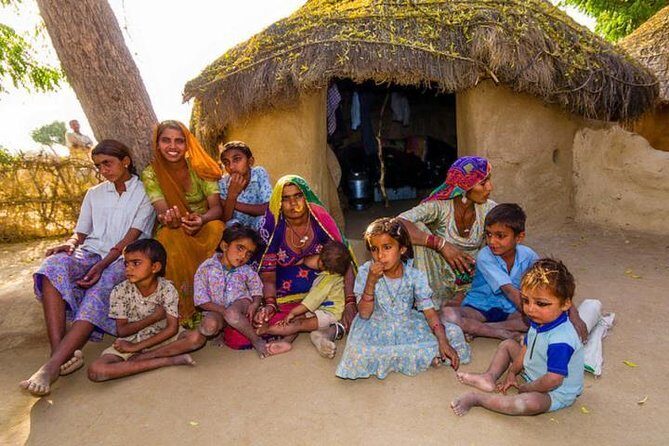
Jodhpur is famous for forts and old-city streets, but the Bishnoi villages nearby offer a different kind of Jodhpur lesson: how people live with the desert. This tour is built for a tight window. In about 3 to 4 hours, you can see village life, watch traditional work, and get a sense of the natural world that the Bishnoi community is known for.
Also, the private format matters more than it sounds. When you’re with a group that’s just you, you can pause for better photos, ask more questions, or move along at your preferred speed. It’s not a checklist where everyone is herded and moved on whether you’re ready or not.
The other smart part is the routing. You’re not only going to one kind of place. You’ll spend time where Bishnoi families interact with their environment, then shift to hands-on craft and production sites—block printing, weaving, and pottery—so the half day doesn’t feel repetitive.
You can also read our reviews of more private tours in Jodhpur

Pickup and your private ride: simple start, your pace
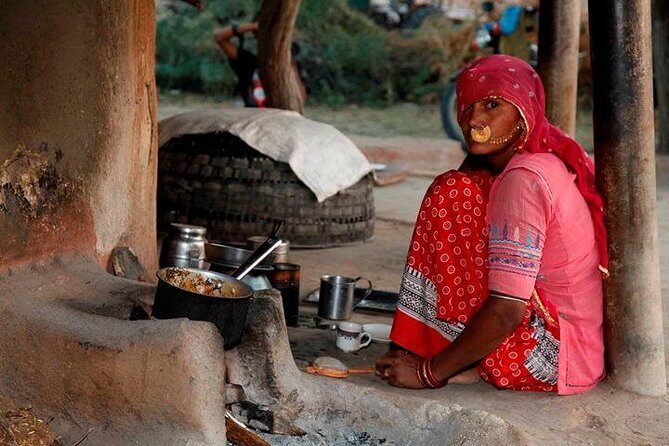
The experience is set up with pickup and drop-off in Jodhpur, which is a big deal if you’re staying in the old city. If you’re at a hotel in the Old City, pickup is arranged from the tour office, which helps you avoid the common headache of trying to coordinate with a driver on narrow lanes.
You can also be picked up at Jodhpur Airport (JDH), Jodhpur Junction Railway Station, or the bus station. That gives you a clean option if your day plan is built around arrival/departure times rather than a hotel-based schedule.
Once you’re with the driver and English-speaking guide, the day stays flexible. The goal is your pacing: quick stops when you want photos and a slower pace when you want to ask about daily routines, the work behind the crafts, or the wildlife surroundings near the villages.
If you’re the kind of traveler who hates being left at the curb while everyone else loads into a vehicle, this is the kind of tour that feels calmer. You get a greeting at the pickup point and you go together.
Stop 1: Guda Bishnoiyan and the wildlife-meets-daily-life feeling

Your first village time is at Guda Bishnoiyan. The emphasis here isn’t on a museum display—it’s on seeing the location and watching the wildlife scenario of the area while you interact with Bishnoi families.
That “wildlife scenario” wording is important. It suggests you’re not going for a scripted animal show. Instead, you’re in a village context where nature is part of how life is lived and explained. This is exactly the kind of stop that helps you understand why the Bishnoi identity is tied to environmental care.
You’ll also get around 45 minutes at this stop, and the admission is listed as free. That’s a good length for a village encounter: long enough to walk around with your guide and ask practical questions, but short enough that you’re not exhausted before the craft visits.
Practical note: because this is the most “nature and interaction” stop, it’s often where you’ll want the most patience. Ask your guide what to look for, and don’t just rush to photos. The value here comes from the conversation and the setting, not just the scenery.
Kankani block printers: where patterns become work
Next up is Kankani, starting with the Block Printers Village portion. This is a must if you want to connect a finished textile product to the actual process behind it.
In this stop, you’ll encounter the place where people gather and do the work of block printing. The idea is straightforward: carved blocks, ink, careful alignment, and repeat. Even if you don’t know anything about print techniques, you’ll likely walk away understanding that the design is not random decoration—it’s labor and skill repeated day after day.
Your time here is about 30 minutes, and admission is listed as free. That means you should expect a guided overview more than a long, detailed workshop. Still, it’s long enough to notice how the workflow is organized and to ask about what makes different patterns possible.
One thing I like about this stop: it bridges culture and craftsmanship without turning it into a staged “buy now” experience. You’re there to observe the work, learn the basics, and understand what goes into textiles before you decide whether you want to purchase anything.
If you’re hoping for a hands-on lesson (like printing your own cloth), the tour details don’t promise that. But you will see the process and meet the people doing it.
Kankani weavers: durry traditions and the carpet connection
You’ll spend more village time in Kankani at the Weavers village stop. This one is described as a place where the tradition of durry (woven floor mats) is kept alive, and it’s also referred to as the land of magic carpets.
The useful part here is seeing how weaving fits into village production. Block printing and weaving pair well: printing creates the pattern language, and weaving turns it into textiles you can use and sell. Even in a short stop, you can often tell the difference between a craft that is still active locally versus something that’s only done for outsiders.
This is listed as about 45 minutes with free admission. Again, that’s an ideal length for learning what the weavers do, how long parts of the process take, and why the craft has staying power in the community.
If you care about sustainability and realistic cultural experiences (not just shopping), this stop tends to be satisfying because it’s about work—real production—rather than just a show.
A few more Jodhpur tours and experiences worth a look



Salawas potter’s village: pottery you can watch, and try
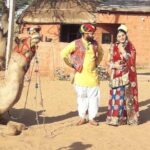
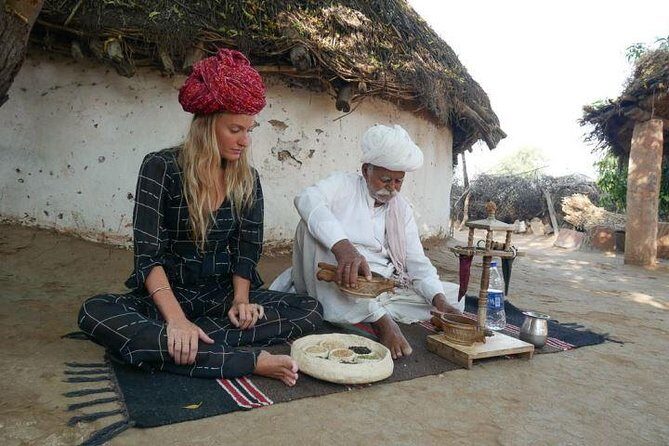
Your final village stop is Salawas, the Potter’s Village. Pottery here is described as prominent, and you can watch people work on pottery and also try hands with them to create pieces.
That “try hands” part is the standout if you want your tour to include more than observation. Even a brief chance to make something yourself tends to create a stronger memory than another photo-only stop.
Time-wise, you’ll have about 45 minutes, and admission is listed as free. That’s enough to see how the work starts, how shapes form, and what goes into creating a basic piece. Whether you finish something fully depends on how the potter’s workflow is organized that day, but you should at least expect active participation.
This is also a good stop to slow down mentally. Pottery involves repetition and patience, so the experience naturally feels different from printing and weaving, which are also craft-heavy but faster in how you can watch the handwork.
Timing, what to expect in 3 to 4 hours, and how to stay comfortable
This is a half-day itinerary with multiple tour time options, so you can fit it into a sightseeing day without killing your whole schedule. In practice, that means each stop is short and focused. You’ll likely spend:
- about 45 minutes at Guda Bishnoiyan
- about 30 minutes at block printing in Kankani
- about 45 minutes at the Kankani weavers village
- about 45 minutes at the Salawas potter’s village
That adds up fast. So I recommend treating it like a guided sampler of village life and local craftsmanship. If you fall in love with one craft, you can always plan a longer follow-up later in Jodhpur, but this tour helps you identify what you’ll want more of.
As for comfort, bring the basics you’d use for any outdoor village time in Jodhpur: water when appropriate, sun protection, and shoes that work on uneven ground. The tour includes transport and an English-speaking guide, but the walking and village surfaces are still village surfaces.
Price and value: $20 per person with private transport and a guide
At $20.00 per person, the value here is really in what you’re getting for the money. You’re not just paying for a driver to drop you at a gate. The tour includes:
- hotel/airport/station pickup and drop-off
- private vehicle transport
- English-speaking guide
- all taxes, fees, and handling charges
- mobile ticket
- group discounts
- listed free admission at the stops
That’s a lot to be included for a low per-person price. In a city like Jodhpur, where taxis can add up quickly, the private routing and guided visits make sense—especially if you’re traveling as a pair or small group and you want to avoid the cost and hassle of arranging multiple separate stops.
What’s not included is also clear: food and drinks aren’t included unless specified, and there’s no lunch or dinner in the price. So plan your meals around the tour time option you choose.
If you’re watching your budget, you might look at this tour as a cost-effective way to cover multiple village experiences in one go: wildlife context, textile craft (printing and weaving), and pottery participation.
Who this tour is best for (and when to skip it)
This tour is a great fit if you:
- want private attention and a calmer pace
- care about craft traditions you can see and ask questions about
- like village experiences where daily work and environment are part of the story
- have only half a day and want a meaningful use of it
It may be less satisfying if you:
- want deep, long conversations at one single site
- prefer wildlife viewing focused on spotting animals rather than learning village-environment relationships
- are hoping for a full day with meals included
The short format is the trade-off. For many people, that’s a feature, not a flaw—especially if you’re using your time for forts and temples too.
Should you book this Village Safari Half-Day Tour?
I’d book it if you want a practical, value-heavy taste of Bishnoi village life that fits neatly into a Jodhpur itinerary. The private setup, pickup options, English-speaking guide, and free-admission craft/village stops make this one of the more straightforward ways to get off the main tourist route.
Book it especially if your goal is to connect what you see in shops later (textiles, durries, pottery) to the real human effort behind it. The craft stops at Kankani and the pottery at Salawas are the kind of visits that stay with you.
Skip it if you’re chasing a long, slow, one-village-at-a-time experience. This tour is short by design, so set your expectations: you’re getting a focused sampler, not a full-day country immersion.
FAQ
How long is the Village Safari Half-Day Tour in Jodhpur?
The tour runs about 3 to 4 hours.
What does the tour cost?
The price is $20.00 per person.
Is pickup and drop-off included?
Yes. Pickup and drop-off are included in Jodhpur, including options from airport, railway station, or bus station, and hotels in the Old City via pickup from the office.
What villages and stops are included?
You’ll visit Guda Bishnoiyan, Kankani (block printers and weavers village), and Salawas (potter’s village).
Is there an admission fee for the stops?
The listed stops show admission ticket free.
Is the tour private?
Yes. It’s a private tour/activity, and only your group participates.
Are food and drinks included?
No. Food and drinks aren’t included unless specified, and lunch and dinner are not included.
Do I get a mobile ticket?
Yes. A mobile ticket is included.
What if I need to cancel?
You can cancel for free up to 24 hours in advance for a full refund. If you cancel within 24 hours, the amount paid is not refunded.