REVIEW · KOCHI
Port Pick-Up: Kochi Tour with Licensed Guide and Vehicle
Book on Viator →Operated by Japan Guide Agency · Bookable on Viator
Kochi gets easier with one smart guide. This private tour in Kochi is built for you to choose the stops, ride in a private vehicle, and have a licensed guide translate and explain everything so you do not waste time guessing. I love that the plan is flexible (you pick 3–4 sights ahead), and I love how much smoother the markets and shopping streets go with local help. One thing to consider: with a 6-hour day and fixed time at each stop, you’ll want to pace yourself, especially if you choose places with lots of steps.
The heart of the experience is that you get a curated list of “go here” options, then you steer the day. The route can include big culture hits like Kochi Castle and smaller, more specific stops like the Yokoyama Memorial Manga Museum or Chikurinji Temple. Your guide keeps the story straight and the logistics simple, including where to spend time and what to skip.
If you’re traveling with limited time—like a cruise day trip—this format is a practical win. You still get variety, but you are not stuck in a rigid group itinerary. Just remember entrance fees and lunch are not included, so you’ll budget for those based on what you select.
In This Review
- Key things to know before you go
- Why a private Kochi day feels worth it
- How your 3–4 stop choice can make or break the day
- Kochi Castle plus the separate history museum: the best opener
- Makino Botanical Garden and Chikurinji Temple: calm stops with real purpose
- Shopping streets and the manga museum: small detours that add character
- Hirome Ichiba and the Sunday Market: food, people, and a guide who knows where to go
- Ryugado Cave: your one-hour payoff (with big time potential)
- Katsurahama Ryuogu Shrine and the beach-side story factor
- Lunch, snacks, and the part you should actually plan for
- Price and logistics: when $570.69 per group is good value
- Who this Kochi tour is best for
- Should you book this Kochi private guided day?
- FAQ
- How long is the Kochi tour?
- How many stops can I choose?
- What’s included in the price?
- Do I need to pay for entry tickets?
- Is this a private tour?
- Are car seats available for children?
- Can I cancel and get a full refund?
Key things to know before you go
- You choose 3–4 stops from the list, so the day matches your interests instead of a one-size route.
- Licensed local guide + translation means you can ask questions and understand the “why,” not just the “what.”
- Private vehicle reduces dead time between areas (especially useful for temple and cave options).
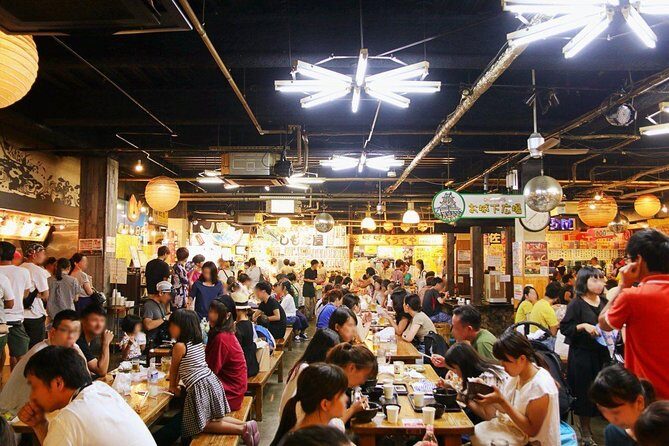
- Markets take planning—with a guide, you can navigate food stalls, shopping arcades, and shared seating faster.
- Time is the real constraint in a 6-hour tour, so pick fewer “walk-heavy” stops if you want to linger.
- Admission fees are separate, so check what you choose and budget for it.
Why a private Kochi day feels worth it
In Kochi, it’s easy to look at a map and think you can handle it on your own. Then you hit one of those problems: signs are not in English, bus routes do not match your timing, and markets are big enough to swallow an afternoon. This tour fixes that with two things: a licensed local guide and a private vehicle.
The private guide part matters more than most people expect. A good day here is not just about seeing famous buildings. It’s about understanding what you’re looking at—why a temple is tied to the Shikoku pilgrimage, why a castle survived eras when many did not, or why that small bridge has a story people still sing about. The guide handles the translation, but also turns it into practical context you can use right away.
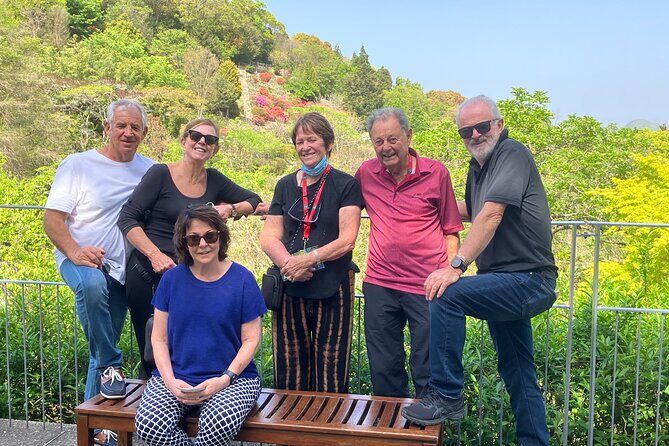
I also like that this is just your group. No waiting for slow walkers. No awkward “group consensus” calls. You can move at a pace that fits your energy.
You can also read our reviews of more guided tours in Kochi



How your 3–4 stop choice can make or break the day
The tour runs about 6 hours, and the schedule is built around short visits: roughly 30 minutes at many stops, with one longer option for the Ryugado Cave. That structure is great if you choose stops that connect logically.
Here’s the way I’d think about it:
- If you want the biggest “Kochi feel,” combine Kochi Castle with one market experience like Hirome Ichiba or the Sunday Market. Then add one culture stop (temple, garden, museum) so the day is not all food and browsing.
- If you’re a nature and scenery person, pair Katsurahama Ryuogu Shrine with Ryugado Cave. The cave is your long anchor.
- If you’re traveling with teens or you like modern culture, swap one market slot for Yokoyama Memorial Manga Museum.
- If you love quiet places, choose the Makino Botanical Garden and Chikurinji Temple, then keep markets as shorter snack-and-stroll stops.
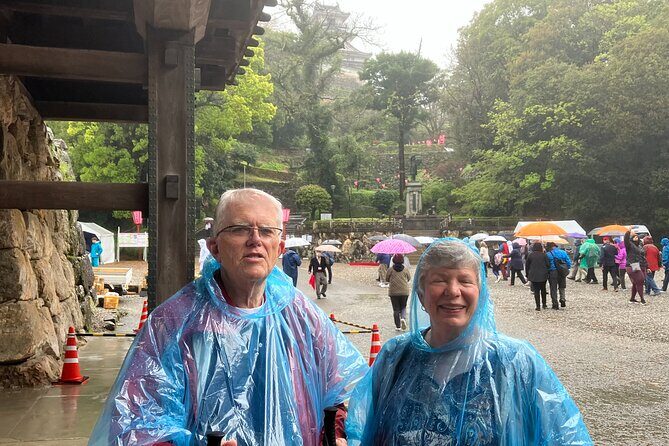
One important practical point: Kochi Castle involves stairs and hills. You can absolutely do it, but if you are also picking a cave and a beach shrine, you should expect a lot of walking in one day. Rain can also change how much you want to climb.
Kochi Castle plus the separate history museum: the best opener
A strong first stop matters, and Kochi Castle is a great start. It’s one of the few Japanese castles that kept its core through major historical upheavals, including the Edo and Meiji eras when many castles were lost. Even if you’ve seen other castles in Japan, this one feels distinct because you’re not just touring a viewpoint—you’re seeing how the story held together.
Plan for time on two fronts: the castle itself and the Kochi Castle Museum of History, which is separate from the castle grounds. That museum focuses tightly on the castle and the Tosa kingdom’s history. It’s the kind of stop where your guide can make the timeline click, and it’s a smart move because it balances the physical effort of stairs with indoor learning.
A couple extra practical perks can show up depending on how your guide works the day. In one instance, the tour included a tea ceremony associated with the castle museum area. Another visit included hands-on activities like making postcards using an old-style block printing process, plus time at the museum’s tea/coffee shop. Those details are not guaranteed for every day, but they’re a good example of what a great guide tries to fit in when the schedule allows.
Possible drawback: if you’re not comfortable with stair climbs, your castle time may feel more like a workout than a stroll. Build the rest of your day around that reality.
Makino Botanical Garden and Chikurinji Temple: calm stops with real purpose
The Makino Botanical Garden is the kind of break that keeps your day from turning into constant movement. It was created to honor Makino Tomitaro, often called the father of Japanese botany. The garden’s value is not just pretty plants; it’s also a connection to Japanese scientific history, presented in a space that lets you slow down.
What you’ll like here is the escape from the tighter city pace. If your schedule includes markets or shopping streets, the garden gives you a breather. Admission is not included, so budget for it, but the time is typically set for about 30 minutes—enough for highlights without feeling rushed.
Then there’s Chikurinji Temple, tied into the Shikoku pilgrimage. Built in 724, it has a long history, and the temple is associated with wisdom, which is why many students come to pray for academic success. If you like cultural depth, this stop delivers it. Even if you only have a short visit, the guide can explain why the pilgrimage network matters and what the prayers mean in context.
Possible drawback: gardens can be very seasonal. If you’re in town when plants are not at peak bloom, it can still be peaceful, but it might not feel like the photos you imagined. Your best move is to treat it as a thoughtful stop, not a one-stop “must be peak season” moment.
Shopping streets and the manga museum: small detours that add character

Kochi’s shopping streets do not just exist for souvenirs. They connect neighborhoods and make walking feel like part of the local rhythm. Two of the options are Obiyamachi Itchome Shopping Street and Harimayabashi Shopping Street.
Obiyamachi gives you the classic arcade experience—places to grab a bite, browse, and reset between bigger attractions. Harimayabashi is more of a story stop than a sight stop. The bridge is only about 20 meters long, but it’s famous for a local folktale and a song people associate with it. That kind of detail is exactly what a guide is good at: explaining why something small matters.
If you want a curveball from the usual shrine-and-castle rhythm, the Yokoyama Memorial Manga Museum is worth considering. It honors Yokoyama Ryuichi, described as the first cartoonist recognized as a person of cultural merit. Inside, you can read manga strips and learn about the legacy behind that recognition. If you’re traveling with younger people, or you just want a lighter cultural break, this museum can be a smart choice.


Hirome Ichiba and the Sunday Market: food, people, and a guide who knows where to go

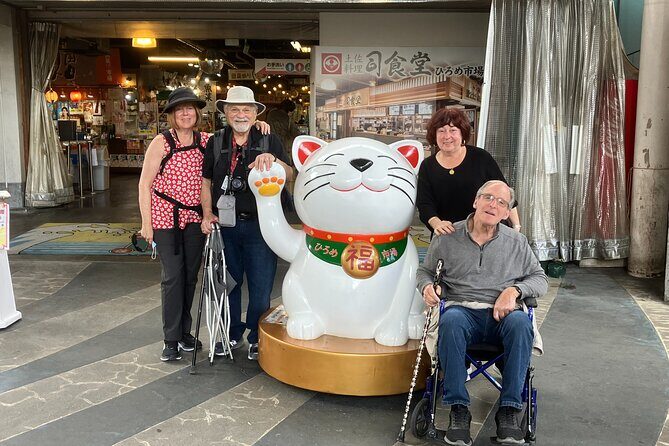
If your day includes one market, make it Hirome Ichiba. It’s a unique food court/market building with 60+ shops, many serving restaurants or izakaya-style food. Seating is shared on long tables, and the energy is exactly what you want from a local market lunch: you taste widely, you watch people move, and you do not feel like you need reservations to have fun.
The other option is the Sunday Market, which is special because it’s old. It opened in 1690 and stretches about 1 kilometer from Otesuji Avenue toward Kochi Castle. That’s a lot of ground for a 6-hour day, so the guide’s role becomes key: not just translating, but helping you decide what’s worth your time and what you can skip.
I especially appreciate how guides handle the “first time in a market” problem. Without help, you can end up wandering, buying something random, and missing what’s truly local. With a guide, you can get pointed toward foods that fit your tastes, plus you’ll know where to stand, what to ask for, and where to sit once you’ve eaten.
Budget note: entrance fees are not included, but market food costs are obviously on you. Lunch is not included, so plan on paying for whatever snacks or meals you choose.
Ryugado Cave: your one-hour payoff (with big time potential)
If you like natural spaces, Ryugado Cave is the most “wow” option on the list. It’s one of Japan’s three major limestone caves in Kochi Prefecture, and it stretches over 4 kilometers with underground formations shaped over 175 million years. The tour gives you about 1 hour, which is perfect for seeing the main highlights without turning it into a whole-day commitment.
One practical detail: swimming is prohibited due to strong currents, but that’s not really the point anyway. You’re there for the stalactites and the carved-out atmosphere.
Possible drawback: caves can involve uneven footing and you’ll be walking underground. Plan for comfortable shoes, and do not pair it with an extra stamina-heavy option unless you’re confident.
Katsurahama Ryuogu Shrine and the beach-side story factor
Katsurahama is a scenic beach area just outside Kochi city center. Swimming is prohibited because the current is strong, but you still get the coastal setting. The shrine stop gives you a chance to see the way religion and landscape connect there.
If you’re building a day around views rather than museums, this works well as a counterbalance to castle stairs and market walking. It’s not always the main headline attraction, but when your guide threads it into your schedule, it becomes the kind of “pause” moment that makes the day feel complete.
Lunch, snacks, and the part you should actually plan for
Lunch isn’t included, and that’s a good thing here because it lets the day match what you want to eat. If your chosen stops include Hirome Ichiba or the Sunday Market, you’ll likely end up eating on the go—snacks, local specialties, and easy casual meals.
In multiple real-day examples, guides took extra time to share local foods and even point out snacks that were not obvious to newcomers. That’s the practical value: you’re not just translating sentences; you’re getting help choosing food that fits your day and your preferences.
My advice: tell your guide what you’re craving at the start—fried, seafood, something sweet, vegetarian-friendly choices, whatever applies. Your guide can then steer you toward places that make sense with the route you selected.
Price and logistics: when $570.69 per group is good value
At $570.69 per group (up to 2 people), this is not a budget tour. But it’s also not priced like a “canned bus ride.” You are paying for a private vehicle, a licensed local guide, and the ability to build a custom day with 3–4 selected stops.
This can be excellent value in a few situations:
- You’re two people who would otherwise pay for separate taxis and then still hire a guide for translation.
- You have tight timing and want the day to run efficiently.
- You want markets and local culture, where a guide’s navigation saves time and stress.
- You care about context—what you’re seeing and why it matters—more than just checking boxes.
The biggest logistic considerations are simple. Entrance fees and lunch are extra. You also cannot combine multiple tour groups, which keeps the experience private but means you cannot expect to mix with others to lower costs. If you need special car seats, there are only a limited number available, and rear-facing car seats are not available—so you’ll want to confirm before you go.
Who this Kochi tour is best for
This tour is a strong match if you want:
- Language help without losing independence
- A day that mixes major sights with local food and street life
- Flexibility to choose the stops that fit your interests
- A private guide who can adjust the pacing so you do not feel like you’re sprinting
It may be less ideal if you want to move slowly with no schedule at all. The structure is built around set stops and time windows, and some choices like Kochi Castle and the cave involve more walking than you might expect.
Should you book this Kochi private guided day?
Book it if your goal is a smarter Kochi day. The combination of licensed guide + private vehicle + pick-your-stops is exactly what you need for a place where markets, arcades, and historical sites can feel overwhelming without context.
Skip it if you’re the type who wants to roam freely with zero planning. Also skip if you know you’ll struggle with stairs and uneven walking, unless you’re willing to choose fewer active stops.
If you do book, pick your 3–4 sites with your energy in mind: choose one big anchor (castle or cave), one culture or nature stop (temple or garden), and one local food/shopping block (Hirome Ichiba or Sunday Market). That blend is the formula most likely to make the 6 hours feel full, not frantic.
FAQ
How long is the Kochi tour?
It runs for about 6 hours.
How many stops can I choose?
You can choose 2–3 sites from the list before the tour, and the tour summary also states a customizable private guided tour of 3–4 sites from the provided list.
What’s included in the price?
A licensed local guide, a private vehicle, and your selected guided sites. Entrance fees, lunch, and other personal expenses are not included.
Do I need to pay for entry tickets?
Yes. Entrance fees are not included.
Is this a private tour?
Yes. It’s a private tour/activity, and only your group participates.
Are car seats available for children?
Car seats and booster seats are limited in number. Rear-facing car seats are not available, and you must contact the provider if you need them.
Can I cancel and get a full refund?
Yes. Free cancellation is available up to 24 hours in advance of the experience start time for a full refund.