REVIEW · NEW DELHI
New Delhi Tour By Car With Guide
Book on Viator →Operated by New Delhi Tourist Taxi · Bookable on Viator
A car tour with a guide is one of the easiest ways to understand New Delhi fast. You’ll cover major sights like India Gate and Humayun’s Tomb without the stress of figuring out routes, and you get hotel/airport pickup plus bottled water. The only real catch is simple: monument entrance fees and lunch aren’t included, so you’ll want a little extra cash and a plan for food.
This one-day loop is built for first-timers. It moves through big “picture spots” plus two religious landmarks that feel very different from the Mughal and imperial monuments. With a max group size of 6, the pace stays friendly rather than frantic.
If you’re hoping for deep, slow wandering at every stop, you may feel the time limits. But if you want a smart highlights day—safe driving, clear explanations, and a smooth schedule—this is a strong value.
In This Review
- Key things to know before you go
- Why a private car tour makes sense for New Delhi’s first day
- Morning route: India Gate, President’s House, and the ceremonial axis
- Humayun’s Tomb: Mughal-era scale in about 50 minutes
- Lotus Temple and Birla Mandir: faith that feels calm
- Qutub Minar and the Qutb complex: the brick-minaret highlight
- Guide + driver value: safe routes and less wasted time
- Price and logistics: what $50 covers (and what it doesn’t)
- Timing, pacing, and what to wear
- Which stops work best for which kind of traveler
- Should you book this New Delhi day tour by car?
- FAQ
- What is the start time for this tour?
- Where is the meeting point?
- How long is the tour?
- What’s the group size limit?
- What’s included in the price?
- Are monument entrance fees included?
- Is lunch included?
- Are drinks included?
- What sites are visited?
- How do I get the ticket?
- Is free cancellation available?
Key things to know before you go
- Max 6 travelers keeps the day more personal than a bus tour
- 8:00 am start helps you beat the worst of the morning crowds
- Private vehicle + local guide means less time lost and more time looking
- Entrance fees aren’t included, so budget extra for ticketed monuments
- Bottled water included, but food/lunch isn’t
Why a private car tour makes sense for New Delhi’s first day
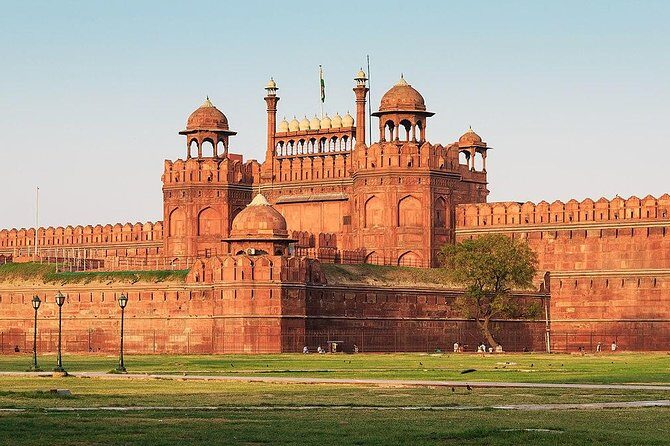
New Delhi can feel intense on day one—traffic, noise, and a city that layers centuries on top of each other. A private car solves the biggest problem: you don’t have to constantly negotiate with maps, stops, and local transit. Your guide handles the “where to next” logic so you can focus on seeing.
I like that this tour is designed around big, recognizable landmarks that connect to different chapters of Delhi’s story. You’re not just collecting photos; you’re walking a timeline of power—from Sultanate and Mughal-era monuments to modern India’s ceremonial axis.
Also, the small group size (up to 6) matters. In a smaller setup, your guide can adjust pace if you want extra time at Humayun’s Tomb or want fewer photo breaks at busy intersections.
You can also read our reviews of more guided tours in New Delhi


Morning route: India Gate, President’s House, and the ceremonial axis
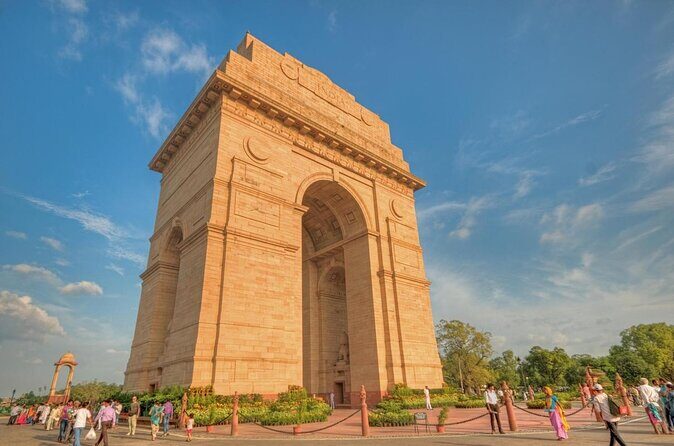
The day starts with India Gate, a war memorial sitting along Rajpath, on the eastern edge of the ceremonial axis. It’s the kind of stop where the scale hits you even if you don’t know every detail. The main thing to look for is how it anchors the whole “imperial-to-modern” vibe of central Delhi—stone, space, and symmetry designed for national remembrance.
Next you’ll see Rashtrapati Bhavan (President’s House) at the western end of Rajpath. It’s the official home of India’s president, and the building connects modern governance to the architectural language of the British-planned capital period. Even without going inside, it’s worth it just for how it frames the area visually and how it helps you understand why Rajpath is so important in Delhi’s public life.
Practical note: these central stops are best for setting your bearings fast. If you’re jet-lagged, this is still manageable because you’re not walking long distances between sites. You’re also less likely to get stuck in “how do we get there” mode.
Humayun’s Tomb: Mughal-era scale in about 50 minutes
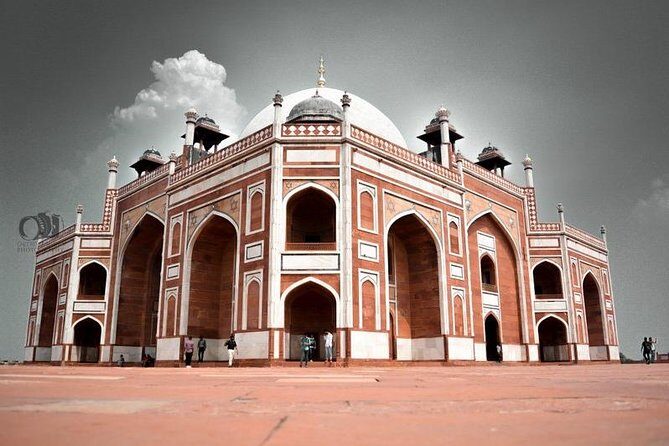
Then comes Humayun’s Tomb, the Mughal emperor Humayun’s tomb in Delhi. It was commissioned by Humayun’s first wife and chief consort, Empress Bega Begum, in 1569–70, and designed by Mirak Mirza. That little detail matters because it turns the site from a pretty exterior into something with clear human and historical intent behind it.
In a relatively short visit window, you can still appreciate the layout: the idea of grandeur through careful symmetry and garden planning. If you’ve been to other Mughal sites before, you’ll notice the same “formality” and proportion—but Humayun’s Tomb is often a great entry point because it’s big enough to feel monumental while still being approachable in a day.
One drawback to know: time can feel tight if you’re the type who wants to read every plaque. If you’re more of a “look, breathe, and take it in” traveler, this stop hits the sweet spot.
Lotus Temple and Birla Mandir: faith that feels calm
After the Mughal monument, you’ll shift to two places of worship that change the mood of the day.
First, the Lotus Temple. It’s a Bahá’í House of Worship dedicated in December 1986, and the project cost about $10 million. The lotus shape is the headline, but what you’ll notice in person is the sense of spacious calm around the structure—like the building is designed to slow your body down.
Then you’ll visit Laxmi Narayan Temple, also known as Birla Mandir, one of Delhi’s major temples. It was built by industrialist Sh. J.K. Birla in 1939. This stop gives you a different kind of devotional architecture—more grounded in a 20th-century context while still serving as a major landmark for worship and tourism.
For a practical traveler, these two stops work because they’re visually distinct. You’re not stuck in one “style” all day. And if your feet are tired, these are still good targets: you can see a lot without an all-day hike.
Qutub Minar and the Qutb complex: the brick-minaret highlight
The day’s big wow moment for many people is Qutub Minar in the Mehrauli area, part of the Qutb complex (a UNESCO World Heritage Site). It’s known as the tallest minaret in the world made up of bricks, and it’s hard not to stare upward when you’re actually there.
If you only have time for one “vertical” landmark today, this is likely it. The height, the craftsmanship, and the way the minaret anchors the complex create a strong sense of place. Even if you’re not a history buff, the building itself communicates importance.
Because it’s UNESCO-listed, it also tends to attract steady crowds. Your guide’s job here is valuable: you’ll be able to position yourself better and manage your time so you’re not losing half the visit to logistics.




Guide + driver value: safe routes and less wasted time
The best part of this kind of day tour isn’t the car. It’s what the guide and driver can control for you.
From the service styles you can expect, guides such as Rajesh, Akshay, Chandan, Lalan, Vikram, and Pradeep have been highlighted for things that matter on the ground: clear English, real commitment to the schedule, and help adjusting when plans change. Drivers are also noted for safe, easy driving and for organizing the day in detail—so you spend less time stressed and more time actually looking.
One very practical advantage mentioned in past experiences: avoiding long queues when possible. That doesn’t mean everything will be magically empty (you’ll still face public spaces and normal crowds), but it can turn a time-constrained day into a day where you get the “see it all” feeling.
Price and logistics: what $50 covers (and what it doesn’t)
At $50 per person, this tour is priced as an efficient “highlights day” rather than a heavy add-on experience. For that money, you get:
- Private vehicle transport
- Local guide
- Bottled water
- Hotel pickup and drop-off
That’s the value core. In many cities, just arranging a reliable driver for a full day can cost close to this—then you still need a guide, and you still need to manage entrance logistics. Here, the structure is doing that work for you.
The two costs to remember:
- Entrance fees are not included for monuments.
- Lunch isn’t included (and no food/drinks are listed beyond water).
So when you budget, think: $50 is the base for transport + guiding, then you add whatever ticketed sites require and what you choose to eat. If you plan snacks in advance, you’ll keep the day smooth.
Timing, pacing, and what to wear
With a roughly 1-day schedule and an 8:00 am start, you’ll want to be ready early. Early morning is usually easier for photos and for not feeling like you’re fighting the day.
The visit windows are designed to keep things moving (for example, around 40–50 minutes at key stops). That’s good for first-timers, but it also means you should decide what “extra time” means to you. If you want to go slower at one place, plan to accept that another stop may feel brisk.
What to wear:
- Comfortable shoes (you’ll be walking around temple and tomb areas)
- Light layers (mornings can be cooler than midday)
- Sun protection, especially if you’re out in open areas like around India Gate
Also, carry a small amount of cash or a payment method for entrance fees, since they’re not covered.
Which stops work best for which kind of traveler
This route is especially good if you want a balanced mix:
- Landmarks for orientation: India Gate and Rashtrapati Bhavan
- Mughal architecture focus: Humayun’s Tomb and Qutub Minar
- A calmer spiritual change of pace: Lotus Temple and Birla Mandir
If you’re traveling with kids, the straight-line nature of the stops can be helpful. You’re not doing long travel legs, and you can explain each stop in a story-based way without needing hours at one location.
If you’re a hardcore architecture nerd who wants to read every inscription and explore every corner, you might want a longer stay or a second day in Delhi. Still, for a time-limited first visit, this tour gives you the essentials in one smooth sweep.
Should you book this New Delhi day tour by car?
I’d book it if you want:
- A guided highlights day in central New Delhi
- Private transport with less navigation stress
- A route that mixes Mughal-era monuments with modern spiritual landmarks
- A schedule that’s realistic for a first day before you move on
I’d think twice if:
- You hate paying extra entrance fees on the spot
- You want long, slow visits with minimal time pressure
- You’re hoping for food to be handled for you (lunch isn’t included)
The big decision factor is your travel style. If you’re the type who likes structure and clear priorities, this tour is good value and easy to manage. If you want freedom above all else, you might prefer hiring a driver for the day without a fixed list of stops.
FAQ
What is the start time for this tour?
It starts at 8:00 am.
Where is the meeting point?
The meeting point is Indira Gandhi Intl Airport, New Delhi 110037, India. Hotel pickup and drop-off are also included.
How long is the tour?
It’s listed as 1 day (approx.).
What’s the group size limit?
The tour has a maximum of 6 travelers.
What’s included in the price?
Included are private vehicle transport, a local guide, bottled water, and hotel pickup and drop-off.
Are monument entrance fees included?
No. Entrance fees of monuments are not included.
Is lunch included?
No. Lunch is not included.
Are drinks included?
Bottled water is included. Alcoholic drinks are not included (they’re available to purchase), and food/drinks aren’t included unless specified.
What sites are visited?
You’ll visit India Gate, Rashtrapati Bhawan, Humayun’s Tomb, Lotus Temple, Qutub Minar, and Laxmi Narayan Temple (Birla Mandir).
How do I get the ticket?
You receive a mobile ticket.
Is free cancellation available?
Yes, free cancellation is available. You can cancel up to 24 hours in advance for a full refund.