REVIEW · AGRA
Guided tour of Bateshwar Temples Morena
Book on Viator →Operated by Travel With · Bookable on Viator
Quiet temples, big stories, long views.
This day trip to the Bateshwar Temples circuit is one of those Agra detours that feels like a discovery mission rather than a checkbox. I love that you get a full guide-led walk through 6th to 10th century Shiva sites, and I especially like the small-group feel (up to 8) that makes it easier to ask questions at each stop. The one real catch is the required uphill walk at one temple (about 300–400 meters), so if mobility is limited, plan for that.
You also don’t get nickel-and-dimed for entry. Entrance fees are included, and there’s no extra ticket cost added on top, plus the tour includes photos taken during the experience. In exchange, you bring your own snacks and picnic lunch, because there aren’t tourist facilities around the temples.
In This Review
- Key things that make this tour worth your time
- Why Bateshwar Temples feel like an Agra “detour” with payoff
- Value check: what you’re really paying for (even if the price shows $0)
- Planning the day from Agra: timing, transport, and group size
- Stop 1: Mitawali Temple’s circular hilltop views
- Stop 2: Bateshwar Shiva complex near Morena—restored stone and real scale
- Stop 3: Padhavali’s Shiva temple carvings inside a 17th-century fort
- Your guide, pacing, and the photos you’re actually given
- What to bring (and what to skip) for a comfortable temple day
- Who should book this Bateshwar temple circuit?
- Should you book this tour? My quick decision rule
- FAQ
- What is the meeting point for the tour?
- How long is the experience?
- How far is Bateshwar from Agra?
- What are the main temple stops?
- Are entrance fees included?
- Is lunch included?
- Is transportation included?
- How big is the group?
- Is there any walking uphill?
- Is free cancellation available?
Key things that make this tour worth your time
- A private, small group circuit: maximum 8 travelers, with flexibility instead of rigid crowds
- Mitawali Temple’s hilltop panorama: circular temple views over the countryside
- Bateshwar’s restored Shiva complex: 200+ temples, recently restored, with a real sense of site-in-progress
- Padhavali’s detailed carvings: an older Shiva temple wrapped by a 17th-century fort
- Guide-led context at every stop: history and architecture explained as you walk
- Entrance included, no extra ticket fees: plus photos taken during the tour
Why Bateshwar Temples feel like an Agra “detour” with payoff
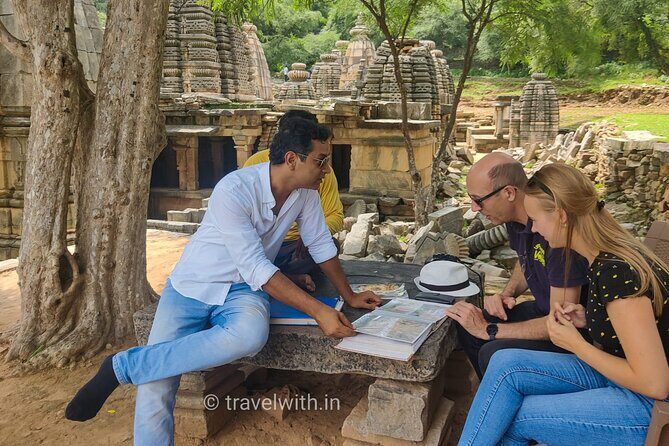
Agra is famous for the headline sights, but the fun part of travel is when you step sideways and see a place that most people skip. Bateshwar Temple area near Morena does exactly that. You’re looking at Shiva temples dating from roughly the 6th to 10th centuries, and the site feels quieter and more “in the work” than the polished, high-traffic landmarks.
What I like most is the way the temples don’t just sit there. They connect to location and time. Mitawali is on a hill; Bateshwar is a sprawling restored complex; Padhavali sits within the outline of a much later fort. You end up thinking about how builders chose sites for views, defense, ritual, and materials, not just how impressive the stone looks.
There’s also a strong sense of local history in the background. The region was once known for dacoits/bandits, and now the area is open for exploration—meaning the atmosphere shifts from legend to archaeology right as you walk the grounds. That makes the day feel more human and less museum-like.
And yes, you’ll hear comparisons (the complex is often compared to Cambodia’s Angkor Wat in scale), but the practical value for you is simpler: you get a lot of temple variety in one circuit without spending all day stuck in transit or in crowds.
You can also read our reviews of more guided tours in Agra


Value check: what you’re really paying for (even if the price shows $0)
The price listed here is $0.00, but the better question is what’s actually covered. This experience includes:
- Guide & escort
- Entrance fees
- Photographs taken during the tour
- A mobile ticket
That’s meaningful because temple sites can quietly add up with entry fees, and transportation is where day trips often get expensive. Here, entrance costs are handled, so your budget stays under control.
The “trade” is that you still need to handle your own comfort items. There’s no lunch and no tourist facilities around the temples. The tour tells you plainly to bring snacks, a picnic lunch, and drinking water. That’s not a problem if you’re used to temple days, and it can even make the day feel more relaxed—you stop when you’re hungry, not when a restaurant is convenient.
Also, this is a private tour, so you’re not just buying access. You’re buying the ability to move at a workable pace, ask questions, and spend a little longer on the temple details that catch your eye.
Planning the day from Agra: timing, transport, and group size
Expect a long but manageable day: about 7 hours total, including travel. You’ll meet in Agra and drive roughly 2 hours to reach the Bateshwar temple circuit.
The group size is capped at 8 travelers. That small number matters more than it sounds. In a place like this—where the charm is in the carvings, edges, and layout—being in a big herd means you rush and miss details. With a smaller group, you can slow down for close looks, and your guide can actually tailor explanations instead of doing a nonstop script.
Transportation is the one gap: private transportation is not included. That means you’ll want to confirm what’s arranged for the drive from Agra (since the tour itself references meeting in Agra). If you’re already using a driver through your hotel, this can pair nicely as a structured add-on. If you don’t have transport set, budget time to sort it out.
Bring the basics:
- A hat/sunscreen and water
- Snacks for the drive and breaks
- A picnic lunch (there’s no food scene nearby)
- Comfortable shoes with grip
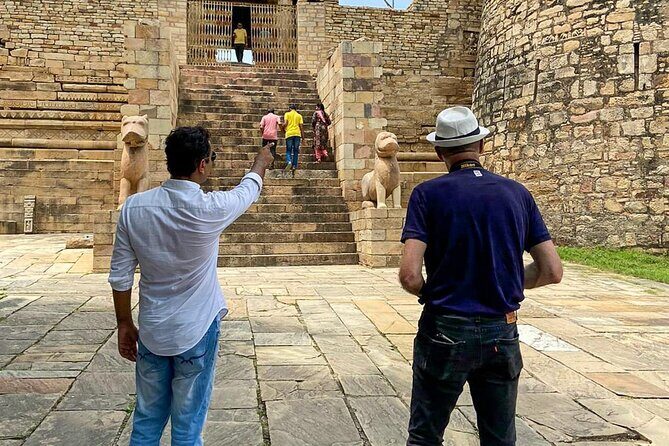
One more practical note: one temple requires a walk uphill for 300–400 meters. Plan for that terrain, and if you have mobility issues, discuss it early so the guide can help you make a comfortable plan.
Stop 1: Mitawali Temple’s circular hilltop views
Mitawali Temple is your first “wow” moment, and it starts with shape. This is a circular temple perched on a hill, and the climb is part of the experience. From up there, you get panoramic views over the countryside. It’s the kind of setting that makes temple architecture feel tied to its world, not floating above it.
The story you’ll hear here is especially interesting for architecture lovers: Mitawali is described as the temple that inspired the design of the Parliament House in Delhi. Whether you’re already familiar with that reference or not, it gives you a handy lens for looking at the temple’s form. You stop seeing it as only an ancient relic and start seeing it as an influence that traveled forward in time.
For practical pacing, plan for about 1 hour at this stop. That’s enough time for the guided explanation plus time to look at the structure itself and catch the views before the light shifts.
Drawback to consider: because it’s on a hill, you’ll want steady footing and comfortable pacing. This is a good warm-up for the rest of the day, but if you’re already tired from travel into Agra, take it slow and save your energy for the main temple complex later.
Stop 2: Bateshwar Shiva complex near Morena—restored stone and real scale
This is the core of the day. The Bateshwar group of temples is dedicated to Lord Shiva, and it spans temples from roughly 6th to 10th centuries. The site has been recently restored by the government, and that matters for your experience: restoration doesn’t just mean the place is intact. It can also mean you’ll notice different stages of repair and rebuilding.
You’re also in a big space. The temple grounds include 200+ temples, and the scale is part of what makes it feel special. It’s often compared to Angkor Wat because of that “how is there so much here?” feeling.
A detail that helps you understand what you’re looking at: the carvings tell stories, but many visitors miss that they’re not all decorative. The guide’s job is to point out what to look for—small scenes and motifs that connect to Shiva worship and the temple’s design logic.
You’ll spend about 1 hour 30 minutes here, which is a decent chunk of time for a site this size. Still, if you love architecture, you might wish you had more time to walk slower and re-check carvings. The good news is this is a quieter, off-the-beaten-track circuit, so you can linger without the same pressure you’d feel at headline sites.
What makes this stop feel authentic: there’s a sense of archaeological reality. Even with restored areas, parts can feel unfinished, and the setting hints at why this site wasn’t famous before restoration and access improved.




Stop 3: Padhavali’s Shiva temple carvings inside a 17th-century fort
Padhavali is a clever contrast to the larger Bateshwar grouping. Instead of focusing on broad scale, this stop leans into details.
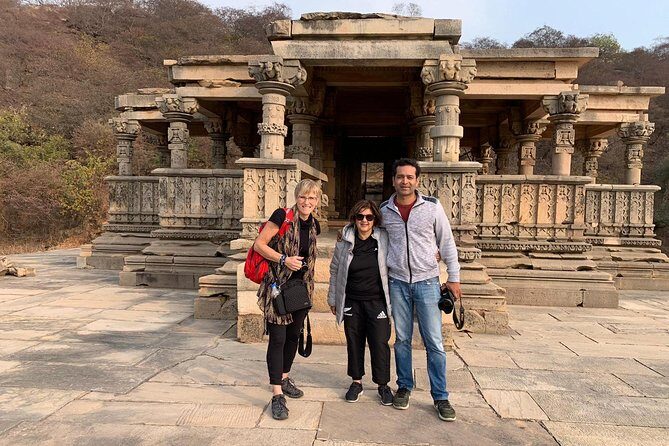
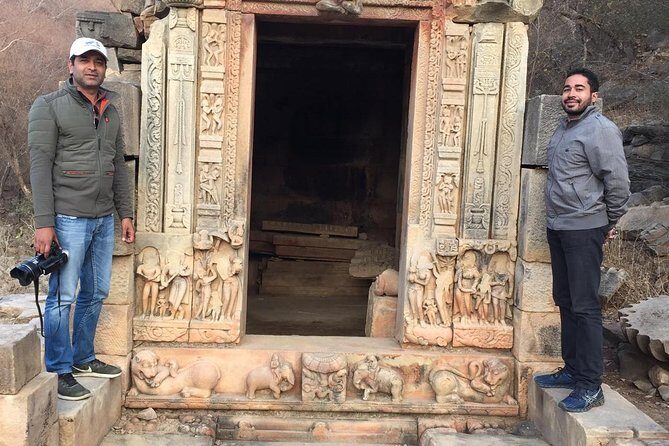
You’ll see an ancient Shiva temple with intricate carvings, and the site sits encircled by a 17th-century fort. That combination is what makes it visually satisfying: older religious stonework inside a later defensive frame.
The carvings are the big reason to slow down here. If you rush, you’ll miss the texture and the storytelling layers. With the guide’s commentary, you’re more likely to notice how the design elements relate to the worship space rather than treating them as random decoration.
Time-wise, plan about 1 hour at this stop. That’s enough to take in the carvings, understand the fort’s relationship to the temple, and finish the day without feeling rushed.
One practical consideration: this is also an outdoor walking stop. Wear shoes that won’t slip and keep water handy—especially if the weather is warm.
Your guide, pacing, and the photos you’re actually given
A lot of day tours promise history. This one pairs history with practical on-the-ground commentary—pointing out architectural features and explaining why the temples look the way they do. That’s exactly the difference between walking through temples fast and truly seeing them.
The experience includes photographs taken during the tour. That’s a small but real convenience. You won’t have to coordinate with strangers for group shots, and it saves you from juggling your phone every five minutes while you’re trying to look at stonework.
Pacing also benefits from the small group size (up to 8). I like tours where you can adjust without feeling awkward—especially at sites like Bateshwar where the fun is in close inspection. A private format keeps you from being trapped in the “follow the leader” rhythm.
What to bring (and what to skip) for a comfortable temple day
Because there are no tourist facilities around the temples, you need to think like a day-tripper, not a city-sightseer. Bring your own food and water. Pack light, but pack smart.
Do bring:
- Picnic lunch plus snacks
- Drinking water
- Sun protection (hat, sunscreen)
- Comfortable walking shoes
Skip (or be cautious with) heavy extras. This isn’t a sit-down museum tour. You’re walking between temple areas and spending time looking closely. Keep the day manageable so the views and carvings can stay the priority.
Also, since the tour ends back at the meeting point in Agra, plan your return time buffer. The total duration is about 7 hours, and the drive is part of that.
Who should book this Bateshwar temple circuit?
Book this if you want:
- A temple visit off the main Agra route
- A guided explanation focused on architecture and Shiva temples
- A smaller-group experience where you can slow down
- A day trip that feels like exploration, not crowds
It’s also a good fit if you’re traveling with someone who loves history and details. A temple site like this works especially well when you’re not only chasing famous names, but also learning how older sites connect across centuries.
I’d think twice if you:
- Struggle with hill walking (one temple includes about 300–400 meters uphill)
- Need on-site restaurants or frequent convenience stops
- Prefer a fully polished, high-tourism experience over a restored-but-still-real archaeological setting
Should you book this tour? My quick decision rule
If you’re tired of only Taj Mahal–style sightseeing and want an Agra-region day that feels personal, this is a strong yes. The combination of guide-led context, entrance fees included, and a quiet temple complex with real scale makes it feel like good value even when the price looks surprisingly low.
If you’re short on time, this won’t replace the headline sites. But if you have a free day and you like temples, carvings, and temple layout, it’s the kind of detour you’ll remember long after the crowds move on.
FAQ
What is the meeting point for the tour?
The tour starts in Agra, Uttar Pradesh, India, and ends back at the same meeting point.
How long is the experience?
The tour takes about 7 hours (approx.), including the drive and time at the temples.
How far is Bateshwar from Agra?
It’s about a 2-hour drive from Agra to the Bateshwar temple circuit.
What are the main temple stops?
The circuit includes Mitawali Temple, the Bateshwar group of Shiva temples near Morena, and Padhavali.
Are entrance fees included?
Yes. Entrance fees are included in the experience price, and there are no additional ticket fees listed.
Is lunch included?
No. Lunch is not included, and you’re advised to bring snacks, picnic lunch, and drinking water.
Is transportation included?
Private transportation is not included, even though the tour includes the guided route between stops.
How big is the group?
The tour has a maximum of 8 travelers.
Is there any walking uphill?
Yes. One of the temples requires walking uphill for about 300–400 meters, which may be challenging for those with mobility issues.
Is free cancellation available?
Free cancellation is available up to 24 hours in advance for a full refund. The experience also depends on good weather, and options include a different date or a full refund if canceled for poor weather.