Golden Triangle turns into a lake-side finish. This 7-day private route strings together major Mughal sights in Delhi, Agra, and Jaipur, then lands in Udaipur for palaces and lake views with local guiding. You’ll also hit multiple UNESCO World Heritage sites, so the “big monuments” part feels efficient, not random.
Two things I really like about this tour are the private comfort and the smooth movement between cities. The planning help and on-the-ground team come through in the details, with staff names showing up such as Manoj Sharma, plus friendly, on-time drivers like Foranji and Shyamji (and others mentioned, such as Rajesh and Surendra), along with guide support across stops like Sunny, Deepak, Kamal, Mukesh, Farooq, Jiten, and Umesh.
One thing to consider before you book: monument fees and meal costs add up. The itinerary lists admission tickets for many sights as not included, and lunch and dinner aren’t included either, so you’ll want to budget for those add-ons on top of the base price.
In This Review
- Key things to know before you go
- Golden Triangle With Udaipur: What the Route Gets Right
- Day 1 in Delhi: Airport Pickup and a Low-Stress Start
- Delhi Day 2: Qutub Minar, Humayun’s Tomb, Lotus Temple, and Red Fort
- Sunrise Taj Mahal and UNESCO Agra: The Day 3 Sequence That Works
- Jaipur Day 4: Amber Fort, City Palace, and Jantar Mantar
- Day 5–6 Udaipur: City Palace, Lake Pichola, and the Monsoon Palace View
- Day 7 Flights: Returning From Udaipur to Delhi
- Transportation and Guides: Why Private Usually Means Less Hassle
- Price and Logistics: Value at $475 Per Person
- Who This 7-Day Tour Suits Best (and Who Might Feel Cramped)
- Should You Book This Golden Triangle With Udaipur Tour?
- FAQ
- How long is the Golden Triangle tour with Udaipur?
- Is this tour private or shared?
- Does the tour include hotel pickup and drop-off?
- What cities are included?
- Are breakfast, lunch, and dinner included?
- Are monument entry fees included?
- How do you travel between cities?
- Does the tour include the flight back to Delhi?
- What is the cancellation policy?
Key things to know before you go
- Private vehicle across cities so you’re not juggling schedules or transfers on your own
- Hotel pickup and drop-off to reduce stress on arrival and departure days
- UNESCO-heavy days at Qutub Minar, Humayun’s Tomb, Taj Mahal, and Fatehpur Sikri
- Sunrise Taj Mahal timing to beat the worst crowds and light up the marble
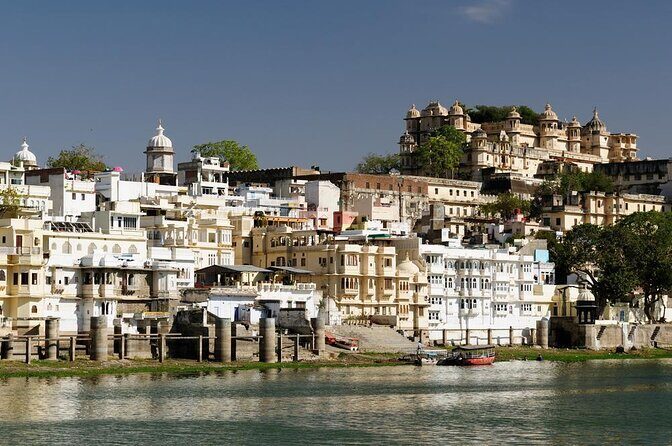
- Udaipur lake loop with City Palace, Lake Pichola, Fateh Sagar Lake, and Sajjangarh Monsoon Palace
Golden Triangle With Udaipur: What the Route Gets Right
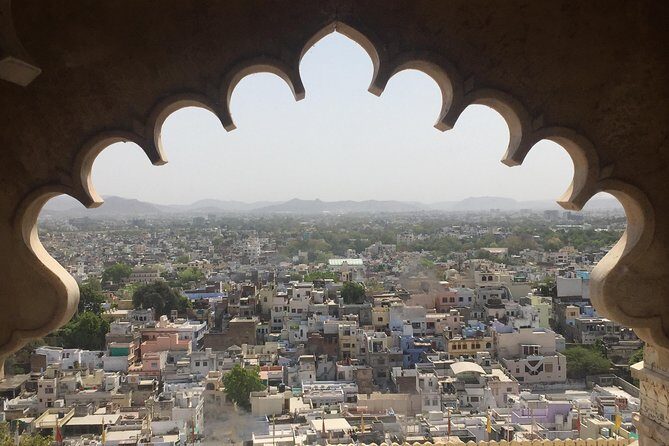
This tour is built around the classic Golden Triangle bones—Delhi, Agra, Jaipur—then adds a slower, scenic ending in Udaipur. That’s the smart trade: you get the “instant wow” monuments early, then you shift to Rajasthan’s palace-and-lake mood for the last days.
I like that your days are structured around named stops with guides at each destination. You’re not just “in the area” for sightseeing; you have people to explain what you’re looking at and help you prioritize what matters most.
It’s also practical that the plan mixes major UNESCO landmarks with a few flexible sightseeing blocks, like the Lotus Temple and Red Fort in Delhi, and multiple Udaipur viewpoints on Lake Pichola and beyond.
You can also read our reviews of more tours and experiences in New Delhi.



Day 1 in Delhi: Airport Pickup and a Low-Stress Start
Day 1 is all about getting you from the airport to a Delhi hotel smoothly. Based on the flight schedule, a driver and an executive pick you up from Delhi airport and transfer you to your hotel, then you get an overnight rest.
For first-time India visits, this kind of start matters. Customs, jet lag, and traffic can stack up fast, so having pickup reduces the “where do I go now?” anxiety.
If you like the idea of a clean launch day—no forced sightseeing, no scrambling—this is a good match. You’re set up for the heavier monument day the next morning.
Delhi Day 2: Qutub Minar, Humayun’s Tomb, Lotus Temple, and Red Fort
Delhi Day 2 is a packed, guided sampler of Mughal and iconic modern architecture. You start with Qutub Minar, the soaring brick minaret that’s been standing for centuries and remains a signature Delhi landmark.
Then you move to Humayun’s Tomb, a garden-tomb built in the 1560s and tied to the Mughal court. This stop is especially valuable because it’s easier to understand with a guide—your eye starts connecting design choices to the ideas behind them.
Next comes the Lotus Temple, a striking 1986-era structure with a very different feel from the tomb and fort sites. It’s short on the clock but useful as a contrast day in a city where everything can feel historical and heavy.
Finally, you close with Red Fort (Lal Qila). The time block is about an hour, but the place is big, and the story behind the Mughal capital era is worth hearing. After your Delhi sights, your driver transfers you to Agra (about a 3/4 hour drive) and you check in for the night.
Possible drawback? This is a long day. If you don’t do well with tight sightseeing windows, you’ll want to manage energy carefully—comfortable shoes and patience are your best tools.
Sunrise Taj Mahal and UNESCO Agra: The Day 3 Sequence That Works
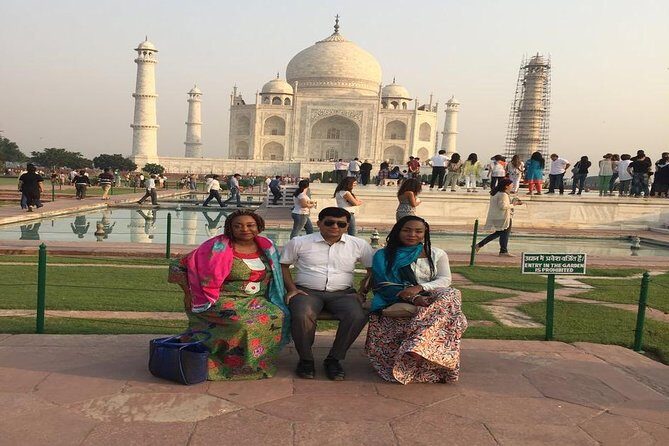
On Day 3, you get the classic highlight in a way that makes sense: early morning at sunrise for the Taj Mahal. The plan specifically calls out sunrise as the best time to visit, and I agree with that logic—early light makes the marble look alive, and you’re not starting at mid-day glare.
After the Taj Mahal visit, you head back for breakfast. That meal timing is a real quality-of-life detail. Sightseeing days can blur together, so having breakfast back at the hotel helps you reset.
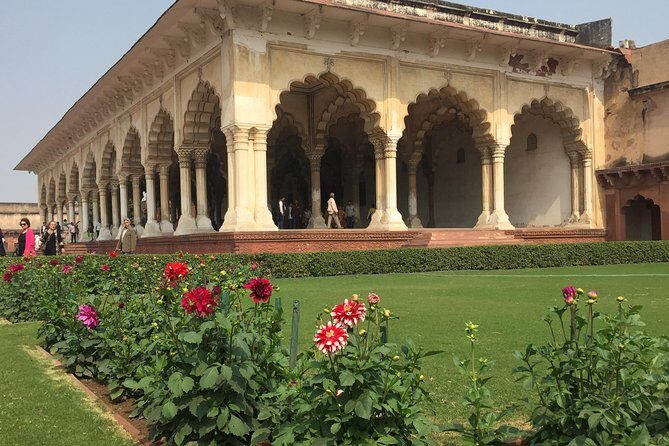
Then you tour Agra Fort, built by Mughal Emperor Akbar. Even if you’re only there an hour, this fort helps you widen the view beyond the Taj, since it connects power, defense, and Mughal life in one frame.
In the afternoon, you depart for Jaipur and stop at Fatehpur Sikri, Akbar’s dream capital. It’s listed as a free admission stop in the schedule, and it’s a key UNESCO site that rewards a guide—whole courtyards and chambers are easier to make sense of when you know what each area was meant for.
You’ll arrive in Jaipur in the evening and check in for the night. That hotel transition is important here: you’re traveling after multiple stops, so you’ll be grateful the day ends with lodging rather than “one more thing.”
Jaipur Day 4: Amber Fort, City Palace, and Jantar Mantar
Jaipur’s Day 4 focuses on three high-impact stops, and the pacing is right for getting photos and understanding.
First: Amber Fort. The fort is described as being on a hill near Amer, and it takes about two hours. This is one of those places where you don’t want to rush. Even on a shorter schedule, plan to slow down and take in the views and the layout.
Then you go to City Palace of Jaipur, established with the founding of Jaipur. The schedule gives it about an hour, but the real value is context: it’s not just “a palace you walk through,” it’s tied to the Maharaja’s shifting court life and ceremonial role.
Next is Jantar Mantar, the observatory built in 1724 by Maharaja Jai Singh. You’re allotted about an hour. What makes this stop click is how it connects time, movement, and measurement—your guide helps translate the math and symbolism into something you can actually watch for.
One more note: the itinerary also includes additional palace-related stops in Jaipur (the schedule includes extra “stop” blocks tied to royal builders and renovations). Even without the full names shown here, the key point is that you’ll have extra historical stops layered in so the day feels more than a “checklist.”
By the end of Day 4, you’re positioned for Udaipur—less “capital city momentum,” more Rajasthan calm.





Day 5–6 Udaipur: City Palace, Lake Pichola, and the Monsoon Palace View
Udaipur is where the tour slows down and starts feeling like a story you can walk through. Day 5 is described as time to get your bearings in a city known for forts, palaces, and scenic lakes.
Then Day 6 becomes the big Udaipur showcase, and it’s arranged like a loop around water and viewpoints.
You begin with City Palace of Udaipur on the bank of Lake Pichola. The schedule gives 1.5 hours, and it notes the palace complex includes multiple royal palaces within the premises. This is a strong choice for first-time Udaipur because the whole city’s identity—Rajputana power and lake-based living—comes together there.
After that, you spend time at Lake Pichola, about 1.5 hours. Even though it’s artificial (created in 1362), it functions like the city’s stage. A guide can help you understand why certain sightlines and buildings developed the way they did.
Next are Fateh Sagar Lake and Sajjangarh Monsoon Palace. The Monsoon Palace is listed as a hilltop palatial residence overlooking Fateh Sagar Lake, with a short time block (about 40 minutes). This is the kind of stop that’s less about rushing and more about looking from the height and noticing how Udaipur sprawls.
You end with Saheliyon-ki-Bari, a garden with fountains and kiosks, plus a lotus pool and marble elephants (the schedule says it’s built by Rana Sangram Singh). It’s a relaxing finish after more architectural days, and it helps you close Udaipur with something lighter.
One caution: the day includes multiple outdoor locations. In hot sun, take breaks when your guide suggests them. Hydration and shade planning are your job here.
Day 7 Flights: Returning From Udaipur to Delhi
Day 7 is a clean wrap-up. Your flight ticket from Udaipur to Delhi is booked according to your international or domestic schedule, and a driver transfer takes you to the airport based on your departure time.
This is a smart structure for two reasons. First, it avoids one more long, exhausting land leg near the end. Second, it keeps your day predictable—no guessing, no last-minute re-routing.
If you prefer travel days that end with something simple—airport and done—this final day design is a good fit.
Transportation and Guides: Why Private Usually Means Less Hassle

This is a private tour, which means the vehicle and guiding are organized around your group rather than a rotating bus full of strangers. That typically leads to less waiting, fewer schedule surprises, and more direct attention from your guide when questions come up.
The reviews highlight professional drivers and on-time pickup patterns, with names like Foranji and Shyamji called out for friendliness and punctuality. Another review specifically points to safe driving and courteous behavior from a driver named Vivek Pratap, and it also mentions that hotel stays were good quality (4-star) in each city.
I also like that the tour includes local guides at each destination. Delhi and Agra can be overwhelming at first—having an expert for Qutub Minar, Humayun’s Tomb, Taj Mahal, and the fort sites helps you move past “I saw it” and into “I understood what I saw.”
Price and Logistics: Value at $475 Per Person
At $475 per person, you’re paying for a bundle: private tour structure, 6 nights of accommodation, breakfast included, and transportation by private vehicle between cities, plus hotel pickup and drop-off. You also get local guidance at major attractions throughout the route.
What’s not included is just as important for true value. Monument fees are not included, and lunch and dinner aren’t included. That means your final trip cost will depend on how you handle daily meals and paid-entry sites.
So how do you decide if it’s good value for you?
- If you want convenience and a tightly managed schedule, this price makes sense because you’re not paying extra for independent transport planning.
- If you love going at your own rhythm, you may feel boxed in by guided time blocks and admission timing.
- If you’re traveling with a group and can use group discounts, the per-person value usually gets even better.
Also, you get a mobile ticket and the tour notes a confirmation at booking time. These small operational touches matter when you’re moving quickly across multiple cities.
Who This 7-Day Tour Suits Best (and Who Might Feel Cramped)
This tour fits well if you want a first or second visit to India that still covers the headline sights. It’s also a strong match for people who like guides but don’t want to plan logistics day-by-day.
It’s especially good for:
- First-time visitors who want a “big monuments” foundation with local context
- Small groups who value private transport over shared schedules
- Anyone who prefers airport-to-hotel transfers on Day 1 and an easy return flight on Day 7
It might feel tight if you:
- Get tired from full-day sight schedules
- Prefer long, slow wandering without structured stops
- Hate the idea that admission fees and meals are extra costs
Should You Book This Golden Triangle With Udaipur Tour?
If you want the Golden Triangle highlights with a smooth, guided handhold, I’d say yes—with one budgeting caveat. The biggest reason to book is the way the route strings together major UNESCO World Heritage stops and major landmarks in a private format, then finishes with Udaipur’s lakes and palace scenery.
But go in with realistic expectations: monument entry tickets and lunch/dinner are not included, so add that into your planning. Also, several days are structured with early timing and packed sequences, so wear comfortable shoes and keep your energy management simple.
If you’re the type who wants big sights handled for you—pickup, guides, transport, and hotel nights lined up—this tour is a solid way to do it.
FAQ
How long is the Golden Triangle tour with Udaipur?
The duration is listed as 7 days (approx.).
Is this tour private or shared?
It’s a private tour/activity, so only your group participates.
Does the tour include hotel pickup and drop-off?
Yes. Hotel pickup and drop-off are included.
What cities are included?
The tour covers New Delhi, Agra, Jaipur, and Udaipur.
Are breakfast, lunch, and dinner included?
Breakfast is included with the hotel. Lunch and dinner are not included.
Are monument entry fees included?
No. Monument fees are not included, and the itinerary notes admission tickets are not included for several stops.
How do you travel between cities?
You travel by private vehicle, with the schedule departing from Delhi by car and returning by air.
Does the tour include the flight back to Delhi?
Yes. Your flight ticket from Udaipur to Delhi is booked according to your flight schedule, and you’ll be transferred to the airport.
What is the cancellation policy?
Free cancellation is available. You can cancel up to 24 hours in advance for a full refund, and changes less than 24 hours before the start time aren’t accepted.