REVIEW · AGRA
Full-Day City Tour of Agra visit The Taj Mahal, Agra Fort & Fatehpur Sikri
Book on Viator →Operated by Hire Taxi India · Bookable on Viator
Agra can feel like a blur—unless you have a smart plan. This full-day route strings together three UNESCO heavy-hitters, with Taj Mahal golf-cart time and a guided look at Mughal architecture. I like that you get a smooth hotel or Agra Cantt pickup and a real stop-by-stop storyline, not just rushed photo stops. One thing to consider: the Taj Mahal is closed on Fridays, so your date matters.
The best part is how the day connects the dots. You start with the Taj Mahal’s symbolism, move into Akbar’s fortified power at Agra Fort, then end with Fatehpur Sikri’s perfectly preserved “ghost town” feel. Add in buffet lunch, water bottles, and time for handicrafts, and you’ve got a packed day that still feels organized rather than chaotic.
In This Review
- Key Highlights Worth Your Time
- A Tight Circuit of Three UNESCO Sites in One Day
- 8am Pickup and the Private AC Ride to Set the Pace
- Taj Mahal: Golf Cart Time and Friday Closures
- Agra Fort: Akbar’s Red-Sandstone Mix of Styles
- Fatehpur Sikri: The “Ghost Town” Feeling (and Golf Cart Help)
- Lunch at a Local Stop: Enough Fuel for the Afternoon
- Shopping in Agra: Marble, Zari Embroidery, Leather, and More
- What a $96 Price Tag Looks Like in Real Agra Time
- The Guide Factor: Mahesh’s Detailed Explanations
- Practical Tips: Timing, Heat, Photos, and Comfort
- Who This Tour Fits Best (and Who Might Want Another Option)
- Should You Book This Full-Day Agra City Tour?
- FAQ
- What time does the tour start?
- Which monuments are included?
- Are entrance fees included?
- Is lunch included, and can I request a vegetarian option?
- Is the Taj Mahal included on Fridays?
- Is pickup and drop-off included?
- Is this a private tour or shared?
- Are golf cart rides included?
- Is there time for shopping in Agra?
Key Highlights Worth Your Time
- Three UNESCO sites in one day: Taj Mahal, Agra Fort, and Fatehpur Sikri
- Golf-cart rides at the Taj Mahal and Fatehpur Sikri to save your legs and time
- Private, air-conditioned transport between stops (Toyota car noted)
- Lunch included plus water bottles throughout the tour
- Shopping stop in Agra for marble inlay, Zari-style embroidery, leatherwork, brass, and more
- Strong guiding support with detailed historical explanations (Mahesh’s knowledge stood out)
A Tight Circuit of Three UNESCO Sites in One Day
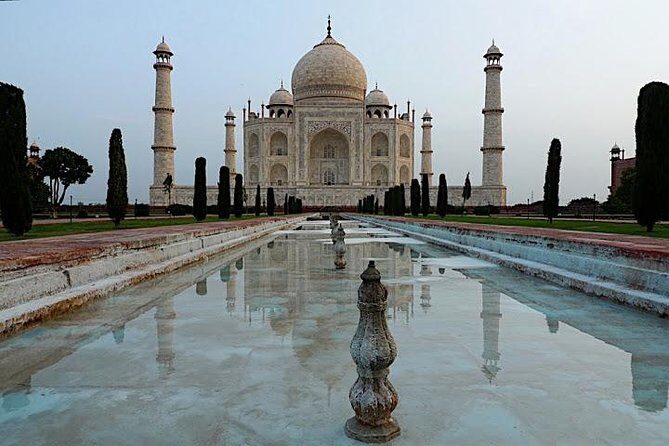
This tour is built for people who want the headline Agra sights without spending your whole trip juggling tickets, transport, and timing. You’ll see the Taj Mahal, Agra Fort, and Fatehpur Sikri, all UNESCO World Heritage monuments, and you’ll get the “why” behind what you’re looking at, not just where it is.
What I like is the flow. The Taj Mahal sets the emotional and artistic tone. Agra Fort shifts the focus to Mughal rule, defense, and architecture mixing Central Asian and Hindu influences. Fatehpur Sikri then shows a different side of Akbar’s ambition, with the eerie effect of a city that was abandoned after a relatively short life.
The day is long—about 9 hours—but it’s structured. You’re on a private AC vehicle all day, with set sightseeing windows, lunch, and shopping time. For many visitors, that structure turns Agra from stressful into satisfying.
You can also read our reviews of more city tours in Agra



8am Pickup and the Private AC Ride to Set the Pace
Your day starts early, with pickup at 8:00am from your Agra hotel or from Agra Cantt Railway Station (AGC). You meet your guide, then go in a private, air-conditioned vehicle (a Toyota car is mentioned) between stops. That matters in Agra, where heat and traffic can slow everything down.
This kind of setup is also practical if you’re traveling with family or friends. It’s a private group, so you’re not waiting around for strangers to decide where they want to stand for a picture. If you’re going with others, the tour also notes group discounts, which can make the overall cost feel more reasonable.
One more detail that helps: water bottles are included throughout the tour. It’s a small thing, but it cuts friction when you’re moving fast between major monuments.
Taj Mahal: Golf Cart Time and Friday Closures
The first major stop is the Taj Mahal, and it’s timed for a strong first impression. You’ll be there for about 2 hours, with admission ticket included. Since the Taj Mahal is a major magnet for crowds and heat, the tour helps you get bearings fast by arranging golf cart rides around the sprawling complex.
What makes that valuable is not just comfort. It also keeps the visit from turning into a long shuffle. You can spend more of your time absorbing the architecture—the symmetry, the marble craftsmanship, and the way the complex is designed to guide your movement—rather than burning your morning on transportation delays inside the site.
Important reality check: the Taj Mahal is closed on Fridays. If your schedule includes a Friday, you’ll need to pick another day or adjust plans, because the tour explicitly flags that closure.
Agra Fort: Akbar’s Red-Sandstone Mix of Styles
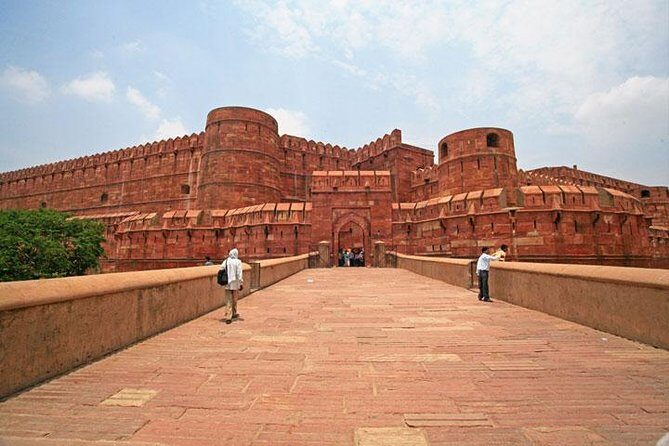
After the Taj Mahal, you head to Agra Fort, another UNESCO site. Expect about 1 hour on-site, with the entrance fee included. This is where the day shifts from love-story monument to Mughal power and engineering.
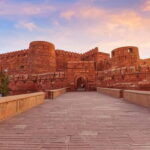
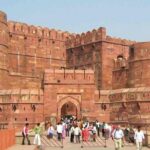
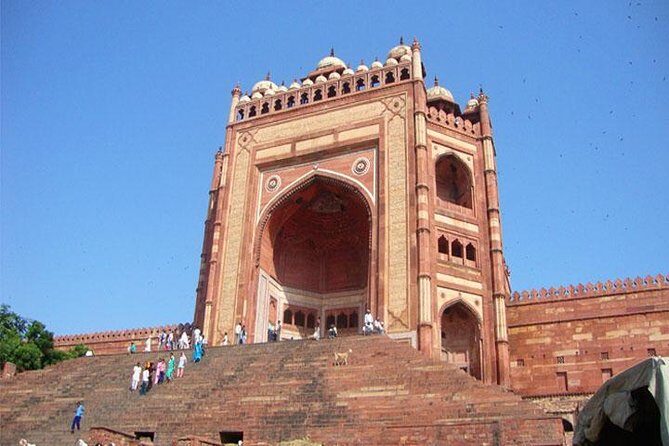
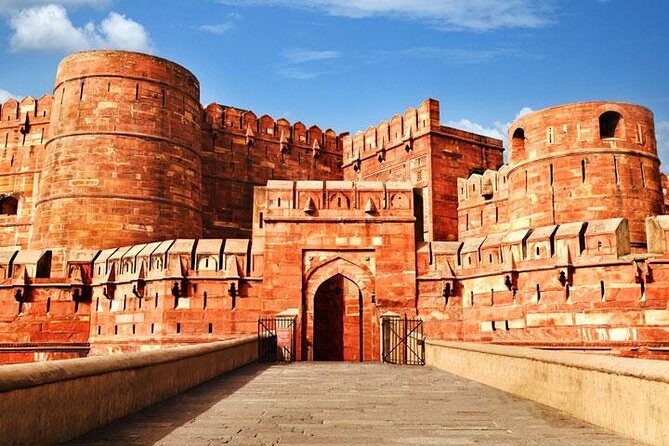
Agra Fort is described as a huge red sandstone fort associated with Emperor Akbar, built in the 16th century. The guided tour focuses on the fort’s layout and highlights its blend of Central Asian and Hindu architectural influences. If you like architecture that shows layers—different regions, different traditions—this stop is a good match.
You’ll tour intricate mosques and courtyards inside the fort. Those details can be easy to miss if you rush, so having a guide who can explain what you’re looking at helps your photos and your memory later.
The practical bonus: Agra Fort is a great middle stop after the Taj Mahal. By then, you’ve already seen the marble spectacle, so the fort feels more grounded and story-driven.
Fatehpur Sikri: The “Ghost Town” Feeling (and Golf Cart Help)
Lunch happens before the drive to Fatehpur Sikri, and then you spend a longer block of time here—about 3 hours—with admission ticket included as free in the tour details. The drive is scheduled for around 2:30pm after lunch, so you’ll likely feel the heat more at this point of the day. The tour’s structure helps, because you’re not deciding what to do next.
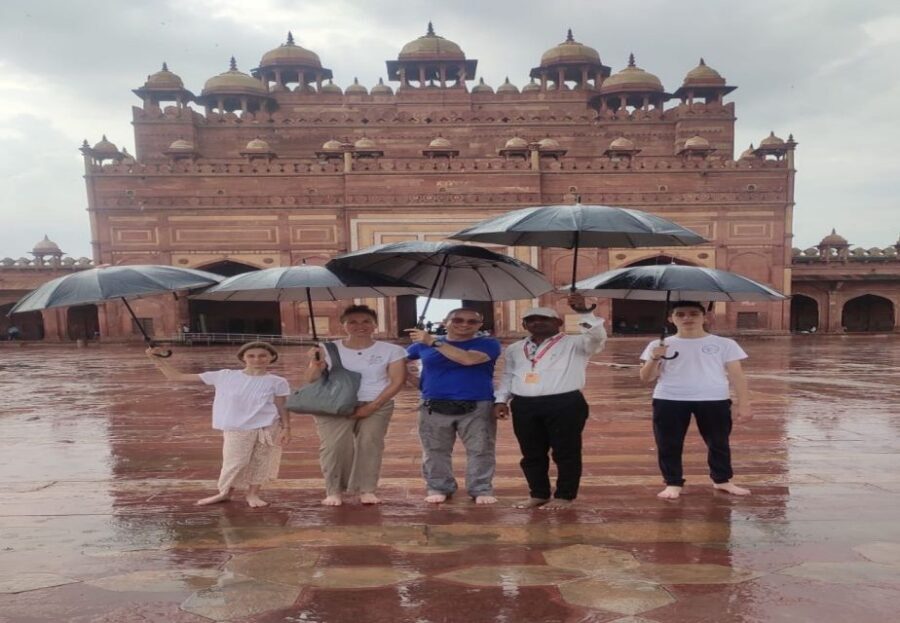
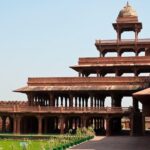
Fatehpur Sikri is described as the world’s most perfectly preserved ghost town, built by Akbar in the late 16th century and abandoned after only about 14 years. That short active period is part of what creates the haunting atmosphere. You can walk through a place that feels complete, but slightly frozen in time.
The tour also includes golf cart rides at Fatehpur Sikri, which is a smart inclusion. These sites cover a lot of ground, and your energy matters, especially after earlier walking at the Taj Mahal.
If you want Agra to feel more than just three monuments, this is often where the trip becomes more memorable. The “why was it abandoned” questions and the architectural planning details are the kind that a guide can make click quickly.
A few more Agra tours and experiences worth a look



Lunch at a Local Stop: Enough Fuel for the Afternoon
You’ll have an included buffet-style lunch at a local restaurant. Vegetarian option is available if you request it at booking, which is helpful for planning ahead.
I think the best lunch on a tour like this does two things: it keeps you from making decisions under pressure, and it gives you enough energy for the afternoon. Since Fatehpur Sikri is the last sightseeing highlight, you don’t want lunch to be too heavy or too rushed.
The tour also includes water bottles throughout the day, so you’re not scrambling for drinks mid-sightseeing. Drinks are not included, so plan for that if you prefer something specific like bottled water beyond what’s provided.
Shopping in Agra: Marble, Zari Embroidery, Leather, and More
Agra is known for handicrafts, and the tour gives you a dedicated stop at a shopping place described as Sanskriti’s Imperial Gems. You’ll have about 1 hour to browse, with a chance to shop for items made from marble and soft stone inlay work, plus embroidery and crafts associated with Mughal patronage.
The tour description also lists common shopping categories you might see: Zari-style embroidery, leatherwork, brass objects, jewelry, and carpets. If you’re buying souvenirs, this is usually the moment when you’ll be able to compare styles and pricing more easily than if you hunt on your own the night before.
A practical tip: decide what you want before you go shopping. If you’re aiming for a smaller souvenir like a scarf, bookmark, or small inlay piece, you’ll feel more in control than trying to compare big purchases under time pressure.
If bargaining is part of your shopping style, keep it calm and respectful. You’re on a schedule, so avoid getting stuck in a long negotiation that cuts into your sightseeing time.
What a $96 Price Tag Looks Like in Real Agra Time
Let’s talk value without sugarcoating it. $96 for a full day covering three UNESCO sites, with pickup/drop-off, a private AC vehicle, a professional guide, buffet lunch, entrance fees, golf carts (at the Taj Mahal and Fatehpur Sikri), and water bottles can add up fast if you do it on your own.
The key value is time and friction reduction. In Agra, the “cost” is often not the ticket price—it’s the wasted time coordinating transport, dealing with entry confusion, and figuring out where to stand or how long you should spend at each stop. This tour handles the core logistics, which is why the day works.
It’s also private, meaning you’re not paying for a group experience where you’re forced to move at someone else’s pace. That said, because it’s a full itinerary, comfort and pacing depend on how you manage your energy. The golf carts are a real help, but you’ll still walk and you’ll still be outside for long stretches.
The Guide Factor: Mahesh’s Detailed Explanations
One detail that really stood out is the guide quality. In one of the standout experiences shared, Mahesh was praised for having detailed knowledge of all the historical places. That kind of guiding makes a big difference at Mughal sites, where the architecture is full of clues.
When your guide can explain what you’re looking at—why certain design choices were made, what Akbar’s projects meant, and how courtyards and mosque spaces relate—you end up remembering more than just the Taj Mahal image everyone posts.
If you care about context, this tour is the right kind of structured. It gives you the broad story line across the day, so the sights connect instead of sitting separately in your memory.
Practical Tips: Timing, Heat, Photos, and Comfort
This is a morning-to-evening day, roughly 8am to around 6pm. That means you should dress and plan for changing conditions: hot midday, cooler morning shade, and lots of sun between monuments.
A smart casual dress code is suggested. Comfortable walking shoes are a must, even with golf cart rides. Also remember that monument visits often involve security checks and controlled entry flow, so arriving on time matters.
For photos, the tour’s built-in pacing is helpful. If you know you’ll want pictures from multiple angles at the Taj Mahal and then still have energy for Agra Fort and Fatehpur Sikri, you’ll benefit from a guide-led route that keeps your stops efficient.
And check the calendar if you’re traveling on a Friday. Since the Taj Mahal is closed that day, your whole morning schedule needs adjustment.
Who This Tour Fits Best (and Who Might Want Another Option)
I think this tour suits you if:
- You want a guided day that hits the big three UNESCO sights in Agra.
- You prefer private transport and a clear route over planning your own day.
- You like learning at each stop, not just snapping pictures.
- You’d benefit from golf cart rides to save energy for the afternoon.
You might consider a different option if:
- You’re mainly interested in one site and don’t want a full schedule.
- You’re visiting on a Friday, since the Taj Mahal closure affects the core experience.
- You have limited stamina for long outdoor sightseeing, even with golf carts.
Should You Book This Full-Day Agra City Tour?
Book it if you want an efficient, guided Agra day with Taj Mahal, Agra Fort, and Fatehpur Sikri handled in one organized circuit, plus lunch and shopping time. The included golf cart rides and private AC transport are practical upgrades that help you stay comfortable while still packing in the key monuments.
If your dates are flexible, build your plan around the Taj Mahal closure and aim for a non-Friday visit. If your dates are fixed, you’ll need to decide whether swapping days is possible or whether you’d rather pick a different itinerary.
For the price, the combination of entrance fees, guide time, lunch, and transport feels like good value—especially when you compare it to the real-world hassle of doing all three UNESCO sites solo.
FAQ
What time does the tour start?
The tour starts at 8:00am, with morning pickup from your Agra hotel or from Agra Cantt Railway Station.
Which monuments are included?
You’ll visit the Taj Mahal, Agra Fort, and Fatehpur Sikri, all UNESCO World Heritage sites.
Are entrance fees included?
Yes. Monument entrance fees are included for the stops listed, including the Taj Mahal and Agra Fort.
Is lunch included, and can I request a vegetarian option?
Yes. The tour includes a buffet-style lunch, and a vegetarian option is available if you advise at the time of booking.
Is the Taj Mahal included on Fridays?
No. The Taj Mahal is closed on Fridays, and the tour notes this closure.
Is pickup and drop-off included?
Yes. Pickup is offered from your hotel or Agra Cantt Railway Station, and you’re transferred back to either the railway station or your hotel in the evening.
Is this a private tour or shared?
It’s a private tour/activity, meaning only your group participates.
Are golf cart rides included?
Yes. Golf cart rides are included at the Taj Mahal and Fatehpur Sikri.
Is there time for shopping in Agra?
Yes. You’ll have about 1 hour for souvenir shopping in Agra, focused on items like marble work, embroidery, leather, brass objects, jewelry, and carpets.