REVIEW · LUCKNOW
Exploring Lucknow in Nightlights: Guided Tour by Foot
Book on GetYourGuide →Operated by Lets Go Far · Bookable on GetYourGuide
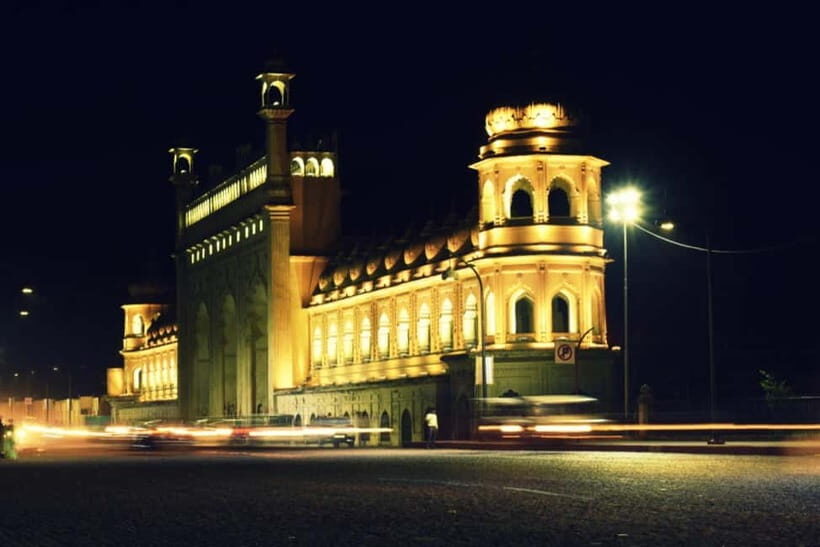
Lucknow looks different after dark. This 2-hour, small-group walk strings together nightlit architecture and the craft details of Lucknow, from Bada Imambada to Zari and Chikan work. I especially like the guide setup, with English/Hindi support and a pace that stays personal, and I like that you get one hot cup of tea/coffee to keep things comfortable. One drawback to factor in: some entrances or interior access may be limited on certain evenings, so you should expect mostly exterior views and lighting-focused photo moments rather than full inside touring.
The best part is that the route feels like a real evening stroll, not a checklist. You start at Bada Imambada’s entrance, then move site to site by foot, including a return pass back toward the Clock Tower area to catch more of the city’s night energy. Wear good shoes and bring a camera, because a lot of the magic here is in angles, arches, and façade details.
In This Review
- Key highlights worth planning for
- How the Nightlights Walk Works in 2 Hours
- Starting at Bada Imambada: the best opening shot is outside
- Chota Imambada Under Lights: calm, not chaos
- Clock Tower and the return pass: where the night energy shows
- Satkhanda silhouette: the kind of view that rewards standing still
- Pakka Pul at night: arches, reflections, and timing
- Unani Hospital facade and the craft moment: Zari and Chikan
- Price and value: $13 for guided lighting + tea
- Small group pacing: why 10 people matters here
- Practical tips so you get the best night experience
- Who this tour suits best (and who should think twice)
- Should you book Exploring Lucknow in Nightlights?
- FAQ
- How long is the Lucknow nightlights walking tour?
- Where do we meet for the tour?
- What languages are the guides, and is it a small group?
- What is included in the $13 per person price?
- What should I bring, and what is not allowed?
- Can I cancel, and what happens if plans change?
Key highlights worth planning for
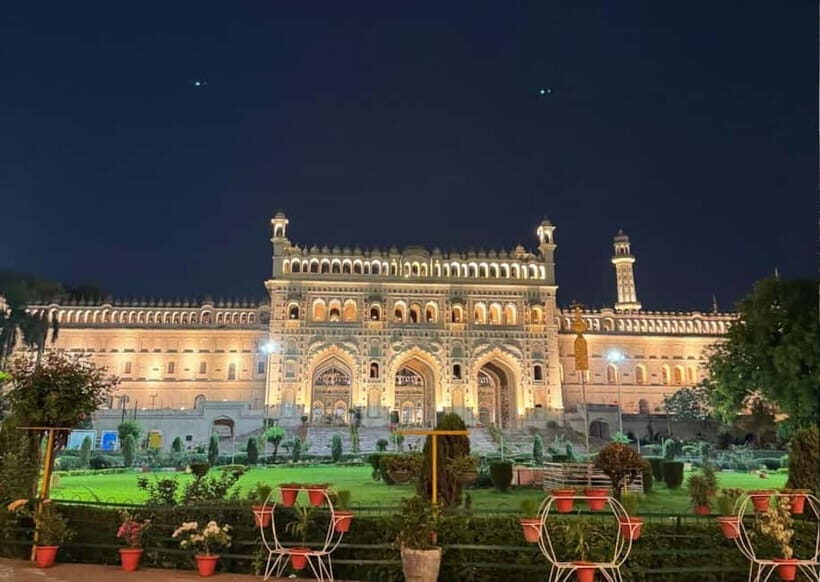
- Bada Imambada’s illuminated façade gives you a strong sense of Nawabi grandeur without needing long travel time
- Chota Imambada at night feels calmer, with twinkling lights that change how you read the space
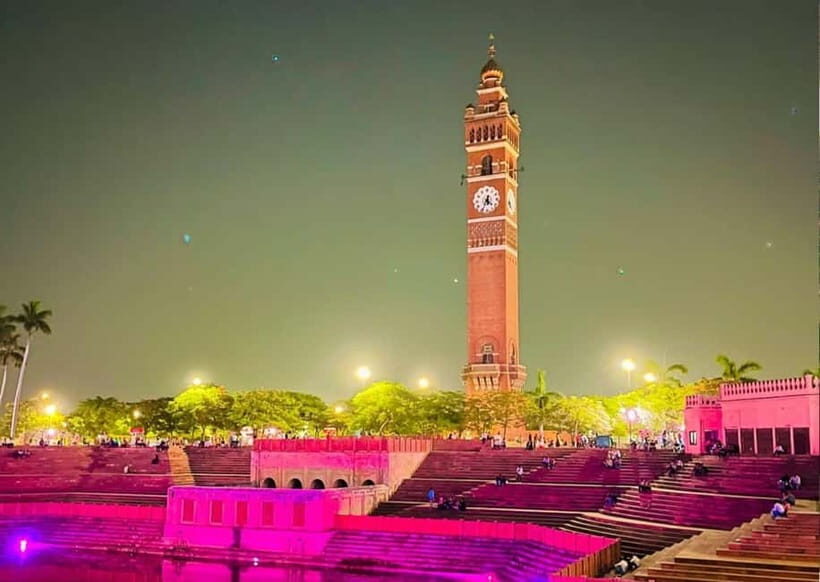
- Clock Tower magic: lights turn a landmark into a meet-up point and a photo target
- Satkhanda silhouette views: a tall night profile that looks best when you let the shape do the work
- Pakka Pul arches and reflections: illuminated spans over the water can reward timing and slow looking
- Zari and Chikan at night: the craftsmanship details become easier to notice when the pace allows close attention
How the Nightlights Walk Works in 2 Hours
This tour is designed around a simple idea: walk the route at night so you can see Lucknow’s architecture with a different mood. You’re moving on foot for about 2 hours, guided by an English/Hindi-speaking live guide. The group stays small, capped at 10 participants, which matters because you’re often stopping for photos and looking closely at façades, arches, and craft details.
The itinerary flows in a loop. You begin at the entrance of Bada Imambada, then go through the lit sites one by one, ending back at Bada Imambada. You’ll also spend time near the Clock Tower on the way out and again while you return, so you get two angles: landmark views and then the surrounding street atmosphere.
If you’re the type who likes seeing how cities feel after dark, this is a good fit. If you’re expecting guaranteed inside access to every structure, keep expectations flexible. One review issue made it clear that entrances can be closed at times, which affects what you can photograph from inside—so treat this as an evening architecture and street-view tour.
You can also read our reviews of more guided tours in Lucknow
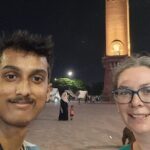
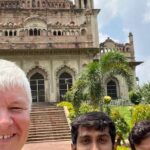
Starting at Bada Imambada: the best opening shot is outside
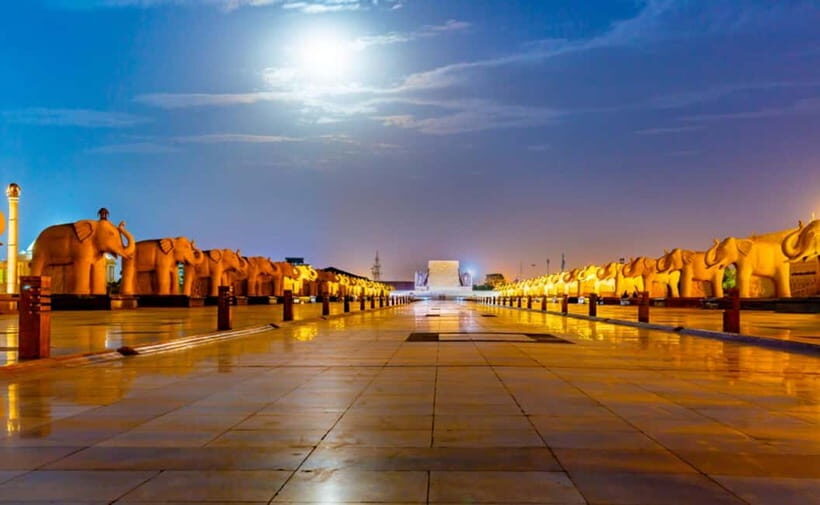
Bada Imambada is your anchor point, and it’s a smart start. Even without going deep inside, the illuminated architecture gives you scale fast: you get the grand façade presence immediately, then you can orient yourself for the rest of the walk. Starting here also helps because it’s a landmark you can navigate by even if you’re arriving a little flustered.
Look for the light patterns on the structure and take your first photos slowly, not right away. Night photography often needs patience—move your feet a step, change your angle, and let the lighting settle in your frame. The tour also includes a practical rhythm: you’re not just standing around. The guide keeps you moving site to site, while still giving you short windows to take photos.
One more reality check from a past experience: some people found that interior entrances weren’t open, meaning the tour was mostly about what you can see from outside. In that kind of scenario, the best results usually come from targeting photo spots around the exterior features. For some visitors, the Rumi Darwaza area became the most satisfying click point, simply because it’s a standout photo subject when access is restricted.
Chota Imambada Under Lights: calm, not chaos
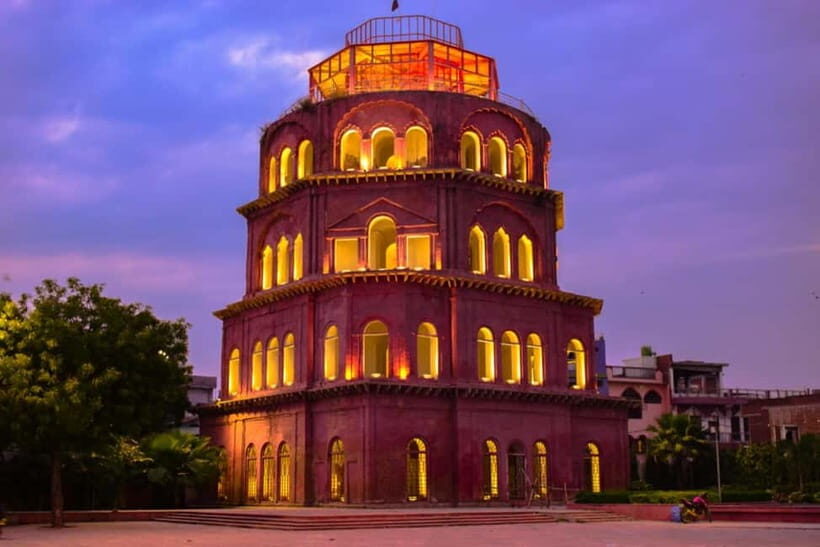
After the strong opener at Bada Imambada, Chota Imambada shifts the mood. The lights here add a gentler, more serene feel, and it’s exactly the kind of contrast that keeps a night walk interesting. Instead of only chasing big spectacle, you get a chance to slow down and notice how twinkling highlights change the way you read the grounds.
Chota Imambada is best enjoyed with two habits:
1) pause to look up and around, not just straight ahead
2) keep your camera ready, but don’t treat every stop as a single shutter moment
Because you’re on a guided path, the guide’s job is to help you know what’s worth noticing visually. That’s where the language pairing (English/Hindi) matters too—clear explanations make it easier to understand what you’re seeing, not just record it.
Like other stops, you may have outside-facing viewing depending on evening access. So if your main goal is architectural lighting and ambiance, you’re in the right zone. If your goal is full inside exploration, plan for the possibility that some areas won’t be reachable.
Clock Tower and the return pass: where the night energy shows
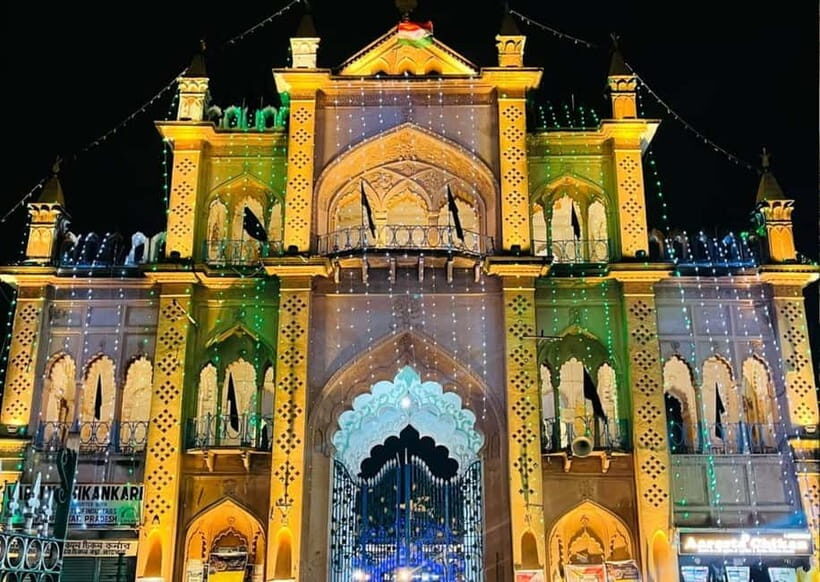
The Clock Tower stop is one of the emotional centers of the tour. When the tower is lit, it becomes both a landmark and a visual reference point for the entire area. You’ll see the tower adorned with shimmering lights, and the surrounding atmosphere feels more active in the evening—this is where street movement becomes part of the experience.
Here’s a smart way to experience this section: don’t only photograph the tower. Step back, look at the approach lanes, and notice how people flow toward it. The tour includes a return route that brings you back toward the Clock Tower area again, which is great because you’re effectively getting a second look at the same atmosphere from a different moment in the evening.
For practical travelers, this is also where your guide can help you fine-tune photo plans. In at least one case, a guide was aware that certain inside photography wasn’t possible, and that tells me the tour’s real value is in guiding you to what’s doable and worth your time in the dark.
Satkhanda silhouette: the kind of view that rewards standing still
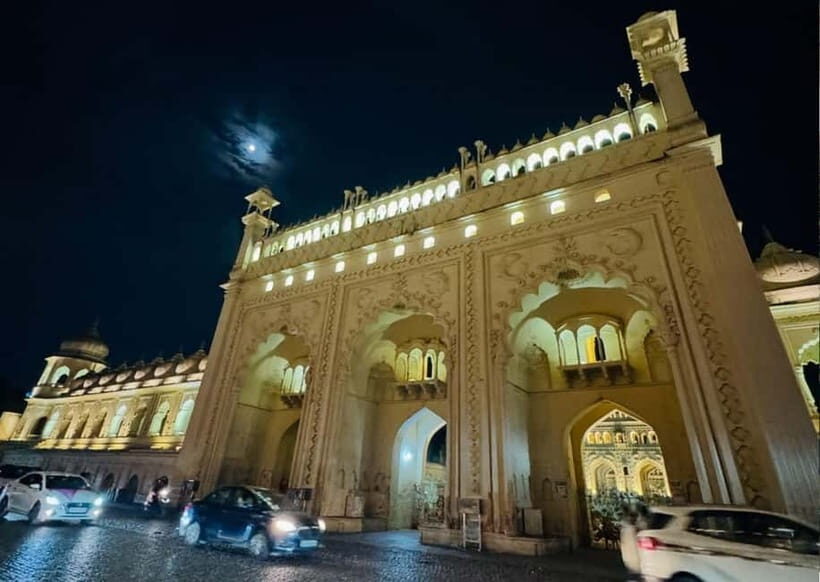
Next up is Satkhanda, and the highlight is simple: its towering silhouette against the night sky. This is the stop for minimal movement and maximum looking. A silhouette doesn’t need a ton of explanation to be striking. The shape does the speaking.
If you want photos that look like more than a random night shot, give yourself room:
- stand at a distance where the whole form fits
- take a couple of angles rather than one fast attempt
- wait a few seconds to see if lighting or street activity changes the background
This is also a good point for travelers who enjoy architecture-as-visual-design. Lights turn vertical structures into nighttime markers. You’re not just touring; you’re learning how Lucknow’s landmarks perform after dark.


Pakka Pul at night: arches, reflections, and timing
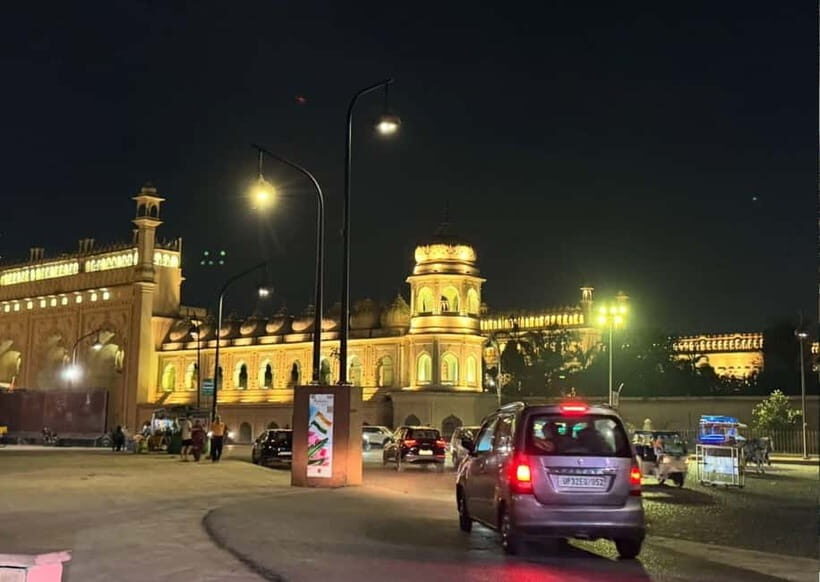
Pakka Pul is where the walk adds a watery element to the visuals. The illuminated arches throw reflections onto the water below, which is one of those scene types that can look good even if you’re not a photographer. It’s also where you’ll likely appreciate the guided timing more than you expect—standing in the right place can make reflections stronger.
This stop also balances the earlier monumental feel. Instead of focusing only on façades and towers, you get a line-and-arch view that feels more scenic. If you’re the kind of traveler who likes to linger, Pakka Pul is usually a good spot to slow down, because the scene has layers: arch structure, light points, and the water’s changing surface.
If you arrive expecting only a quick glance, you’ll miss why this stop is included. If you take 3–5 extra minutes to change your angle slightly, the reflections often become the payoff.
Unani Hospital facade and the craft moment: Zari and Chikan
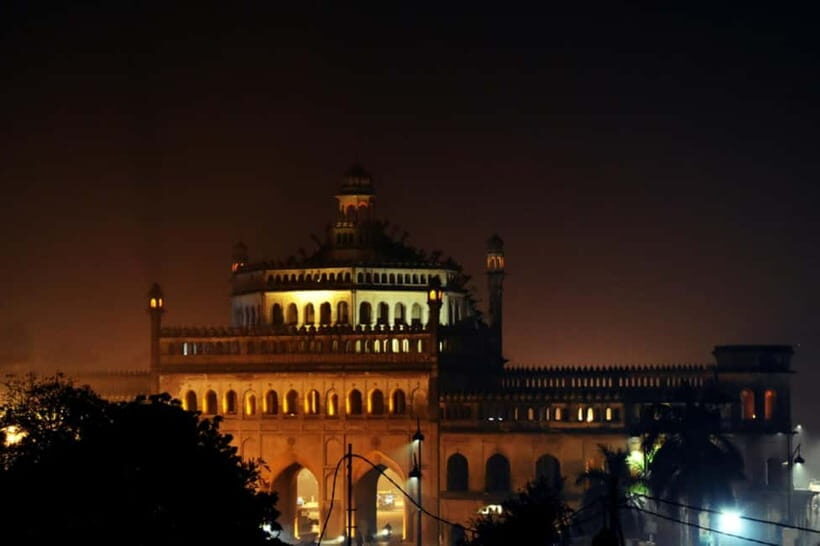
Toward the later part of the tour, you’ll see the Unani Hospital facade softly lit. This is a quieter visual break, and it helps keep the evening from turning into only large, high-attention landmarks. Soft lighting on an established façade gives you texture—enough to notice architectural presence, without dominating your senses.
Then the tour shifts to what Lucknow is famous for in everyday culture: Zari and Chikan artwork. The key value here is pacing. When you’re walking quickly, craft details are easy to miss. On this tour, the night context and the guided attention make it easier to see the intricacy and the way color and threadwork show up under evening lighting.
I like craft stops on night tours because they change your focus. Instead of always looking at structures at a distance, you look closer. You’re training your eyes to switch from skyline and façade views to fine design details. That’s the kind of shift that makes a short, 2-hour tour feel more complete.
Price and value: $13 for guided lighting + tea
At $13 per person for 2 hours, this is priced for people who want guided value without a big time or money commitment. In practical terms, you’re paying for:
- a live guide in English/Hindi
- help with insider hacks and where to look
- a focus on lighting and architectural details
- a hot tea/coffee included during the walk
- a small group experience, limited to 10 participants
Is it a steal? If you’re the kind of traveler who benefits from a guide spotting what’s worth your attention at night, yes. The guide’s role is especially important because photo-friendly scenes depend on what’s accessible at the time, and only a local guide can help you adapt your priorities in real time.
But if your main goal is guaranteed interior access and you expect to roam freely inside every building, the value might feel weaker. That’s not the tour being bad; it’s expectation mismatch. Based on the issues people reported, the most satisfying outcomes tend to come from focusing on what the nightlights are designed to show you: façades, arches, silhouettes, street approaches, and craft details you can actually notice.
Small group pacing: why 10 people matters here
A group limit of 10 is a big deal on this kind of night walk. When you’re stopping at lit architecture and trying to photograph well, too many people turns every stop into a traffic jam. With a smaller group, you get:
- more room to maneuver for photos
- fewer long waits at each site
- easier conversation with the guide
The guide quality also seems to be a strong point. One highly rated experience specifically praised the guide’s excellent English and described the guide as adapting the tour to personal preferences. That kind of flexibility makes a short tour feel less scripted and more like it fits your interests.
So if you hate rigid tours, this format is promising. If you love strict timeboxing and zero surprises, you’ll still be fine, but you should understand that night access and lighting conditions can affect how stops play out.
Practical tips so you get the best night experience
Here’s how you make this tour go smoothly and actually enjoy it:
- Bring comfortable shoes. You’re walking, and night feet fatigue is real.
- Carry a camera (or a phone with a camera you trust).
- Bring water and cash for personal needs.
- Wear something that works for evening weather and keeps you comfortable while standing still for silhouette shots.
Also, follow the rules: no weapons or sharp objects, and no intoxication, alcohol, or drugs. It’s a straightforward policy, but it helps keep the group calm and focused on seeing.
And one more tip: if a stop looks like it might involve doors or entrances, ask the guide early what’s realistically accessible at that moment. That small habit can prevent disappointment and help you prioritize photo points.
Who this tour suits best (and who should think twice)
This is a great match if you:
- love architecture in low light and want a guided eye for nightlit details
- enjoy shopping-adjacent culture without turning it into a shopping mission, especially around Zari and Chikan
- prefer small groups and a conversational guide dynamic
Think twice if you:
- need guaranteed interior access to every building
- want a strict museum-style experience where you can walk into every room on your timetable
Remember: the tour is built around nightlights and visibility of illuminated exteriors, plus a craft focus. If that’s your goal, you’ll likely feel you got your money’s worth quickly.
Should you book Exploring Lucknow in Nightlights?
I’d book this tour if you want a short, focused evening in Lucknow that combines landmark lighting with craft attention. The small group size, English/Hindi guidance, and included hot drink make it feel practical, not touristy. If you’re willing to treat it as an exterior-and-details night walk, you’re in the sweet spot.
If you’re the type who needs to go inside specific sites to feel satisfied, do a quick expectation check before you commit. Based on reported experiences, entrances can be limited, and the best outcomes may come from photographing exterior photo points and enjoying the ambiance rather than assuming full interior access.
FAQ
How long is the Lucknow nightlights walking tour?
The tour lasts 2 hours, guided on foot in the evening.
Where do we meet for the tour?
You meet at the entrance of Bada Imambada. Try to arrive on time to avoid delaying the start.
What languages are the guides, and is it a small group?
The live guide speaks English and Hindi, and the group is limited to 10 participants.
What is included in the $13 per person price?
The price includes the English/Hindi live guide, insider tips to experience the city like a local, help exploring hidden alleys and tucked-away gems, one hot cup of tea/coffee, and lively conversations with the guide.
What should I bring, and what is not allowed?
Bring comfortable shoes, a camera, water, and cash. Weapons or sharp objects are not allowed, and the tour does not allow intoxication, alcohol, or drugs.
Can I cancel, and what happens if plans change?
Yes. You can cancel up to 24 hours in advance for a full refund.