REVIEW · AGRA
Agra To Jaipur Drop Via Fatehpur Sikri & Chand Baori, Step Well
Book on Viator →Operated by India saying namaste Trips · Bookable on Viator
Agra to Jaipur feels like a marathon—this makes it manageable. You get a private air-conditioned vehicle and English-guided stops at Fatehpur Sikri plus Chand Baori Stepwell, with entry tickets handled for a smoother day. It’s a smart way to string together two of India’s biggest heritage landmarks without losing hours to planning.
The main consideration is your feet and your schedule: you’ll cover uneven stone and steep steps, and the day can feel hot. If you hate walking on staircases or you pack heavy luggage without thinking ahead, this route can feel tight.
In This Review
- Key highlights at a glance
- Private Agra to Jaipur day: what this transfer is really for
- Door-to-door logistics: pickup, drop, and how the day flows
- Fatehpur Sikri: a guided monument circuit you can actually finish
- Shahi Darwaza to Buland Darwaza: the royal story in stone
- Courts, audience halls, and the spaces people gathered
- Courtyards of belief: the Jama Masjid and Sheikh Salim Chishti’s tomb
- Mughal daily life vibes: palaces, elephants, and leisure water
- Quick timing note that matters for photos
- Chand Baori Stepwell (Abhaneri): the pause that steals the show
- What to expect on the ground
- Guide quality can vary by site
- Price and value: what $146.06 per group buys you
- Food, heat, and comfort tips that actually help
- The small friction points to watch for
- Who should book this Agra to Jaipur heritage drop
- Should you book? My quick decision guide
- FAQ
- How long does the Agra to Jaipur tour take?
- Where can you be picked up in Agra?
- What time do you spend at Fatehpur Sikri?
- Is entry to Fatehpur Sikri included?
- Do you get an English-speaking guide?
- How long is the stop at Chand Baori Stepwell?
- What about food and drinks?
- Is this a private experience?
- What is the cancellation policy?
Key highlights at a glance
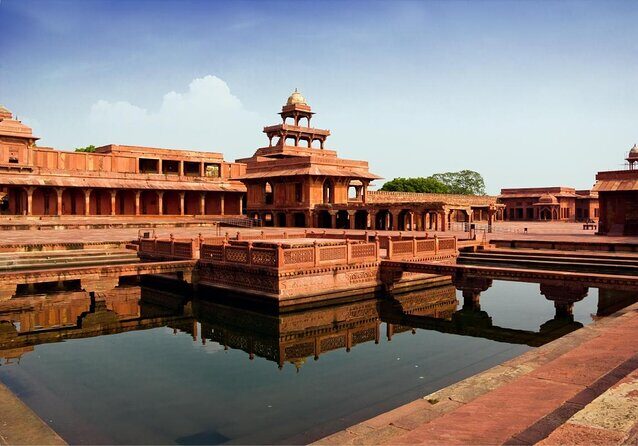
- Fatehpur Sikri guided walk through major monuments, including Buland Darwaza and the Jama Masjid
- Tight, efficient timing: roughly 2 hours at Fatehpur Sikri, then a short stop at Chand Baori
- Chand Baori Stepwell: symmetrical steps at one of the deepest stepwells on earth
- Private, door-to-door transfer from anywhere in Agra to anywhere in Jaipur
- English-speaking guide support plus entry tickets so you don’t waste time at ticket counters
Private Agra to Jaipur day: what this transfer is really for
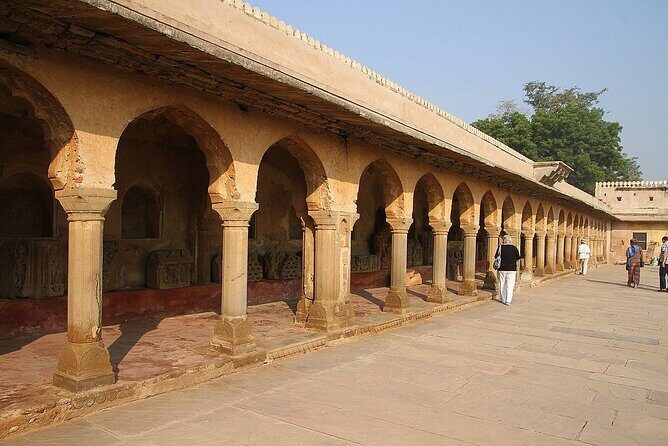
This is not just a “ride.” It’s a structured handoff between two cities, built around heritage stops that sit right on the route. You start in Agra with pickup from your hotel, railway station, airport, restaurant, or your chosen address, then you’re moved through Fatehpur Sikri and Chand Baori before dropping in Jaipur.
The value here is the compression of effort. Instead of figuring out transport, entrance lines, and local guides on the fly, you’re given a ready-made plan: private AC car, timed stops, and tickets included for the key sites. You’ll still need to stay alert and flexible (traffic and site pacing happen), but the framework keeps the day from turning chaotic.
Also, it’s built for small groups. The price is per group up to 2, which usually means couples, friends, or solo travelers who want privacy without paying for a big tour bus.
You can also read our reviews of more tours and experiences in Agra.


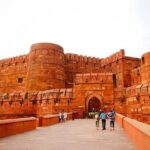
Door-to-door logistics: pickup, drop, and how the day flows
Your pickup and drop are flexible. You can be collected anywhere in Agra and dropped anywhere in Jaipur—hotels, railway stations, the airport, restaurants, or a specific address. That matters because Jaipur station areas and hotel zones can be a hassle to navigate when you’re tired.
The itinerary runs about 8 hours total. You’ll get a little time at the start in Agra (it’s listed as 1 hour) and a little time on the Jaipur end (2 hours). In practical terms, that buffer helps with check-in, getting your bearings, and not feeling rushed at the very end.
The handoff model is also a big part of why people like this. Guides meet you at the sites after you arrive, and you’re back in the car to continue the drive. It’s the kind of setup that keeps you from playing phone-tag when you’re dealing with a new language, a new place, and a new driver.
One small reality check: vehicle size can feel different depending on luggage. If you’re traveling with more than 5 bags, you may want to flag that ahead of time. A sedan works fine for 2 travelers, but heavy packing can make the car feel tight.
Fatehpur Sikri: a guided monument circuit you can actually finish
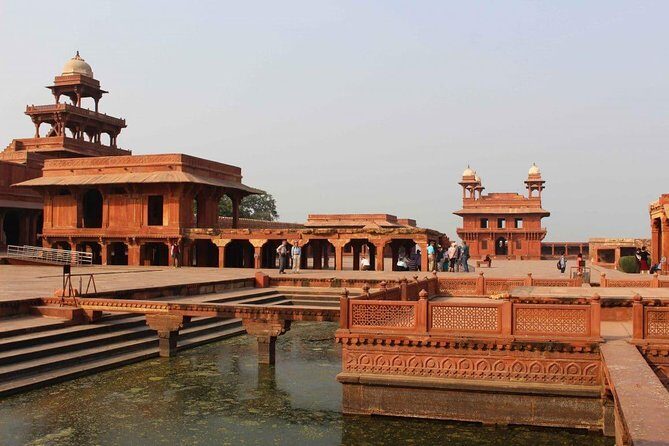
Fatehpur Sikri is one of those places where it’s easy to wander around for hours and learn nothing unless you have a guide. This plan is built to do the opposite: you get an English-speaking guide for a guided visit across the areas covered, and you hit multiple landmarks in about 2 hours.
That time budget is important. Fatehpur Sikri is spread out, with courtyards, gateways, and monumental structures that can swallow your day if you drift. A structured route helps you see the major works without turning it into a long slog.
Shahi Darwaza to Buland Darwaza: the royal story in stone
You start with the Shahi Darwaza Gate, the royal entrance used by the emperor and court. It’s a good first stop because it sets the tone: Mughal power shown through scale and detailed carving.
Then comes the Turkish Sultana’s House, an Indo-Turkish style residence with elegant arches and decorative details. It’s not just a building; it’s a reminder that the Mughal court wasn’t culturally single-note.
From there you move to the Panch Mahal, a five-story pavilion designed for leisure, with open pillars and airy structure. Even if you’re not a “palace person,” the layout gives you a feel for how space and status worked.
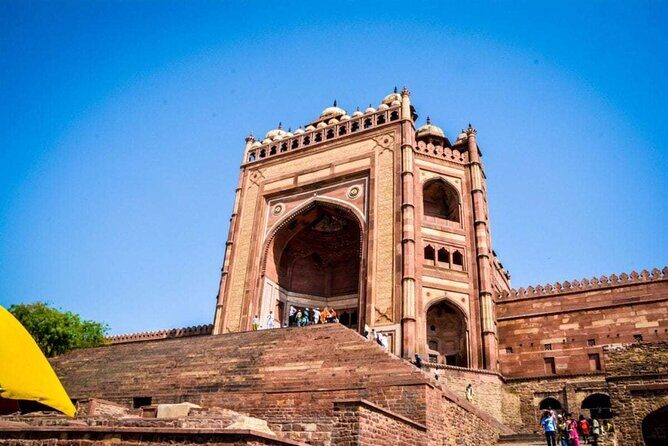
Next, the headline gateway: Buland Darwaza, built by Akbar in 1601. It’s listed at 54 meters high, and the sheer size is the point. It’s the kind of structure where you understand why they made entrances into statements.
Courts, audience halls, and the spaces people gathered
Fatehpur Sikri also includes political and public spaces, and this route covers several of them.
You’ll visit the Diwan-i-Aam, the hall of public audience where Akbar handled grievances. The setting helps you connect architecture to governance, not just architecture to aesthetics.
You’ll also pass through the Diwan-i-Khas, the hall for private audiences and discussions. The famous central pillar design with radiating stone bridges is one of the places where the stones feel like they’re doing something besides supporting the roof.




Courtyards of belief: the Jama Masjid and Sheikh Salim Chishti’s tomb
If you’re looking for the spiritual side of Fatehpur Sikri, you get it here.
The Tomb of Sheikh Salim Chishti is described with white marble and precious gems and stones. That kind of material choice instantly signals significance and reverence.
Then there’s the Jama Masjid, one of India’s largest mosques, built in 1571, with intricate Persian-inspired motifs. Even if you don’t read a single line of history, you’ll feel the intention in the geometry and ornamentation.
Mughal daily life vibes: palaces, elephants, and leisure water
Not everything is about power displays. You also get details that make the place feel lived-in.
Jodha Bai’s Palace blends Rajput and Mughal styles, with spacious courtyards and richly carved motifs. It gives a more human angle to the court story.
The route includes Hathi Pol, the Elephant Gate, wide and built strong enough for royal elephants. It’s a great reminder that logistics and spectacle were tightly linked in imperial life.
And then Hiran Minar, built in memory of Akbar’s favorite elephant. It’s a different kind of monument—affection turned into architecture.
You’ll also see Anup Talao, an ornamental pool used for musical performances and royal gatherings. Water features like this turn a complex into a social stage.
Finally, the Khwabgah (House of Dreams) is the emperor’s private chamber for rest and reflection. It’s listed with richly decorated interiors, which is exactly what you want when your eyes start to glaze over from gateways and courtyards.
Quick timing note that matters for photos
If you can manage it, early timing helps with crowd levels and light. One useful tip from the day-before logistics is that you can get better photo conditions when you’re not fighting peak tourist flow.
This itinerary is set up as a day drive, so you won’t fully control the sun angle, but you can still benefit from being mentally ready when the light hits.
Chand Baori Stepwell (Abhaneri): the pause that steals the show
Chand Baori is where the day changes pace. You’ll spend about 30 minutes here, with admission ticket included.
This stepwell is described as one of the deepest and largest on earth, built over 1,000 years ago. The key experience is the symmetry—long lines of steps dropping down in a patterned way that makes your brain do math before your camera even comes out.
What to expect on the ground
Stepwells are engineering, but they’re also stubborn physical spaces. The steps can be slippery or uneven, so proper footwear matters. Also watch where you step—goats are part of the scene around the stepwell area, and you don’t want to be surprised mid-photo.
With only about half an hour, you’ll want to move with purpose. Take a few wide shots, then descend if you’re comfortable, then circle back for the symmetry from a slightly different angle. Don’t get stuck reading every sign if you’re not a deep researcher type.
Guide quality can vary by site
This plan includes guided support, and Fatehpur Sikri benefits from that most. Chand Baori’s setting is more remote, and guide energy can vary.
If you care about deeper interpretation at Chand Baori, ask one or two focused questions when your guide is with you—like what you should notice first about the geometry or why it was built the way it was. Even a short Q&A can turn 30 minutes into a memorable understanding.
Price and value: what $146.06 per group buys you
At $146.06 per group (up to 2), this is priced like a private heritage transfer day rather than a sightseeing-only tour. And that’s the key to judging value: you’re paying for transport plus entry tickets and guide time at the main sites.
If you were to book each piece separately—private car, tickets, and guides—you’d likely spend comparable money while also taking on coordination headaches. Here, the plan does the glue work: pickup and drop in each city, timed stops, and tickets included.
So who gets the best deal? You’ll usually feel the value most if:
- you want a private AC car rather than a shared bus
- you want guided explanations at major sites
- you’re traveling as 1–2 people and don’t want the hassle of assembling your own day-trip plan
If you’re traveling with a larger group, the per-person value might drop depending on how you normally hire drivers and guides. But for couples and solo travelers, the math is often friendly.
Food, heat, and comfort tips that actually help
Food and drinks are not included. There may be a lunch stop along the way, and that’s typically your own expense.
One practical warning: some lunch stops can be overpriced. The best defense is simple—choose based on what you see, and don’t feel locked into the first option. If you’re traveling in peak heat, build in a small buffer for water and rest so you don’t get sluggish at the sites.
Temperatures can be intense on an India heritage day. Come prepared with hat/sunglasses if you use them, and consider lighter clothing for the walk-heavy portions. Your goal isn’t to “tough it out.” It’s to enjoy the sites while you still have energy to look up.
The small friction points to watch for
A smooth day is usually about small details, not big promises.
- Driver language: the driver may not always speak English fluently, even when the guide is English-speaking at the sites. That doesn’t necessarily affect the drive quality, but it can affect directions and communication. If you’re sensitive to that, keep your pins and addresses handy.
- Lunch pacing: if there’s a planned meal stop, you might spend time waiting while the driver finishes their own lunch. Treat lunch as flexible and plan your expectations.
- Luggage: sedan size can be tight with lots of bags. If you have more than 5+ bags, mention it ahead of time.
These aren’t deal-breakers. They’re the things that help you set realistic expectations.
Who should book this Agra to Jaipur heritage drop
This tour-style transfer makes the most sense if you:
- have limited time and want to see Fatehpur Sikri and Chand Baori in one day
- prefer private transport over public connections
- like a structured route with a guide who connects the dots at major stops
- are traveling with 1–2 people and want door-to-door convenience
It’s also a good fit if you’re arriving in Agra and need a clean, low-stress route into Jaipur without planning the middle.
If you’re the type who hates walking, you might still enjoy it—but you’ll need to go slow. The sites involve stairs, courtyards, and uneven stone.
Should you book? My quick decision guide
Book it if you want an efficient day where transport, tickets, and guided sightseeing are handled for you. The biggest win is that you can focus on the monuments—Shahi Darwaza, Buland Darwaza, the Jama Masjid, and then Chand Baori’s step geometry—without spending your energy on logistics.
Consider another option if you have mobility concerns, you expect a long guided experience at every stop (Chand Baori is about 30 minutes), or you’re arriving with very heavy luggage and haven’t planned for sedan space.
If you’re flexible, wear good shoes, and ask questions when you have a guide with you, this is a strong way to connect Agra to Jaipur with two high-impact cultural stops.
FAQ
How long does the Agra to Jaipur tour take?
The experience runs for about 8 hours.
Where can you be picked up in Agra?
Pickup is available from any location in Agra, including hotels, railway stations, the airport, restaurants, or your preferred address.
What time do you spend at Fatehpur Sikri?
You have about 2 hours at Fatehpur Sikri with visits to all areas listed for the tour.
Is entry to Fatehpur Sikri included?
Yes. Admission tickets are included for Fatehpur Sikri.
Do you get an English-speaking guide?
At Fatehpur Sikri, an English-speaking guide is included for the visit. The experience also lists English-speaking tour guide support as part of what’s included.
How long is the stop at Chand Baori Stepwell?
The stop is about 30 minutes, and admission is included.
What about food and drinks?
Food and drinks are not included. Lunch stops, if any, are typically your own expense.
Is this a private experience?
Yes. This is a private tour/activity, and only your group participates.
What is the cancellation policy?
Free cancellation is available. You can cancel up to 24 hours in advance for a full refund. If you cancel less than 24 hours before the experience starts, the amount paid won’t be refunded.