REVIEW · NEW DELHI
8 Day Golden Triangle Private Tour with Ranthambore National Park
Book on Viator →Operated by Indo Routes · Bookable on Viator
One of India’s best routes gets a wildlife twist. This private 8-day Golden Triangle blends iconic UNESCO sights with two Ranthambore safaris, plus the comfort of private transport and pickup in New Delhi. I like how the days mix big-name monuments with real atmosphere in Old Delhi and Jaipur.
I also like the value of keeping things practical: private car with a professional chauffeur, bottled water, and scheduled entrances so you spend less time figuring out logistics. Add in small extras like seasonal fruit and snacks, and the long travel days feel more manageable.
The one thing to think about is pace. You’ll move fast between cities and spend several full days on the go, so this works best if you’re comfortable with early starts and a tight sightseeing schedule.
In This Review
- Key highlights worth caring about
- Why the Golden Triangle plus Ranthambore works so well
- Day 1 in New Delhi: straight to the hotel, no stress
- Old Delhi on Day 2: Red Fort, Jama Masjid, and Chandani Chowk by rickshaw
- Delhi’s monuments to Agra: Qutub Minar and Humayun’s Tomb context
- Sunrise Taj Mahal and Agra’s Mughal power circuit
- Mehtab Bagh and the Yamuna-side perspective you shouldn’t skip
- Day 5 arrival in Ranthambore: first safari ride and the wait that counts
- Day 6: second Ranthambore safari, then Jaipur and a cultural night
- Amber Palace and Jaipur’s big names: forts, observatories, and markets
- Getting your money’s worth: what $540.10 covers and how to judge it
- Who this tour fits best (and who should reconsider)
- Should you book the Golden Triangle with Ranthambore?
- FAQ
- How long is this tour?
- Where does the tour start?
- Is pickup included?
- Is this a private tour?
- What languages are the guides?
- Are Ranthambore safari rides included?
- Which major monuments are included?
- Are meals included?
- What’s not included in the price?
- What happens if weather affects the tour?
Key highlights worth caring about
- Two Ranthambore game safaris (October to June departures) so you get more than one chance at wildlife
- Sunrise Taj Mahal timing, which usually means calmer crowds and softer light
- Old Delhi by rickshaw through Chandani Chowk for a street-level feel
- Jaipur hilltop and observatory combo: Amber Palace area plus Jantar Mantar
- Private transportation end-to-end, with a Wi‑Fi-enabled car and bottled water
- English/Spanish/Italian guide support depending on group size
Why the Golden Triangle plus Ranthambore works so well
Most Golden Triangle trips focus on monuments. This one keeps the formula but adds a serious nature hit: Ranthambore National Park, known for its Royal Bengal tiger chances and its reputation as a more pristine wildlife sanctuary. That shift matters because it breaks the pattern of forts and tombs with open-air, early-morning energy.
You also get a smart geographic flow. Delhi sets up the Mughal and Sultanate story, Agra brings you into the Taj and power centers, Jaipur adds royal architecture and daily-life markets, and Ranthambore lands you in a different rhythm entirely. The private driver helps a lot here, because you’re not fighting trains, taxis, or multiple transfers.
One more practical upside: this is described as a private tour/activity, so it’s only for your group. That usually means fewer waiting games and more time staying on track when you hit tight monuments.
You can also read our reviews of more private tours in New Delhi


Day 1 in New Delhi: straight to the hotel, no stress
Your first day is intentionally light. You’re welcomed at Indira Gandhi International Airport and transferred to your hotel, then you get free time to relax. That’s not filler; it’s a real strategy for jet lag and the first heat-humidity shift.
Since you’re not pinned to a schedule yet, you can do basics: hydrate, figure out the area, and plan your early starts for the rest of the week. If you’re traveling with family, this is the day that helps everyone settle in.
Also note the tone of the trip: it’s not a backpacker-style shuffle. You’re in a private car with a professional chauffeur, and the tour includes the guiding and admission flow for the main sights on later days.
Old Delhi on Day 2: Red Fort, Jama Masjid, and Chandani Chowk by rickshaw
Day 2 leans into the sights and sounds that make Delhi feel like Delhi. You visit the Red Fort complex and Jama Masjid, then head to Chandani Chowk Bazaar for a rickshaw ride through the narrow lanes. That rickshaw segment is one of the best ways to get a street-level feel without turning it into a cardio challenge.
You also make a cultural stop at Raj Ghat, the resting place of Mahatma Gandhi. Pairing a huge Mughal-era fort complex with Raj Ghat’s quiet memorial space gives the day real contrast.
Timing is built for impact: you have a packed Old Delhi morning and afternoon, then a welcome dinner back at the hotel. That dinner is especially useful if your group wants one organized meal without hunting for restaurants after a long day.
Two practical notes to keep your comfort up: wear shoes you can walk in for the bazaars, and keep water handy. The tour includes mineral water bottles, which helps.
Delhi’s monuments to Agra: Qutub Minar and Humayun’s Tomb context
Day 3 is your Sultanate-to-Mughal bridge day. After breakfast, the tour moves through New Delhi highlights such as India Gate, Humayun’s Tomb, Birla House (Gandhi Smriti Bhawan), and Qutub Minar before continuing to Agra.
Qutub Minar is a key stop because it sets architectural and historical context for everything you’ll see next. Humayun’s Tomb helps you understand how Mughal design matured. And Birla House/Gandhi Smriti Bhawan adds a later-era perspective through the museum dedicated to Mahatma Gandhi.
This is also the day where transportation really earns its keep. You get private transfers so the city-to-city move doesn’t become a whole separate project. You’re still busy for the day, but it stays organized.
If you’re sensitive to walking, this is the day to go steady in the tomb areas. Temples and tomb compounds can look manageable, but the ground can be uneven and the sightseeing can stack up.
Sunrise Taj Mahal and Agra’s Mughal power circuit
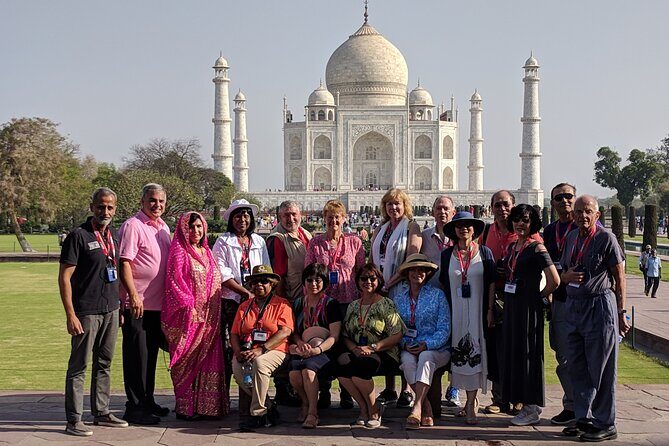
If your trip has one “pin” moment, it’s the Taj Mahal at sunrise. The tour specifies the visit for the early time window, and it’s easy to see why that matters: softer light on the white marble and a calmer start compared to peak hours.
Then you move through Agra’s power story. Agra Fort is next, described as the main residence of Mughal emperors until 1638, when the capital shifted to Delhi. That detail helps you see the fort not as scenery, but as a seat of authority and court life.
Fatehpur Sikri rounds out the Mughal “City of Victory.” You’ll also see Buland Darwaza. Even if you’re not a history person, this site works because it gives scale—arches, courtyards, and built-in geometry that make the story feel tangible.
One thing to watch: this day is long. The itinerary lists multiple major stops, and even with included entrances, you’ll still need stamina. Build in calm time at lunch if you can, and don’t plan anything intense after.




Mehtab Bagh and the Yamuna-side perspective you shouldn’t skip
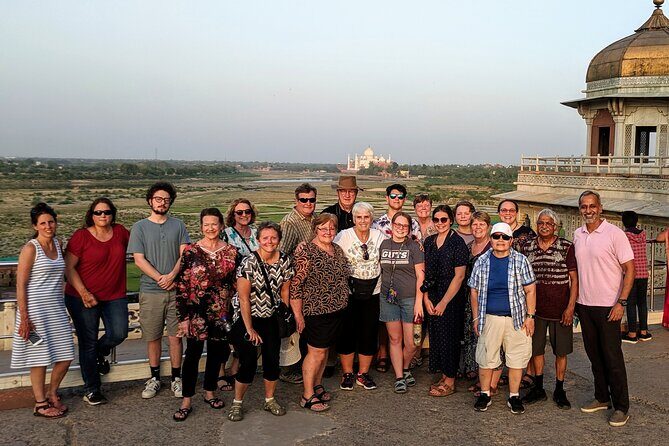
The tour overview includes Mehtab Bagh, the Mughal flower garden on the bank of the Yamuna River, built for an empress of the Mughals. This matters because it changes how you view the Taj Mahal story.
Instead of only looking at the main monument from inside the main Taj experience, you get a riverside perspective that helps you understand how Mughal planners used water, gardens, and sightlines. It’s one of those “small addition” stops that can make the day feel more complete.
Mehtab Bagh is also a nice break from indoor tomb-heavy walking. If you’re someone who likes photo moments, it’s a good chance to capture the Taj in a different mood. Just be ready for sunshine and bring shades if you’re going mid-day.
Day 5 arrival in Ranthambore: first safari ride and the wait that counts
You travel into Rajasthan toward Ranthambore, then in the afternoon you board the safari vehicles for your first jungle safari. This is one of the defining rhythms of the whole trip. In the city, you control the pace. In the park, the pace controls you.
Ranthambore is famous for Royal Bengal tigers, but the realistic promise here is a safari experience and a chance of sightings, not a guaranteed tiger moment. Two safaris is the smartest feature in your favor, and that second ride is scheduled for the next day.
After the safari, you overnight in a hotel near the park area. That keeps the logistics simple so you can focus on the morning. If you’re traveling as a family, this also gives kids a clear goal for the day: wildlife first, sightseeing later.
Practical tip: safaris are often about patience and visibility. Keep your phone charged, wear layers you can adjust easily, and listen to the safari staff so you know where to sit and when to shift attention.
Day 6: second Ranthambore safari, then Jaipur and a cultural night
Another morning game safari follows, then you drive to Jaipur, the rose pink capital of Rajasthan. The evening includes a Rajasthan cultural dance performance with dinner, and it’s a smart blend: you close out nature in the morning and switch to culture in the evening.
In wildlife country, the morning slot can feel more promising because animals are often more active then. The tour’s two-safari plan basically gives you a better odds setup than one ride alone.
Then Jaipur shifts everything. Even before you hit the big palace sights, Jaipur’s feel is different: it’s more of a living city, with markets and color. The tour doesn’t just show you monuments. It connects you to the way the day moves there.
If you’re choosing between museums and streets, this tour leans toward both. You’ll do palaces and observatory sights, but you’ll also spend time in markets and see temple culture through the Monkey Temple stop later.
Amber Palace and Jaipur’s big names: forts, observatories, and markets
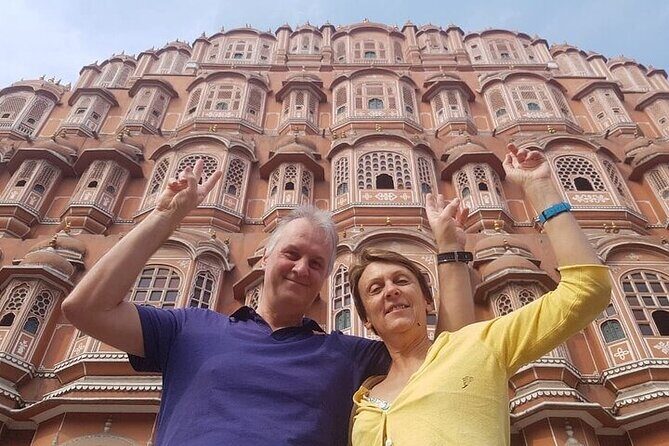
Day 7 is your main Jaipur sightseeing day, and it’s a packed but very coherent cluster. You start with Amber Palace, then move to the palace of winds and the Water Place. From here you head into the Jantar Mantar area (the astronomical observatory), the City Palace, the Monkey Temple, and then colorful markets.
Amber Palace is the hilltop anchor. The tour highlights that you’ll enjoy hilltop views, which is exactly why this stop is worth the time. Even if you don’t read every plaque, you’ll feel the planned geography: built for commanding views and royal presence.
Jantar Mantar is one of the most interesting stops because it’s not a typical palace or tomb. It’s described as having 19 astronomical instruments, completed in 1734, and it includes the world’s largest stone sundial. If you like seeing how science was built into public space, this is your moment.
The City Palace of Jaipur is the royal residence of the Maharajah of Jaipur, and the tour includes time there. Monkey Temple adds a quick cultural stop that’s free and short, which helps keep the day from running too long.
Two practical considerations: Jaipur palaces and observatories involve walking between viewpoints. Go slow and keep hydration up. Also, if you’re hoping to shop, markets are best earlier rather than when you’re tired.
Getting your money’s worth: what $540.10 covers and how to judge it
At $540.10 per person for an 8-day private experience, the main question is what you get beyond the word private. Here, the value comes from bundled basics that normally cost time and stress.
You get accommodation in the mentioned/similar category hotels, plus all sightseeing and transfers by private transportation. That matters in India, where saving an hour here and there can mean fewer missed connections and less last-minute bargaining.
You also get entrance coverage for many major sites and game parks “as mentioned” in the schedule. Then there’s the operational side: a Wi‑Fi-enabled car, mineral water bottles, and seasonal fruits/biscuits/snacks during the tour. That’s not glamorous, but it’s real comfort on long days.
Finally, two safari trips in Ranthambore can be the biggest variable in your experience. This program builds in a second chance. Even if sightings aren’t guaranteed, two rides dramatically improve your odds compared to one.
So is it “cheap”? No. Is it a reasonable deal for a private, multi-city, wildlife-plus-monuments circuit? Often, yes—especially if you’d otherwise have to stitch together taxis, tickets, and separate guides yourself.
Who this tour fits best (and who should reconsider)
This tour fits best if you want a guided route that hits the big UNESCO names plus Ranthambore wildlife without forcing you to plan the logistics. It’s also designed to work for families, with a mix of monuments, bazaars, and safari time.
You’ll likely enjoy it if you:
- Like seeing a full set of contrasts in a single trip: forts, tombs, palaces, markets, and nature
- Can handle long sightseeing days and early starts
- Value private transport over trains and public transit juggling
You might reconsider if you want a slower pace, deep time in one city, or lots of free wandering. This is built as a schedule-forward experience.
And a final small note: the tour includes group discounts and is private for your group. If you’re traveling with 6 people or more, you’ll get a tour escort to accompany you, which can make the pacing and coordination smoother.
Should you book the Golden Triangle with Ranthambore?
I’d book it if you want the Golden Triangle checklist handled well and you also care about adding real wildlife time. The two-safari plan is the standout. The sunrise Taj Mahal and the Old Delhi street experience by rickshaw are the other two big wins.
If you’re the type who gets stressed by tight days, this might feel like a lot. But if you’re comfortable with an active itinerary and you want one organized private trip that covers Delhi, Agra, Jaipur, and Ranthambore in about a week and a half, it’s a strong match.
FAQ
How long is this tour?
It’s an 8-day tour, described as approximately 8 days / 7 nights.
Where does the tour start?
It starts at Indira Gandhi International Airport in New Delhi.
Is pickup included?
Yes. Pickup is offered, and you’ll be transferred from the airport to your hotel on Day 1.
Is this a private tour?
Yes. It’s listed as a private tour/activity, so only your group participates.
What languages are the guides?
For groups up to 05 persons, the guide is listed as local English/Spanish/Italian speaking. For 06 persons and above, a tour escort is provided.
Are Ranthambore safari rides included?
Yes. The tour includes 02 safaris through Ranthambore National Park (for October to June departures).
Which major monuments are included?
The tour includes stops such as Taj Mahal, Agra Fort, Mehtab Bagh, Amber Fort, Qutub Minar, Humayun’s Tomb, and Jantar Mantar, plus additional UNESCO-listed sites mentioned as part of the 8 UNESCO stop total.
Are meals included?
Breakfast is included for 7 days. A welcome dinner is included on Day 2, and there is also dinner with the cultural dance performance on the Jaipur evening.
What’s not included in the price?
International airfares, insurance/visas, and tips/gratuities are not included.
What happens if weather affects the tour?
If the experience requires good weather and it’s canceled due to poor weather, you’ll be offered a different date or a full refund. It also notes free cancellation up to 24 hours in advance for a full refund, and it requires a minimum number of travelers.