REVIEW · KOCHI
5 Day Private Tour of Tigers, Taj Mahal and Palaces from Cochin
Book on Viator →Operated by Pacific Classic Tours India · Bookable on Viator
Tigers and the Taj in one tight swing. This private, cruise-friendly route links Delhi, Agra, Jaipur, and Ranthambore with included domestic flights, 5-star stays, and guided sightseeing built for people who don’t have weeks to spare.
I really like two parts of this plan. First, the schedule pushes you to see the Taj Mahal at sunrise, when the light turns the marble soft and the crowds are still small. Second, you get two chances for a Ranthambore safari in a shared jeep/canter, with an English-speaking naturalist to help you read animal signs and the landscape.
One thing to consider is the pace. You’ll spend real time in transit, including long drives and airport connections, so pack for “moves-fast” days and plan for some early starts.
In This Review
- Key highlights to know before you go
- A cruise-to-cruise overland route that actually fits your calendar
- Day 1: From Kochi port to Delhi with included flights and 5-star downtime
- Delhi monuments in one strong day: Humayun’s Tomb to the ceremonial center
- The Agra drive that sets up your Taj Mahal day
- Taj Mahal at sunrise: the light, the quiet, and the marble details
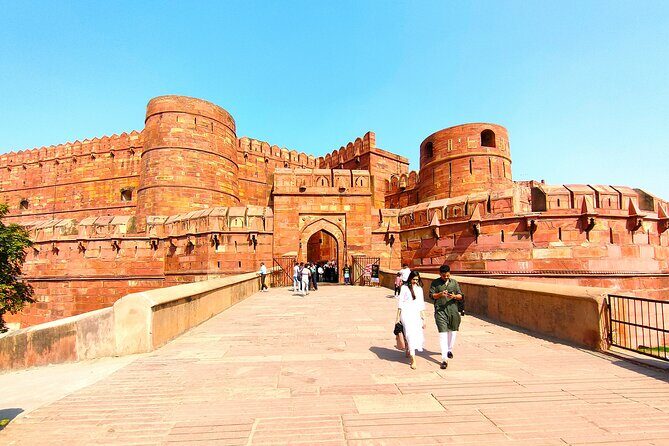
- Agra Fort: Mughal power in a different key from the Taj
- Ranthambore travel day: changing from cities to wilderness time
- Two safari chances in Ranthambore: shared jeep/canter plus a naturalist
- Jaipur’s palaces and observatory: pink city landmarks without the time sink
- Total value check: what $1,668 per person buys you (and what it won’t)
- Who this trip suits best—and who should rethink it
- Should you book this 5-day Kochi-to-Mumbai tour?
- FAQ
- How does the tour handle pickup and drop-off for cruise travelers?
- What flights are included in the package?
- Is this tour private, or will I be mixed with other groups?
- Where do the sightseeing days take place?
- Are the Taj Mahal and other monument entrance fees included?
- How many safaris do you get in Ranthambore?
- What type of vehicle is used during Ranthambore safaris?
- What hotel standard and room setup are included?
- Are meals included?
- What should I wear for the jungle safari?
Key highlights to know before you go

- Sunrise Taj Mahal with a timed visit so you see it before the daytime crush
- Two Ranthambore safaris (morning and afternoon) to improve your odds of spotting tigers
- Private local guides during sightseeing for context that makes monuments click
- Golden Triangle + Pink City in 5 days, using efficient flights and transfers
- 5-star hotels with twin-share rooms for a comfortable base between big days
- Safari clothing advice (khaki/brown/olive) to help the wildlife feel less pressured
A cruise-to-cruise overland route that actually fits your calendar

If you’re arriving on a cruise in Kochi, this tour is built around that reality. You get port pickup in Kochi, fly up to Delhi, and then finish in Mumbai so you can get back on a ship. That matters because India travel is rarely smooth in the “wing it” sense. This route tries to remove the guesswork.
You’re also not stuck in one city. In five days you’ll see the Mughal highlights around Agra, the iconic monuments of Delhi, and Jaipur’s royal architecture, then shift gears into wildlife time at Ranthambore. That mix can feel like whiplash—in a good way—if you like variety and don’t mind a schedule that moves.
The trip’s “private” promise is also worth noticing. It’s not a cattle-call bus tour where you lose your place. It’s designed so your group stays together across transfers and sightseeing.
You can also read our reviews of more private tours in Kochi


Day 1: From Kochi port to Delhi with included flights and 5-star downtime

Day one is mostly travel and a landing, and that’s a smart use of time. After Kochi (Cochin) port pickup, you transfer to the local airport for a commercial flight to Delhi. In plain terms: you lose fewer daylight hours than you would if the plan were driving all the way.
Once you arrive in Delhi, you’re met and taken to your hotel. The tour includes 4 nights of 5-star accommodation on twin sharing, so you’re not checking into basic rooms after a long travel day. You’ll likely want that comfort because the next day starts sightseeing early-ish.
A practical note: domestic flights are included as economy class, but you still need a current passport and a passport copy for booking. Build a little buffer into your pre-trip prep so you don’t get stuck at the last minute.
Delhi monuments in one strong day: Humayun’s Tomb to the ceremonial center

Delhi here is not “museum after museum.” It’s a tight route through major landmarks with enough time to actually look.
Start with Humayun’s Tomb, a UNESCO World Heritage site and one of the Mughal-era anchors in Delhi. What I like about this stop is how it sets the stage for everything you’ll see later at the Taj Mahal. Even if you don’t know the details, the symmetry and the garden layout make the style feel real.
Next is Qutub Minar, another UNESCO site. It’s not just tall—it’s visually commanding. The complex around it gives you a sense of how centuries layered on top of each other in the Delhi area.
Then you’ll visit Gurudwara Bangla Sahib, a major Sikh temple in Delhi. This is a good pause from stone monuments because you shift from royal memorials to living faith. If you’re curious about India’s many traditions, this stop helps you remember that the country is not only about landmarks.
You also get stops at India Gate and the government-civic area around Rashtrapati Bhavan / President House and the Parliament building area. India Gate is a solemn memorial arch, and it’s also a good spot to understand how modern India marks its history.
One practical “make it work” tip: Delhi sites can include walking and standing time. Comfortable shoes matter more than fancy outfits here, because you’ll move between landmarks with short time windows.
The Agra drive that sets up your Taj Mahal day
After Delhi sightseeing, the plan shifts to Agra by road, with driving time of about 3 hours. That’s actually useful. You get to reset, and you’re not forced to stay awake for hours longer than necessary.
Agra is the city that turns your schedule into a real highlight. The Taj Mahal is the reason most people come, and this itinerary treats it like the headliner by arranging an early visit the next morning. That’s the difference between seeing the Taj as a photo location and seeing it as an experience.
Also, the tour includes a return ride by battery bus/golf cart from parking at the Taj Mahal. That helps you conserve energy so you can focus on the walkways and viewpoints instead of stairs and long stretches.
Taj Mahal at sunrise: the light, the quiet, and the marble details
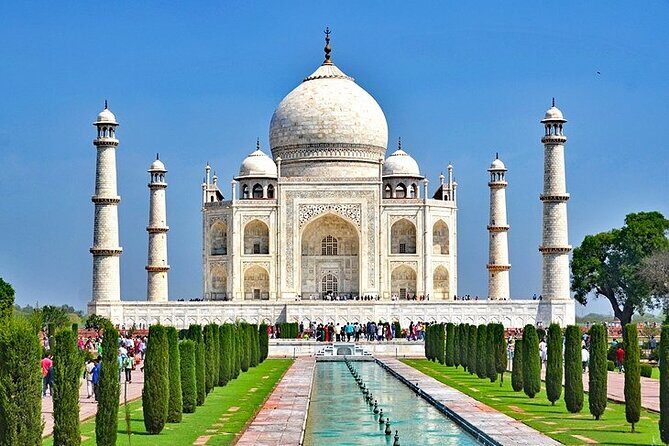
Your Taj Mahal morning is set for sunrise to beat crowds and daytime heat. This is a big deal. The Taj’s marble changes with the weather and the angle of the sun, and the early timing gives you more of that “soft glow” effect instead of harsh midday light.
This stop is also where a good guide really pays off. Even without special knowledge, you can start noticing patterns: the symmetry, the calligraphy, and the way the complex is arranged so your eye keeps moving between courtyards, gate lines, and the main structure.
Plan for some waiting and a chill morning start. Sunrise can mean cooler air, and you’ll be glad you brought layers even if the rest of the trip feels warm.
A few more Kochi tours and experiences worth a look


Agra Fort: Mughal power in a different key from the Taj

Later, you’ll visit Agra Fort, another UNESCO site. The Taj Mahal is about elegance and romance of power. Agra Fort feels like administration and control—stone walls, royal space, and the defensive mindset of the Mughal era.
The itinerary keeps this as a shorter block compared with the Taj visit. That works because you’ll likely be absorbing a lot of information and images by then. Agra Fort is a strong companion to Taj: together they help you see the Mughal world as more than one iconic building.
One thing to be ready for: Agra is busy and busy days can make it harder to linger. If you’re the type who likes slow travel, you might feel the schedule. But if you’re okay moving at a “good pace,” you’ll get a lot of value.
Ranthambore travel day: changing from cities to wilderness time
After Agra, you head to Ranthambore Tiger Reserve, with about a 5-hour afternoon drive. This is the part of the trip where the mood shifts. You’ll trade crowds and monuments for scrub forest and a real sense that wildlife could be around the bend—though of course, sightings are never guaranteed.
This is where having a clear plan matters. The tour includes safari logistics and tickets, plus the English-speaking naturalist during safari. That means you’re not just sitting in a jeep hoping for the best. You’ll have help spotting tracks, reading the terrain, and understanding why certain areas hold more animal activity.
If you’re traveling with a moderate physical fitness level, this segment is still manageable, but remember you’ll be doing long sitting time. Pack snacks if allowed by your daily meal plan, keep water accessible, and plan to stretch during breaks.
Two safari chances in Ranthambore: shared jeep/canter plus a naturalist
This itinerary gives you two safaris: one morning and one afternoon. That’s smart because animal movement can change with temperature, light, and activity patterns. Two shots don’t guarantee tigers, but they give you more time in the right conditions.
The safaris are in shared jeeps/canters, with an option to use canters if shared jeeps aren’t available. Either way, you’ll be in a vehicle with other safari participants. The upside is that you get a more lively shared experience; the downside is you can’t always choose the exact sightline inside the vehicle.
A key inclusion is the English-speaking naturalist on safari. In practical terms, this helps you understand what you’re seeing—why you stop where you do, what animals might be nearby, and how to watch without wasting time.
Dress matters in the park. The tour guidance recommends khaki, brown, and olive green colors that blend with the forest. The idea is simple: bright colors can feel alarming to wildlife. Also, remember you’ll likely sit for stretches of time, so comfortable layers help even if the day is warm.
Jaipur’s palaces and observatory: pink city landmarks without the time sink
After Ranthambore, you drive to Jaipur, about 3 hours in the evening, and check in. Jaipur is where you switch back into architecture and royal-era storytelling.
You’ll start with Sheesh Mahal (mirror palace). This is one of those spots where the details reward patience. Even if you don’t go deep on the lore, you’ll see how light and ornamentation were used to create a dramatic indoor effect.
Then you get photo stops at Jal Mahal and Hawa Mahal. The Jal Mahal water palace has that cinematic feel because it sits in the Man Sagar waters. Hawa Mahal, the Palace of Wind, is instantly recognizable with its honeycombed pink facade.
A realistic tradeoff: these are photo stops, not long museum-style visits. That can be perfect if you want the “hit list” in a limited timeframe. If you prefer slow looking, you’ll feel slightly rushed, especially in peak crowds.
Next is City Palace, where you’ll get more time—about an hour for the main exploration block. This area gives you courtyards and buildings with royal family history. It’s a good chance to connect the outside “pink city” look with the interior story of power and living spaces.
Finally comes Jantar Mantar, the UNESCO observatory. Even if you’re not a science nerd, you can appreciate that the shapes are built to measure time and the sky. It’s not just a photo stop. It’s an example of how observation and design worked together in the pre-digital world.
Total value check: what $1,668 per person buys you (and what it won’t)
At $1,668 per person, the biggest question is value: do you get enough included to justify private pricing?
Here’s what you do get, factually: 5-star hotel nights (4 nights) on twin sharing, private air-conditioned vehicle for transfers and sightseeing, domestic flights (Kochi to Delhi and Jaipur to Mumbai), meals as specified each day, entrance fees for the listed monuments and national park, plus safaris in Ranthambore with a naturalist. You also get unlimited bottled water and a battery bus ride at the Taj Mahal.
That combination is what makes private sense for a time-limited cruise passenger. You’re paying not just for seats and tickets, but for someone to manage the web of airport transfers, timing, and guiding between UNESCO sites and wildlife excursions.
What’s not included is the stuff that can add a surprise cost. Video camera fees may apply for monuments (listed as about $6 per video camera). Food and drinks aren’t included unless the itinerary specifies meals. And the tour notes that a mandatory gala dinner on Christmas Eve and New Year’s Eve isn’t included and is charged extra if it applies to your dates.
The other hidden cost is energy. You’re moving fast through major stops, with long drive days (Delhi to Agra and Agra to Ranthambore) and airport handoffs. If you need slow travel, you’ll likely feel “scheduled” even in a private format.
Who this trip suits best—and who should rethink it
This tour fits well if you’re a cruise traveler on a schedule, or if you like seeing the biggest icons without adding extra nights to your plan. It also suits you if you’re happy doing early mornings (sunrise Taj) and sitting in vehicles for long legs.
I think it’s especially good for couples or small groups who want a private guide experience but still want the economy of shared safari vehicles. You get the comfort of private guiding on land, then the reality of shared safari logistics in Ranthambore.
It’s also a strong match if you care about context. Delhi and Agra monuments are easier to appreciate when someone can connect the architecture and history to what you’re looking at. Many guides who lead this type of route—like Prashant, Vijay, Rajni, Dillip Singh, and Ashok Sherma—are known for delivering the “what am I looking at and why does it matter” layer that makes the day feel less like a checklist.
If you’re going to Ranthambore just for the tiger fantasy, keep your expectations flexible. Safaris provide the best chance, but wildlife doesn’t run on our calendar. The tour’s two safari slots help, and the naturalist inclusion helps you spot more than you might otherwise.
Should you book this 5-day Kochi-to-Mumbai tour?
Yes—if you want a high-impact Golden Triangle plus Ranthambore plan that’s built around cruise timing, flight connections, and guided time at major UNESCO sites. The sunrise Taj Mahal and the two Ranthambore safari days are the two anchors that justify the private price, especially since many core costs (hotels, guiding, entrances, safaris, and key flights) are already included.
Hold off if you’re the kind of traveler who needs downtime between stops or hates early starts. This itinerary is full, and the payoff comes from riding the pace with patience and comfy shoes.
If you book, do two things: pack light layers for sunrise and safari mornings, and bring the right clothes colors for Ranthambore. With that, you’ll be set to make the most of a short trip that still manages to feel like more than a rush-through.
FAQ
How does the tour handle pickup and drop-off for cruise travelers?
The tour includes Kochi (Cochin) port pick-up, and it also includes port pick-up and drop-off at Mumbai Port. After the tour ends, you’ll be transferred to your ship in Mumbai.
What flights are included in the package?
Domestic commercial flights are included in economy class: Kochi to Delhi and Jaipur to Mumbai.
Is this tour private, or will I be mixed with other groups?
It’s a private tour/activity, and only your group participates.
Where do the sightseeing days take place?
You’ll have guided sightseeing in Delhi, Agra, Jaipur, and you’ll visit Ranthambore Tiger Reserve for safaris.
Are the Taj Mahal and other monument entrance fees included?
Entrance fees of the mentioned sights and the national park are included, based on the tour’s inclusions.
How many safaris do you get in Ranthambore?
You get two safaris in Ranthambore Tiger Reserve: one morning and one afternoon.
What type of vehicle is used during Ranthambore safaris?
Safaris are in a shared jeep/canter. If shared jeeps aren’t available, safaris will be provided in a shared canter (20-seater van).
What hotel standard and room setup are included?
You get 4 nights of 5-star hotel accommodation on twin sharing.
Are meals included?
Yes. Meals are included as specified in the itinerary (with lunch and dinner plus breakfasts as listed). Food and drinks beyond what’s specified aren’t included.
What should I wear for the jungle safari?
The tour recommends wearing colors that blend with the forest, such as khaki, brown, and olive green, to help animals feel less alarmed.