REVIEW · NEW DELHI
12 Days Golden Triangle with Jodhpur & Pushkar
Book on Viator →Operated by Abyss Tours · Bookable on Viator
Golden Triangle in India, then add Jodhpur and Pushkar for meaning. This private 12-day plan is built to keep you moving with private transport and city-by-city sightseeing support, while still leaving breathing room for real moments like spice-market wandering and a Pushkar sunset. What I especially like is how the itinerary mixes big-ticket monuments with smaller, human-scale stops.
I also like that you get practical add-ons that make the cities feel lived-in, like a rickshaw ride in Old Delhi and a cooking class in Pushkar that you can actually repeat later. One thing to consider: major monument entry fees and camera fees are not included, so you’ll want to budget extra on top of the tour price.
In This Review
- Key highlights that make this tour work
- Price and logistics: what $800 covers (and what to budget)
- Day 1 in Delhi: arrival calm, then a full free day
- Day 2 Old Delhi with Jama Masjid, spice lanes, and Chandni Chowk
- Day 3 Agra Fort and Taj Mahal at sunset time
- Day 4 Chand Baori step well en route to Jaipur
- Day 5 Jaipur highlights: Hawa Mahal pass, Amer Fort by Jeep, City Palace, Jantar Mantar
- Day 6 Travel to Jodhpur: one clean shift in scenery
- Day 7 Jodhpur city tour: Jaswant Thada, Mehrangarh Fort, Umaid Bhawan Palace
- Day 8 Pushkar: Lake sunset at Folla Sui Ghat
- Day 9 Brahma Temple plus free exploration in Pushkar market
- Day 10 back to Delhi: a reset before New Delhi monuments
- Day 11 New Delhi classics: Qutub Minar, Humayun’s Tomb, Lotus Temple, India Gate, Birla Mandir
- Day 12 departure: simple airport transfer
- Service style and guides: the human touch that matters
- Who this tour is best for (and who might want a different plan)
- Should you book this 12-day Golden Triangle with Jodhpur and Pushkar?
- FAQ
- What is included in the tour?
- Are hotel rooms included, and what quality are they?
- Is breakfast included every day?
- Are monument entrance tickets included?
- Do you get local guides in every city?
- Is there a cooking class on the itinerary?
- What kind of transportation do you use between cities?
- Is this tour private?
- Where do you start, and when?
Key highlights that make this tour work
- Private car + English-speaking driver for transfers and sightseeing, so you’re not doing mental math on schedules.
- Old Delhi by Metro plus Jama Masjid, spice market lanes, and Chandni Chowk, with a rickshaw ride for extra local feel.
- Agra Fort and Taj Mahal (sunset time) paired with a timed drive from Delhi, keeping the day efficient.
- Jaipur with Amer Fort by Jeep ride plus major sights like City Palace and Jantar Mantar.
- Mehrangarh Fort and Umaid Bhawan Museum in Jodhpur, giving you both views and context.
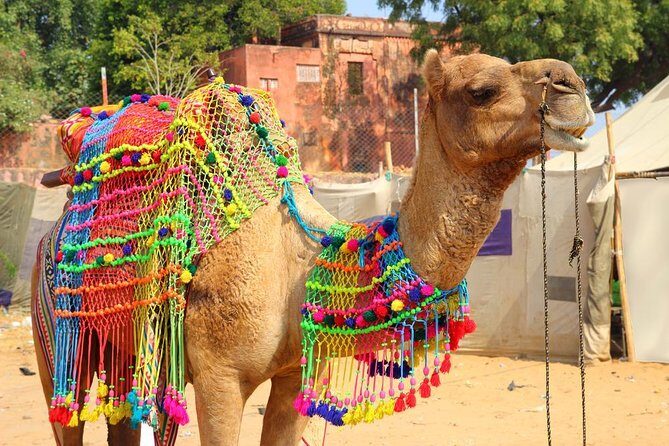
- Pushkar sunset at Pushkar Lake and a Cook & Eat style cooking class.
Price and logistics: what $800 covers (and what to budget)
At $800 per person for about 12 days, this tour is priced like a “you sit back and go” package. The value comes from the basics that normally eat up time: door-to-door private transfers, 3-star hotel rooms on a bed and breakfast basis, and guided sightseeing in several key cities.
Here’s what’s clearly included:
- 3-star accommodation (double or twin rooms), breakfast included on 11 days
- Air-conditioned private car with an English-speaking driver for transfers and sightseeing
- Sightseeing tours as per the plan, plus local registered English-speaking guides in Agra, Jaipur, and Jodhpur
- A jeep ride in Jaipur for Amer Fort
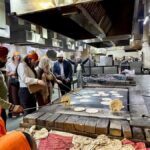
- One cooking class in Pushkar, followed by a professional chef session in a Cook & Eat format
- One rickshaw ride in Old Delhi and Delhi Metro tokens for the return segment
- Fuel, tolls, parking, driver lodging/food—basically the “small hidden costs” that add up
What’s not included (and matters for your budget):
- Monument entrance tickets and any camera fees
- Tips and laundry
- Unscheduled or unspecified lunch/dinner
- Personal expenses and luggage handling
- A note on special-season hotel requirements: a Gala Dinner for X-Mass and New Year is mandatory and paid directly at hotels at check-in
If you’re thinking, I want this price to cover everything, it won’t. But if you want a clean, low-stress structure with transport and the main guides handled, it’s a fair deal.
You can also read our reviews of more tours and experiences in New Delhi.


Day 1 in Delhi: arrival calm, then a full free day
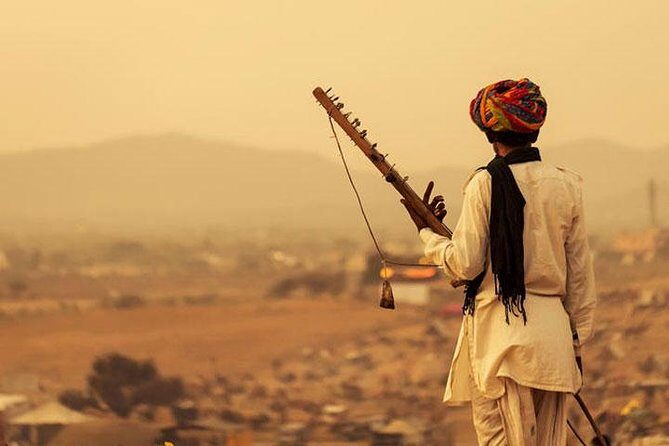
Your tour starts at Indira Gandhi International Airport, with a meet-and-greet representative at T3 Road. From there, you transfer to a hotel, and the day stays open. This is smart. Delhi on day one can be loud, crowded, and a bit chaotic, so having the time buffer helps you get your bearings fast—without forcing a packed schedule right after the flight.
The hotel stay sets the tone for the rest of the trip: you’re not hopping between neighborhoods every few hours. You’re parked in one place per city, which is exactly what makes this kind of route feel doable.
Day 2 Old Delhi with Jama Masjid, spice lanes, and Chandni Chowk
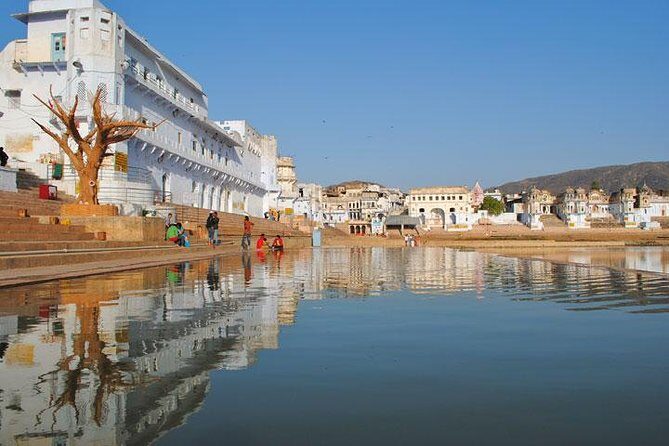
Day 2 is where Delhi gets cinematic—but still practical.
You start with Old Delhi sightseeing using the Delhi Metro. That’s a big deal for two reasons. First, it avoids a lot of road traffic. Second, it gives you a local transport rhythm before you hit the famous lanes.
The key stops:
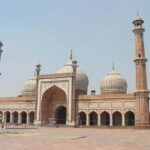
- Jama Masjid: the classic Old Delhi power stop. Expect a big scale and lots of movement around the area. Admission isn’t included, so plan on paying onsite if you want full access.
- Spice Market / Khari Baoli Road: this is the kind of place where your senses do the navigating. You’ll see hundreds of shops trading refined, local, and exotic spices, and you’ll get plenty of photo opportunities.
- Rickshaw ride and Chandni Chowk: Chandni Chowk is one of the oldest, busiest markets in the area. The fort sits nearby within the market zone, and it’s the kind of place where you feel the city working.
Then you head back toward the hotel using the Metro, with assistance from the tour representative. I like this setup because it doesn’t leave you guessing about directions, and it keeps the day from swallowing your whole evening.
A small consideration: because Jama Masjid and other sights may have separate admission rules, your “free time” budget shouldn’t be zero. Keep a little cash for entry fees and any camera charges.
Day 3 Agra Fort and Taj Mahal at sunset time
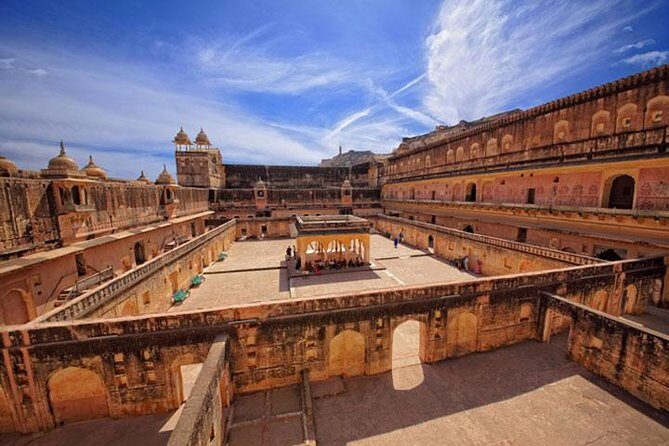
You leave Delhi after breakfast and drive to Agra, about 4.5 hours. That’s a long but manageable transfer, especially with a private car and an English-speaking driver.
Once in Agra:
- Agra Fort comes first. It’s a Mughal-era fortress complex near the Taj zone, with palaces inside. Even if you’re not a fortress person, the setting and the layout make it easier to understand how power worked here.
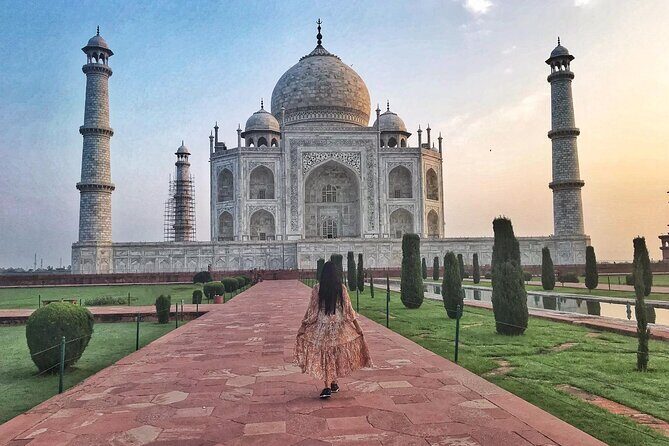
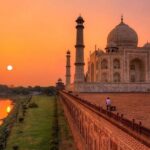
- Then Taj Mahal (sunset time): this is the emotional highlight. The plan notes Taj Mahal at sunset timing, and it includes the reminder that it is closed every Friday. If your departure date hits Friday, Taj timing would need to be adjusted based on official closure rules, so double-check your dates when you book.
Dinner time is flexible since your return is back to the hotel after sightseeing. The key point is pacing: you do the major monuments on one focused day rather than spreading Agra out.
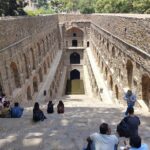
Day 4 Chand Baori step well en route to Jaipur
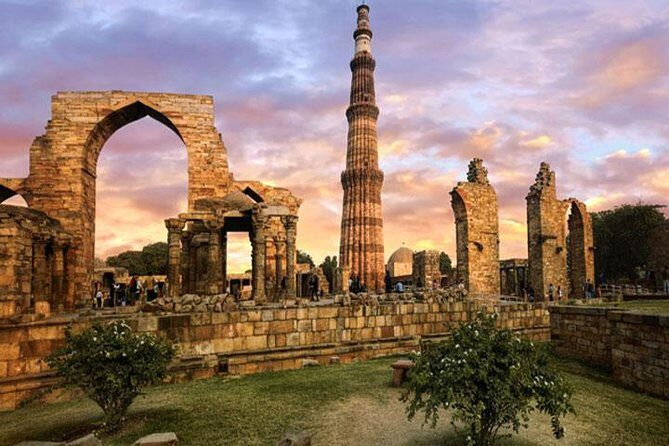
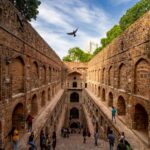
Instead of going straight Delhi-to-Jaipur, you make a stop at Chand Baori (the stepwell) on the way. This is the kind of stop that feels like a story: old architecture you can walk through, not just look at from the roadside.
What makes it worth your time:
- It’s associated with a local ruler named Raja Chanda.
- The stepwell’s oldest parts date to around the 8th century, with later upper structures added in the 18th century during the Mughal era.
- It has about 3,500 narrow steps across 13 stories, and it goes roughly 30 meters into the ground.
Then you reach Jaipur and check in to your hotel for the night. This stop breaks up travel fatigue and adds variety before Jaipur starts throwing famous landmarks at you.


Day 5 Jaipur highlights: Hawa Mahal pass, Amer Fort by Jeep, City Palace, Jantar Mantar
Jaipur is a full day, but it’s organized around the city’s strongest visual rhythm: palaces, forts, and the science of royal planning.
Your day includes:
- Hawa Mahal (Palace of Wind): you’ll do a stop/drive pass. It’s built in 1799 and known for its 5 stories and 152 windows. Even from the outside, it’s instantly recognizable.
- Amer Fort (Amber Palace): you’ll experience a Jeep ride from the old town up to the fort courtyard. That “last stretch” matters because it matches the historic route feel. Inside, Amer Fort is described as a blend of Hindu and Muslim architecture, with red sandstone and white marble elements and big courtyard scale.
- Jal Mahal: a photo stop. It’s set in the middle of Man Sagar Lake, and the plan notes that renovation is in progress around the lake. Even so, it remains a classic viewpoint for pictures.
- City Palace: located in the old city core, mixing Rajput and Mughal styles. The tour mentions key areas like Chandra Mahal, Diwan-E-Am, Diwan-E-Khas, and Mubarak Mahal, plus the Clock Tower nearby.
- Jantar Mantar: the observatory instruments built in the 18th century by Maharaja Sawai Jai Singh II. You’re looking at massive masonry tools used to study constellations and star movements; the tour notes an enormous sundial designed to measure time, with corrections needed daily.
- Albert Hall Museum: a quick stop and photo opportunity, set in Ram Niwas Garden.
This is a lot of ground for one day, so the “value” isn’t just the sights—it’s that the order prevents you from backtracking. You go from exterior landmarks to the fort mindset, then into palace and citywide planning, then finish with the museum stop before returning to your Jaipur hotel.
Day 6 Travel to Jodhpur: one clean shift in scenery
Day 6 is straightforward: after breakfast, you drive to Jodhpur, check in, and overnight. This is exactly the kind of day that helps the itinerary stay enjoyable. You’re not trying to add another major monument on top of a long drive.
Day 7 Jodhpur city tour: Jaswant Thada, Mehrangarh Fort, Umaid Bhawan Palace
Jodhpur is the “views and character” half of the trip, and Day 7 gives you a strong slice of Marwar identity.
Highlights:
- Jaswant Thada: a marble memorial built in 1899 in memory of Maharaja Jaswant Singh. It’s close to Mehrangarh Fort and described as tranquil, with intricate carvings and portraits of the Rathore rulers in the interior. It’s also got multilevel garden grounds, which makes it a calming pause between bigger forts.
- Mehrangarh Fort: a major one. Built on a rise around 400 feet above the city, it’s described as one of the largest Indian forts, with layers of architecture from different periods. The fort was started by Rao Jodha in 1459 AD. The payoff is the views over Jodhpur and the sense of power the fort was designed to project.
- Umaid Bhawan Museum / Umaid Bhawan Palace: this is where the “royal home meets modern museum” feeling shows up. Construction started in 1929 and finished in 1943. The plan notes it’s named among the largest private residences in the world, and that it mixes Indian and European styles. Part of it remains tied to the royal family, while other sections are converted into Taj Palace Hotel and a museum.
- Mandore Gardens: a garden and historical site that previously served as Marwar’s capital before Jodhpur. The tour mentions a government museum, a hall of heroes, and a temple to 33 crore gods.
Day 7 ends with a return to the hotel. You’ll likely want that quiet afterward. Jodhpur’s fort days can be tiring in the best way.
Day 8 Pushkar: Lake sunset at Folla Sui Ghat
After breakfast in Jodhpur, you head to Pushkar. You arrive, rest, and later in the day go to Pushkar Lake for sunset time.
This is a good design: you aren’t forced into temple-hopping the minute you arrive. Instead, you ease into the spiritual atmosphere with a sunset ritual.
The plan describes Pushkar Lake as one of India’s holiest lakes, part of the Panch Sarovar concept in Hindu mythology. It also calls out a specific sunset spot: Folla Sui Ghat, in front of Sunset Cafe.
This stop is valuable because it slows the trip down. You’re not just moving from landmark to landmark; you’re seeing how people actually gather around the lake.
Day 9 Brahma Temple plus free exploration in Pushkar market
Day 9 centers on the Brahma Temple, described as the lone Hindu temple in India dedicated to Lord Brahma. It’s on the banks of Pushkar Lake and is said to have a special position in Hindu belief. The plan notes it was built in the 14th century, with features like a raised platform, red spire, and details inside such as a four-armed idol of Brahma and a silver-carved turtle.
After that, the rest of the day is freer, with suggested time for Pushkar Market. The shopping district around the lake is the practical way to experience Pushkar day-to-day: walking, browsing, and soaking up the pace.
This free time is what makes the Pushkar portion feel personal instead of rushed.
Day 10 back to Delhi: a reset before New Delhi monuments
You travel to Delhi after breakfast and check in to your hotel. This is another “breathing room” day. It gives you time to freshen up and reset before the New Delhi monument lineup.
Because New Delhi is spread out, these transition nights help you avoid the classic problem of a trip that feels like a conveyor belt.
Day 11 New Delhi classics: Qutub Minar, Humayun’s Tomb, Lotus Temple, India Gate, Birla Mandir
Day 11 is your New Delhi monument day.
Stops include:
- Qutub Minar: described as the tallest brick minaret in the world and an early Indo–Islamic architecture example. The plan says it was built in 1206 and notes different theories about its purpose.
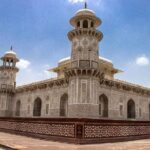
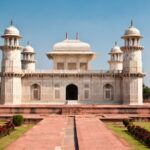
- Humayun’s Tomb: often compared to the Taj Mahal in inspiration. The tour notes it was built in 1570 and is the resting place of Mughal emperor Humayun.
- Lotus Temple: the Bahai Temple shaped like a lotus flower, made of white marble, especially pretty at night when lit. The plan also notes it is closed every Monday, so again your travel day matters.
- India Gate: a war memorial at the center of New Delhi for Indian soldiers who lost their lives fighting for the British Army in World War I.
- Birla Mandir (Lakshmi Narayan Temple): dedicated to Goddess Lakshmi and Narayana, built in 1938 by G.D. Birla near Connaught Place. The plan notes it was inaugurated by Mahatma Gandhi with the stipulation that people of all castes can enter.
This set of monuments gives you a mix: early Islamic architecture, Mughal-era design, a modern interfaith temple, and then national memorial space. It’s a strong way to end the trip on variety, not just another fort.
Day 12 departure: simple airport transfer
On the last day, you transfer back to the airport for your onward flight. Since the tour end point returns you to the meeting point area, it’s built for an easy handoff at the end—no last-minute guessing about where to go.
Service style and guides: the human touch that matters
Even with all the landmarks, the biggest difference on this kind of route is the people running it. The provided service is described as excellent, with professional guidance and responsive support. In particular, one traveler’s experience highlighted Mr. Abid for customizing a Rajasthan itinerary and Deepak as an excellent guide.
Now, not every guide situation will match exactly, but the takeaway is useful for you: choose this tour if you want handled logistics and a guide who explains what you’re seeing. That’s the difference between taking photos and actually understanding the place.
Who this tour is best for (and who might want a different plan)
This tour fits you best if:
- You want a private tour style with a car and driver doing the heavy lifting.
- You like a structured route that still includes some calm moments, like Pushkar sunset and free exploration time.
- You’re okay with paying separate monument entry fees and want fewer decisions overall.
It may not fit as well if:
- You only want fully included attraction tickets with no extra budgeting.
- You dislike driving days. There are multiple long transfers (for example, Delhi to Agra and later returns).
If you’re a first-time India visitor, this itinerary can work well because it hits iconic sites while keeping transportation and guide support in place.
Should you book this 12-day Golden Triangle with Jodhpur and Pushkar?
I’d recommend booking if you want the best kind of compromise: major sights without the stress of planning every route change. The combination of Delhi Old City transport support, Taj-focused Agra, Jaipur’s fort-and-palace circuit, then Jodhpur’s fort and museum blend, and finally the spiritual reset of Pushkar Lake and a cooking class gives you variety across emotions—history, architecture, faith, and food.
Book it if:
- You value comfort and structure over total independence.
- You’d enjoy a guided day in Agra/Jaipur/Jodhpur and want a learning tone rather than just sightseeing.
Skip it (or at least question it) if:
- You hate paying separate entrance fees.
- You prefer slower travel with more nights in each city. This plan is efficient, not leisurely.
If your goal is a strong introduction to north India with meaningful stops, this route is a solid bet.
FAQ
What is included in the tour?
The tour includes an air-conditioned private car with an English-speaking driver for transfers and sightseeing, fuel/taxes/tolls/parking, 3-star hotel accommodation with breakfast, sightseeing tours per the plan, local registered English-speaking guides in Agra, Jaipur, and Jodhpur, a jeep ride in Jaipur, a cooking class in Pushkar followed by Cook & Eat, and one rickshaw ride in Old Delhi plus Delhi Metro tokens for the return trip.
Are hotel rooms included, and what quality are they?
Yes. You get 3-star accommodation in double or twin rooms on a bed and breakfast basis.
Is breakfast included every day?
Breakfast is included for 11 days.
Are monument entrance tickets included?
No. Monument entrance tickets and camera fees are not included.
Do you get local guides in every city?
Local registered English-speaking tour guides are included for sightseeing in Agra, Jaipur, and Jodhpur. Delhi and Pushkar include the planned sightseeing and assistance described in the itinerary, but the local guide inclusion is specifically listed for those three cities.
Is there a cooking class on the itinerary?
Yes. There is one cooking class in Pushkar followed by Cook & Eat with a professional chef.
What kind of transportation do you use between cities?
You use an air-conditioned private car with an English-speaking driver for all transfers and sightseeing as per the tour plan.
Is this tour private?
Yes. It’s described as a private tour/activity, with only your group participating.
Where do you start, and when?
The meeting point is Indira Gandhi International T3 Road, New Delhi, and the start time is 8:30 am. The tour ends back at the meeting point.