REVIEW · NEW DELHI
Private Full-Day City Tour of Old and New Delhi with Jama Masjid
Book on Viator →Operated by Nikita Holidays · Bookable on Viator
Old Delhi and New Delhi in one day can feel like two different worlds. This private 10-hour loop mixes huge sacred spaces with UNESCO sights, plus a real shopping bazaar moment. I love that it’s private with a guide, so you’re not just moving from monument to monument like a dot on a map.
Two parts I especially like: the time you get at Jama Masjid (one of India’s biggest mosques, with a courtyard for up to 25,000) and the calm reset at Lotus Temple, including the quotes carved into the petal alcoves. One drawback to plan for: it’s a long day in traffic, and the route packs a lot of stops, so you’ll want comfortable shoes and a slower pace mindset.
In This Review
- Key Things That Make This Delhi Day Work
- The Value: Why This 10-Hour Private Route Can Make Sense
- Starting at 9am: How the Day Flows (and Where Time Can Slip)
- Jama Masjid: One Big Mosque, Real Scale, Real Crowd Energy
- Passing Red Fort and Pausing at Raj Ghat
- Lotus Temple: The Quiet Break You Actually Need
- Qutub Minar UNESCO Stop: Intricate Carvings and Verses
- India Gate and the British-Era Government Zone: Monuments With Meaning
- The Market Hour at Art India and Chandni Chowk by Rickshaw
- Lunch Timing: The One Built-In Pause
- Who This Tour Fits Best (and Who Should Skip It)
- Price and Logistics: What You’re Actually Paying For
- Should You Book This Old and New Delhi Highlights Tour?
- FAQ
- What time does pickup happen?
- How long is the tour?
- Is the tour private?
- Are entrance fees included?
- Is lunch included?
- Is the rickshaw ride included?
- What should I wear?
Key Things That Make This Delhi Day Work
- Private guide keeps explanations personal and helps you understand what you’re seeing
- Jama Masjid visit includes admission time and a grand courtyard atmosphere
- Lotus Temple stop is free and designed for quiet reflection in a Bahai worship space
- UNESCO hits: Qutub Minar (11th century) plus a classic monument pairing at India Gate
- Chandni Chowk time includes an optional rickshaw ride plus a market hour for shopping
- One-price convenience: air-conditioned transport, lunch, and monument entrances are included
The Value: Why This 10-Hour Private Route Can Make Sense
Delhi is not the easiest city to “DIY” in a single day. Distances are big, traffic can be chaotic, and monument timing matters. This tour’s main value is that you get an organized route in an air-conditioned private vehicle, plus a guide to translate the meaning behind the places you visit.
At $88 per person for about 10 hours, it isn’t just sightseeing. The price is built around practical items that add up fast on your own: round-trip transport from your hotel or the airport, monument entrance fees, a buffered lunch, and even a rickshaw ride option in Old Delhi. If you’re trying to cover Old and New Delhi in one day, this structure usually feels like less friction than piecing together auto-rickshaws, tickets, and timing by yourself.
The other big practical win is that it’s a private tour. That means you can move at a pace that makes sense for your group, and you’re not stuck waiting on a mixed schedule. In reviews tied to this kind of operation, guides and drivers named K.K. Sharma and Anil show up as standout examples of clear explanations, while KK/Kiki and Omkar are mentioned for safe, on-time driving. You’ll still face traffic, but you’re less likely to feel lost.
You can also read our reviews of more city tours in New Delhi


Starting at 9am: How the Day Flows (and Where Time Can Slip)
You start early, typically around 9:00am, with pickup from your hotel or the Indira Gandhi International Airport. Then you travel by private air-conditioned vehicle, which matters in Delhi’s heat and haze. The day is structured so you hit major Old Delhi and New Delhi landmarks in sequence, with lunch placed before the New Delhi monuments.
The realistic consideration is timing. Delhi traffic can stretch drives, and the tour itself is intentionally packed. That’s great if you want a full highlight run, but it can feel tight if you like to wander slowly or take lots of photo breaks. The tour’s design solves some of this by giving you set time at each key stop (for example, about 1 hour at Jama Masjid and Qutub Minar), but the “drive time” piece still depends on the day.
My advice: treat this as a highlights day, not a slow museum day. You’ll enjoy it most when you’re okay with seeing a lot—then taking in fewer details per stop.
Jama Masjid: One Big Mosque, Real Scale, Real Crowd Energy
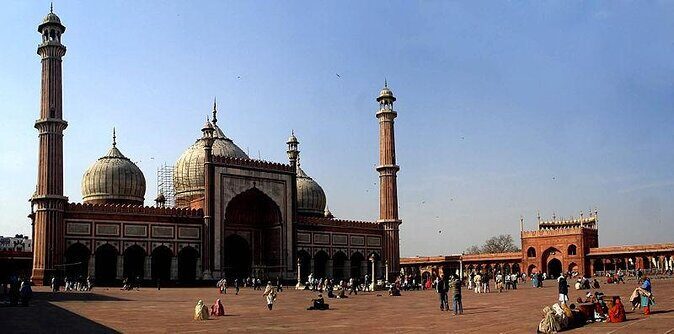
Old Delhi’s Jama Masjid is the kind of place where scale hits you before you even start paying attention to details. It’s described as one of India’s largest mosques, with a courtyard that can hold up to 25,000 devotees. That courtyard size is not marketing fluff; you can feel how it’s meant to host masses for prayer and community gatherings.
This stop also works well with a guide because Jama Masjid isn’t just architecture. It’s part of a living religious rhythm. Your visit includes admission and about one hour, which is enough time to see the space, understand what the mosque represents, and still have a moment to take photos without rushing.
A practical note: dress code is smart casual, but for religious sites you may also want to be prepared to cover appropriately if you’re asked to. Also plan for crowd flow. Even with a guide, you’ll move at the pace of the place.
If you care about explanations, this is often where the guide’s storytelling matters most. In experiences shared with similar tours, guides such as K.K. Sharma and Anil were praised for history and religious context—exactly the kind of framing that turns a big monument into something you actually understand.
Passing Red Fort and Pausing at Raj Ghat
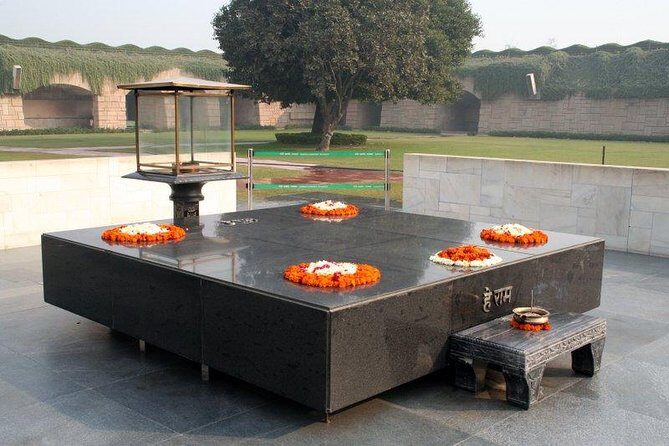
From Jama Masjid, the route continues with a drive past the Red Fort, then heads toward Raj Ghat. Raj Ghat is the memorial to Mahatma Gandhi at his cremation site. Even though it’s a shorter segment in the schedule (about 11:00am drive-by and arrival timing), it’s a meaningful emotional pivot in the day: the tour moves from the scale of worship in Old Delhi to a quieter, reflective national memorial.
This portion is valuable because it changes your lens. You go from architectural grandeur and religious practice to a place tied directly to one person’s legacy and India’s modern identity. A guide can help you connect the dots without turning it into a lecture.
One consideration: because it’s part of a driven route, you’ll want to keep your schedule mindset flexible. The time you feel here depends on how traffic and the rest of the day shape the pace.
Lotus Temple: The Quiet Break You Actually Need
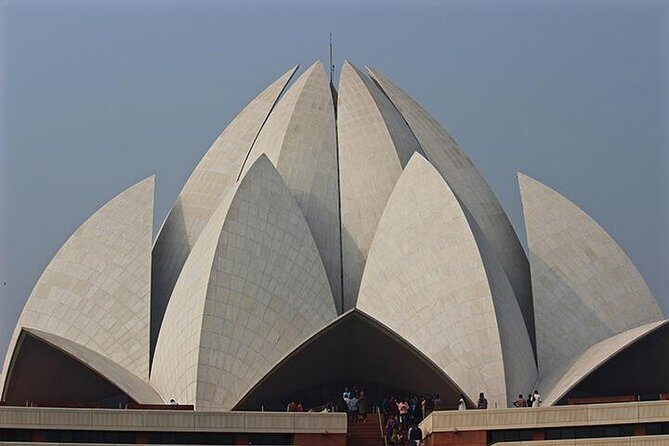
After Raj Ghat, the schedule brings you to the Lotus Temple, the Bahai House of Worship known for its lotus-flower shape and peaceful setting. Your visit is timed around 11:30am, includes about one hour, and admission is free.
The most interesting detail here is what you find once you’re inside. The petal alcoves include thought-provoking quotes from Bahai sacred scriptures. That design turns a temple into a kind of built-in reflection space. You’re welcome to meditate and clear your thoughts in the central hall, which makes Lotus Temple one of the best “reset” stops in the whole itinerary.
Why this matters for you: if you’ve already spent time around Old Delhi’s intense energy, Lotus Temple gives you contrast. It’s also a great place if you want something that’s not only about history or politics, but about personal stillness.
Practical tip: keep your phone use respectful. This is a place of worship and reflection, not a selfie hallway. A calm vibe helps your experience.
You can also read our reviews of more private tours in New Delhi





Qutub Minar UNESCO Stop: Intricate Carvings and Verses
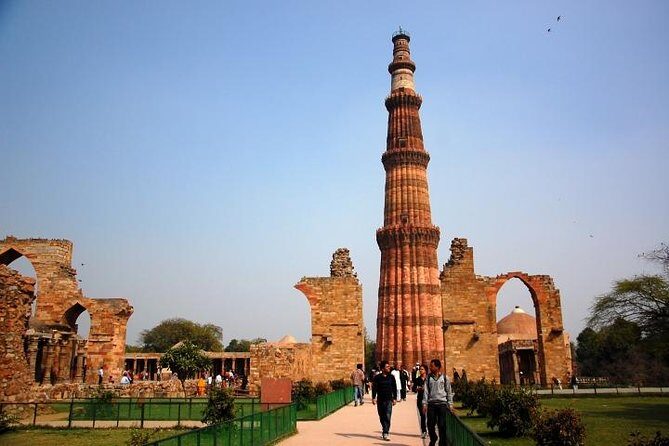
Lunch comes before you shift into New Delhi sights, then the tour heads to Qutub Minar, a UNESCO World Heritage Site dating back to the 11th century. Your visit includes admission and about one hour, which is long enough to appreciate the tower’s craftsmanship and understand why it’s considered such a major landmark.
What I like about Qutub Minar in a tour format is that it’s visually strong even without deep architectural study. You can see the intricate carvings and you can learn how it fits into the broader story of Delhi’s early historical layers.
The detail worth knowing: the carvings/inscriptions are connected to the holy Qur’an. That gives you a religious-literary angle, not just a stonework angle. If your guide explains the inscriptions and the site’s context, you’ll get more meaning out of the hour.
A consideration: Qutub Minar can get busy and you’ll be outside for parts of the visit. Comfortable clothes and water help, and plan for some walking and standing.
India Gate and the British-Era Government Zone: Monuments With Meaning
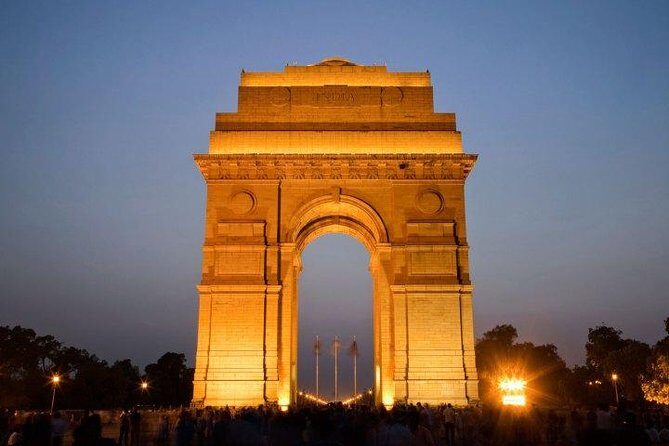
Next you reach India Gate, described as an arch about 138 feet (42 meters) tall. It commemorates more than 70,000 Indian soldiers who perished while fighting in the British Army. After the gate, the route continues by vehicle past the President’s House and Parliament House, both part of the British Raj-era government backdrop.
This segment is valuable because India Gate works on two levels. It’s a monument you can photograph easily, but it’s also a heavy memorial that reframes your day. You’re not only sightseeing; you’re reading the city’s history through architecture and remembrance.
The drive-past element has its own pros and cons. You won’t do deep entry-level exploring of every building, but you do get the big picture of the government district without losing time to ticket lines or extra transfers. If you’re short on time, that’s a smart trade.
The Market Hour at Art India and Chandni Chowk by Rickshaw
By around 5:00pm, the tour shifts from major landmarks to everyday Delhi. You stop at a local bazaar area (listed as Art India) where you can browse textiles, jewelry, shoes, handicrafts, and other goods.
Then there’s an optional rickshaw ride through the Chandni Chowk shopping bazaar. This is one of the best “feel the city” moments because you’re not walking in a tourist corridor. You’re moving through a working shopping area with constant street life, noise, and colorful storefront energy.
This part is fun, but I’ll give you the practical expectations: you’re there for about one hour, and you’ll likely have limited time for deep bargaining or careful comparison. If shopping is a priority, go in with a shortlist (one or two categories) and decide your price range early.
Also, because the rickshaw is optional, you can choose comfort over thrill if you want. Either way, you’ll get a real sense of how people shop and move in Old Delhi.
Lunch Timing: The One Built-In Pause
Lunch is included as a buffet lunch, and it’s scheduled before the New Delhi section with Qutub Minar. That timing matters. If you eat too early, you can feel stuffed for longer travel. Eat too late and you’ll be stuck hungry while visiting monuments in the afternoon.
The buffet format also usually makes decision-making easier when you have dietary preferences, since you can choose what fits you. Still, drinks are not included, so plan to budget for water and other drinks if you’re thirsty.
Who This Tour Fits Best (and Who Should Skip It)
This private day tour is a strong fit if you want:
- A single-day overview of Old and New Delhi
- Clear explanations from a guide, not just photos
- Major spiritual and UNESCO landmarks in one route
- Transport solved for you with an air-conditioned private vehicle
It may be less ideal if:
- You hate tight schedules and want hours of wandering at each stop
- You’re sensitive to long vehicle time due to traffic
- You fall under the tour’s medical caution list: it’s not recommended for participants with back problems, heart complaints, pregnant women, or other serious medical conditions
Price and Logistics: What You’re Actually Paying For
The headline number—$88 per person—only tells half the story. The real value is what’s included:
- Private air-conditioned vehicle and transfers
- Professional private guide
- Monument entrance fees
- Buffet lunch
- Rickshaw ride in Old Delhi
- A mobile ticket
- Pickup and drop-off from your hotel or the airport
Things not included are simpler: drinks and gratuities (recommended). So your personal cost picture is mostly drinks plus any tipping you choose.
If you were to price this out yourself, you’d likely spend time coordinating transport and paying for entrances one by one. Here, those pieces are pre-packaged, which is why the price can feel fair—especially for a full day.
Should You Book This Old and New Delhi Highlights Tour?
I’d book it if you want a high-impact Delhi day that covers Old Delhi, key UNESCO landmarks, and the shopping street experience without the stress of planning. The best reason to choose it is the pacing balance: you get time at the big spiritual and historical stops (Jama Masjid, Lotus Temple, Qutub Minar, India Gate), then you end with a more relaxed bazaar hour and an optional rickshaw.
Skip it if you know you’ll need a slower tempo than a 10-hour route can provide. Also, if religious sites feel uncomfortable to you or you dislike crowds, choose wisely—these places are popular, and you’ll share space with many locals.
If you do book: wear comfortable shoes, carry water, and treat the day as a highlights run. You’ll come away with a strong sense of how Delhi blends faith, empire-era architecture, and everyday street life—without having to figure out the logistics yourself.
FAQ
What time does pickup happen?
Pickup starts in the morning at 9:00am, either from your Delhi hotel or from Indira Gandhi International Airport.
How long is the tour?
The tour runs for about 10 hours.
Is the tour private?
Yes. It’s a private tour, meaning only your group participates.
Are entrance fees included?
Yes. Monument entrance fees are included, including admission for Jama Masjid and Qutub Minar.
Is lunch included?
Yes. You get a buffet lunch included in the tour.
Is the rickshaw ride included?
A rickshaw ride in Old Delhi is included, with an option described for riding through Chandni Chowk.
What should I wear?
A smart casual dress code is recommended.