REVIEW · KOCHI
Fort Kochi Sightseeing Tuk-Tuk Tour
Book on Viator →Operated by United kochi tours · Bookable on Viator
Small lanes make Kochi feel personal. This eco-friendly tuk-tuk tour strings together Fort Kochi sights and the quieter corners between them, guided by friendly locals who know the streets by feel. I like the photo-friendly setup of the tuk-tuk, and I like that the route mixes big-name landmarks with bonus stops you usually miss.
One thing to plan for: pickup is only included within Fort Kochi and Mattancherry, and if you’re staying outside those areas there’s an extra charge based on distance.
In This Review
- Key points to know before you go
- Why a Fort Kochi tuk-tuk tour works (and what to expect)
- The route in plain terms: how the day flows
- Stop 1: Church of Saint Francis and the European-era footprint
- Stop 2: Chinese fishing nets and the coast’s working rhythm
- Stop 3: Fort Kochi Beach as a reset point
- Stop 4: Dutch Cemetery for quieter, somber context
- Stop 5: Indo-Portuguese Museum for a cultural bridge
- Stop 6: Santa Cruz Cathedral Basilica and another layer of faith
- Stop 7: Dhoby Khana Public Laundry—see daily life, not just monuments
- Stop 8: Cochin Thirumala Devaswom Temple for local religion’s scale
- Stop 9: Jain Temple and the noon pigeon show
- Stop 10: Mattancherry Palace (Dutch Palace) and the mural storytelling
- Stop 11: Paradesi Synagogue, a living old community
- Stop 12: Cochin Spice Market for the final sensory hit
- Photo help and “hidden gems” that matter more than you think
- Value check: is $10.11 per person a smart deal?
- Who this tour fits best (and who might want something else)
- A note on the guide: Nasru’s kind of professionalism
- Quick practical tips before you book
- Should you book the Fort Kochi Sightseeing Tuk-Tuk Tour?
- FAQ
- How long is the Fort Kochi Sightseeing Tuk-Tuk Tour?
- What is the price per person?
- Is pickup offered?
- Is this a private tour or shared with others?
- What ticket format do I get?
- Are any admissions included?
- Which major sites are included in the route?
- Is the tour time flexible during the day?
- Is the Jain Temple pigeon show time-specific?
- What happens if the weather is bad?
Key points to know before you go
- Tuk-tuks that fit narrow lanes better than larger vehicles, so you spend more time moving through the right streets.
- A stop-by-stop guided route that hits major Christian landmarks, Portuguese/Dutch-era sites, and local daily-life places.
- Plenty of short photo moments, including at scenic and street-level corners from multiple angles.
- Entry is built into the experience for the included sights, so you’re not constantly checking ticket prices.
- A Jain Temple stop around noon can be special, since the daily pigeon show and feeding happens at noon.
Why a Fort Kochi tuk-tuk tour works (and what to expect)
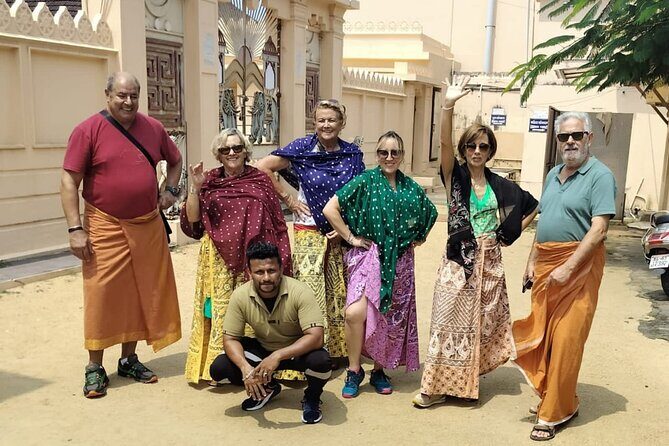
Fort Kochi is a place where your best memories come from street turns, not long highway drives. A tuk-tuk-style route makes that easy because it’s sized for the area’s tight lanes and slow foot traffic. You get a guided pace that helps you connect what you’re seeing with what it means.
I also like that this tour is designed as a “3 to 4 hours, point-to-point” plan. That time window is long enough to cover a lot of ground, but short enough that you won’t feel stuck in a single neighborhood for half the day. It’s a private tour, so it’s just your group—useful if you want to move at your pace without worrying about matching someone else’s interests.
One more practical note: you’ll handle logistics with a mobile ticket, and confirmation is provided at booking time. The experience runs across a broad daily window (listed as 12:00 AM–11:30 PM), so you can usually find a slot that fits your day in Kochi.
You can also read our reviews of more tours and experiences in Kochi.
The route in plain terms: how the day flows
The itinerary is built as a sequence of short, focused visits—most stops are around 15–20 minutes. That format works in Fort Kochi because you’re often stepping from one style of place to another: church to sea, museum to laundry activity, temple to palace, synagogue to spice market.
You start at key Christian and colonial-era landmarks in Fort Kochi, then move through the coastal atmosphere and cemetery sites, followed by a museum and a major basilica. From there, the route shifts into real daily-life visuals (public laundry) and religious variety (temples, Jain worship, and synagogue). Finally, you close with Mattancherry Palace murals and a spice-market stop.
If you’re the type who likes to understand a place while you’re walking it, this structure is helpful. You’re not just ticking boxes; you’re getting a line of context from European-era churches and Portuguese/Dutch connections to local religious institutions and commerce.
Stop 1: Church of Saint Francis and the European-era footprint

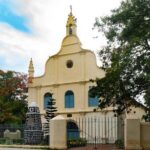
The first stop is St. Francis Church in Fort Kochi, originally built in 1503. That one date alone gives you a sense of why Fort Kochi became such a meeting point for different empires and communities. You’ll also learn how the church has European colonial historical significance and has functioned as a “mute witness” to those changes.
In practical terms, this is a good opener because it sets expectations for the rest of the day. After you see how old the European presence is in the architecture and location, later stops like the Portuguese/Dutch palace and other colonial-era sites make more sense.
Time on-site is listed at about 20 minutes, which is enough to look around, take photos, and absorb the guide’s stories without feeling rushed.
Stop 2: Chinese fishing nets and the coast’s working rhythm
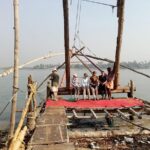
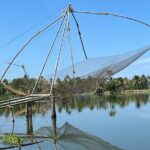
Next you’ll see the Chinese fishing nets (Cheena vala). In India these are widely called Chinese fishing nets, but the more formal description is that they’re stationary lift nets: fixed land installations that help with fishing.
Even if you’ve seen similar “nets by the shore” in other places, these are worth paying attention to because the guide can connect the engineering idea to local coastal fishing practices. The stop is listed at about 20 minutes, so it’s structured for photos and quick questions rather than a long viewing session.
Tip for your camera: aim for multiple angles—some will show the net structure clearly, while others show how the nets sit in the larger sea-and-town setting.
Stop 3: Fort Kochi Beach as a reset point

Then it’s on to Fort Kochi Beach along the Arabian Sea. This is a short pause—about 20 minutes—meant more for atmosphere and breathing space than for a full beach break.
I like this kind of timing in guided routes: after religious and colonial sites, the sea view helps your brain reset. You come away with more than just buildings and monuments.

Stop 4: Dutch Cemetery for quieter, somber context
The Dutch Cemetery is one of those stops that adds depth without needing fireworks. It’s known for the imperial inhabitants who left their homelands centuries ago to expand and propagate their empire. The mood here is very different from churches and museums, so it’s a good balancing point in the tour.
Plan for a bit of slower walking. This stop is listed at about 15 minutes, so keep your photos efficient—capture the layout and headstones, then use the guide’s explanations to do the real learning.
Stop 5: Indo-Portuguese Museum for a cultural bridge

After that, you’ll visit the Indo-Portuguese Museum. This is a smart mid-tour stop because it’s where you can connect the day’s European-era sites to objects and stories that explain how cultures interacted.
You’ll spend about 20 minutes here, which works well if you prefer “focused viewing” over wandering for hours. If you’re the type who likes to understand the why behind what you’re seeing, this is often the stop that makes everything else click.
Stop 6: Santa Cruz Cathedral Basilica and another layer of faith
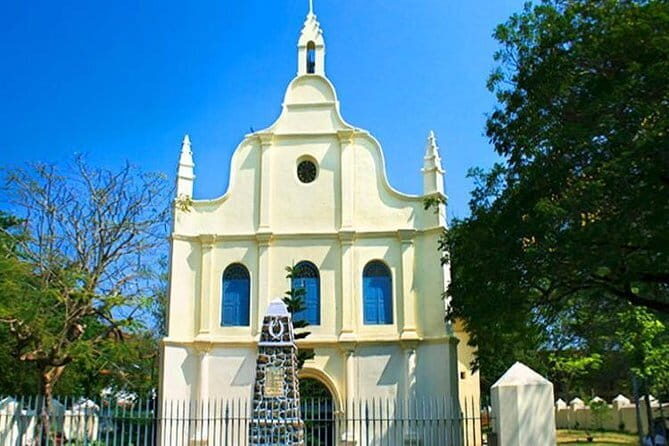
Next is Santa Cruz Cathedral Basilica at Fort Kochi. The listing notes it’s one of the eight Basilicas in Kerala, and it’s counted among Kerala’s heritage edifices.
This is another about-20-minute visit, and it works because it’s not repeating St. Francis—it adds a different chapter of church architecture and religious presence in the same area. You’ll have a chance to notice how the guide frames the basilica’s importance, then connect it to the earlier European-influenced landmarks.
Stop 7: Dhoby Khana Public Laundry—see daily life, not just monuments
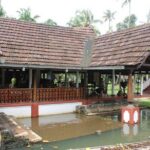
Then comes one of the more “real life” stops: Dhoby Khana Public Laundry. This was founded in the early 1700s as a central community place for cleaning laundry. At this facility, washing of clothes is done in the old-style way described in the listing (the wording suggests traditional methods rather than modern machines).
I love including a stop like this because it shifts your perspective from heritage buildings to how people actually use public spaces. It’s about 20 minutes—enough time to observe and take photos, but not so long that it stalls the route.
Stop 8: Cochin Thirumala Devaswom Temple for local religion’s scale
Now the tour moves into Hindu religious space with Cochin Thirumala Devaswom (also called Gosripuram). The listing describes it as the biggest and most important socio-religious institution of Gowda Saraswat Brahmins of Kerala, located at Cherlai in the Matta… area.
Even if you’re not religious yourself, temple visits can be powerful because they show community structure and how faith shapes daily routines. You’ll have about 20 minutes here—enough for understanding the significance and getting a sense of how people move through the space.
Stop 9: Jain Temple and the noon pigeon show
Next is a Jain Temple, described as known for its pigeon show and feeding, held every day at noon. The stop is listed at about 20 minutes.
Here’s the practical angle: since the pigeon show and feeding are scheduled at noon, your experience will vary depending on what time your tuk-tuk arrives. If your goal is to catch that moment, choose a tour slot that lands close to midday.
Stop 10: Mattancherry Palace (Dutch Palace) and the mural storytelling
The tour then heads to Mattancherry Palace, a Portuguese palace popularly known as the Dutch Palace. The listing says it features Kerala murals depicting portraits and exhibits connected with the Rajas.
This stop is about 20 minutes, and it’s often where the tour’s “visual learning” phase kicks in. After churches, nets, and temples, you get something that’s more art-forward: murals and palace interiors that help you understand how different rulers and cultures left visible marks.
If you like photography, this is a good one to slow down for. Aim to capture both the overall palace feel and the detail areas your guide points out.
Stop 11: Paradesi Synagogue, a living old community
Next you’ll visit Paradesi Synagogue, described as the oldest active synagogue in the Commonwealth of Nations and located in Kochi. It was constructed in 1568 and is noted as one of seven synagogues of the Malabar Yehudan o… group name as listed.
This stop is listed at about 20 minutes. It’s also a reminder that Kochi wasn’t only about European colonial sites—it was a crossroads where different Jewish communities and traders shaped the city.
In a guided format, you’ll get context fast, which helps because synagogue history is easy to miss if you’re just skimming surfaces.
Stop 12: Cochin Spice Market for the final sensory hit
To close, you’ll go to Cochin Spice Market, described as a down-to-earth shop with polished displays selling exotic spices in bulk. This is listed for about 15 minutes.
This stop is valuable even if you don’t plan to buy much. You’ll see what’s actually sold locally, how spices are presented, and what products catch attention in bulk formats. If you do buy, you’ll know what you’re looking at because you already spent the day learning how Kochi’s trade history is layered into everyday life.
Photo help and “hidden gems” that matter more than you think
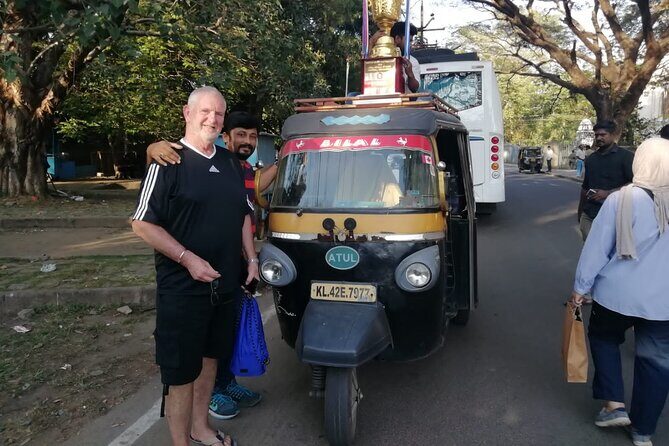
The tour includes some hidden gems/bonus secret places, even if they’re not spelled out in the basic outline. That’s where a local guide’s instincts show up: small lanes, quick photo opportunities, and less obvious corners that larger vehicles usually skip.
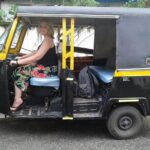
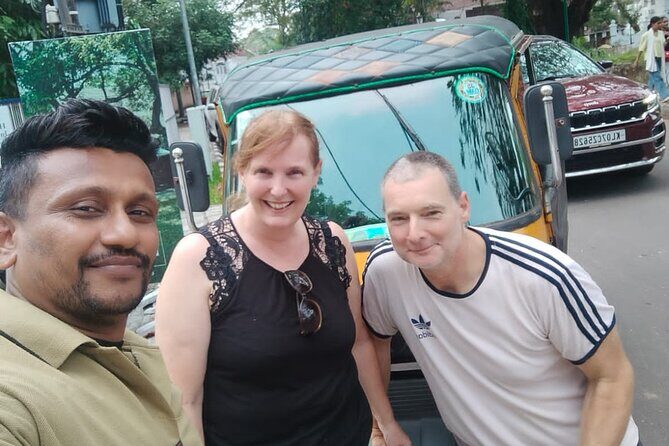
Also, the experience is built to help with photos using the tuk-tuk. If you’ve ever tried to shoot while you’re stuck behind a crowd, you know why this matters. Here, the tuk-tuk becomes part of the framing, so you can get variety without changing your whole plan every two minutes.
Value check: is $10.11 per person a smart deal?
At $10.11 per person (with a listed duration of about 3–4 hours), this is a bargain only if you actually use what’s included. In this case, you’re not just paying for a ride.
The tour includes all fees and taxes, and the itinerary’s listed entries include admission for each stop. That can add up quickly when you’re visiting multiple churches, museums, and other paid sites in one afternoon. On top of that, you’re getting a private format, so your group isn’t sharing the guide with strangers.
There is one cost consideration: pickup outside Fort Kochi and Mattancherry adds an extra charge based on distance. If you’re staying beyond those areas, ask for clarity on the pickup quote before you confirm.
A final value detail: the booking pattern shows it’s commonly reserved about 46 days in advance on average. That’s a hint that slots can fill, especially if you’re traveling during peak periods. If your dates are fixed, booking earlier usually saves hassle.
Who this tour fits best (and who might want something else)
This experience fits best if you want a guided route that covers a lot of different Kochi “faces” in a short time. It’s a good match for first-timers who want a solid orientation of Fort Kochi and Mattancherry without needing to plan tickets and routes on your own.
It’s also great if you like photos and street-level viewpoints from a vehicle that’s sized for tight areas. And because it’s private, it works well for couples, small families, and friends who don’t want to feel pulled in a dozen directions.
If you’re the kind of traveler who wants long stays—30 to 60 minutes in each place, lots of wandering, and slow museum reading—this might feel structured. The stops are intentionally short, so you’ll get the highlights and guidance, then you can decide what deserves extra time later.
A note on the guide: Nasru’s kind of professionalism
One guide name that comes up in the experience details is Nasru. The way he’s described is practical: being flexible, professional, and responsive from the start. That style matters because Fort Kochi is busy and streets can change quickly. When your guide handles that smoothly, the tour feels easier and more relaxed.
Even if your guide isn’t Nasru, the tour is designed around friendly locals who can steer you through this mix of faith sites, colonial landmarks, and daily-life corners.
Quick practical tips before you book
- If you want the Jain Temple noon pigeon show, aim for a tour time close to midday.
- Plan your expectations for stop lengths: you’ll see a lot, but you won’t spend long hours in one place.
- If weather changes your plans, the experience requires good weather, and if it’s canceled due to poor weather you’ll be offered a different date or a full refund.
Should you book the Fort Kochi Sightseeing Tuk-Tuk Tour?
I’d book this tour if you want an efficient, guided way to understand Fort Kochi and Mattancherry without stitching together tickets and transportation yourself. For the price, you’re getting a lot: a tuk-tuk ride, a private group setup, admission included across multiple sights, and photo-friendly help plus bonus stops.
Book it with extra care if your location is outside Fort Kochi and Mattancherry, because pickup can add cost. And if you want more time for deep museum reading or long church stays, consider pairing this with free time afterward so you can slow down where you liked things most.
Overall, this is the kind of tour that gives you a strong first pass through Kochi’s layers—European-era churches and palaces, working coastal fishing nets, everyday laundry life, religious variety, and spices to wrap it all up.
FAQ
How long is the Fort Kochi Sightseeing Tuk-Tuk Tour?
The tour is listed as approximately 3 to 4 hours.
What is the price per person?
The price is $10.11 per person.
Is pickup offered?
Yes, pickup is offered. If you are outside Fort Kochi & Mattancherry, there will be an extra charge based on distance.
Is this a private tour or shared with others?
This is a private tour/activity, meaning only your group participates.
What ticket format do I get?
You get a mobile ticket.
Are any admissions included?
Yes. The itinerary lists admission tickets included for each of the listed stops.
Which major sites are included in the route?
The tour includes St. Francis Church, Chinese fishing nets, Fort Kochi Beach, Dutch Cemetery, Indo-Portuguese Museum, Santa Cruz Cathedral Basilica, Dhoby Khana Public Laundry, Cochin Thirumala Devaswom Temple, Jain Temple, Mattancherry Palace, Paradesi Synagogue, and Cochin Spice Market.
Is the tour time flexible during the day?
It’s listed as running Monday through Sunday from 12:00 AM to 11:30 PM (for the date range shown in the listing).
Is the Jain Temple pigeon show time-specific?
Yes. The Jain Temple is known for a pigeon show and feeding held every day at noon.
What happens if the weather is bad?
The experience requires good weather. If it’s canceled due to poor weather, you’ll be offered a different date or a full refund.